FoundMyFitness

by Rhonda Patrick, Ph.D.
A podcast about health, science, nutrition, aging, and fitness.
Episodes

#114 How Meditation Rewires Your Brain, Gut, & Immune System | Dr. Richard Davidson
<p><a href= "https://www.foundmyfitness.com/aliquot?utm_campaign=richard_davidson_podcast&utm_medium=podcast&utm_source=podcast_description"> Get access to <strong>more than 200 episodes</strong> of my premium podcast (The Aliquot) when you sign up as a FoundMyFitness Premium Member</a></p> <p>Five minutes of daily meditation can measurably lower a marker of inflammation and alter pathways in the gut microbiome. In this episode, <strong>Dr. Richard Davidson</strong> explains how exercise and meditation can work together to shape resilience and support the biology of flourishing. He also shows how meditation can be folded into exercise and ordinary routines, with benefits comparable to formal sit-down practice.</p> <p><strong>Timestamps:</strong></p> <ul> <li><strong>(00:00)</strong> Introduction</li> <li><strong>(05:22)</strong> Why meditate when you can exercise?</li> <li><strong>(09:05)</strong> How loneliness and connection alter our biology</li> <li><strong>(10:44)</strong> Can compassion be trained like a muscle?</li> <li><strong>(13:14)</strong> Does timing meditation around exercise matter?</li> <li><strong>(16:30)</strong> What are the four pillars of well-being?</li> <li><strong>(22:38)</strong> The six emotional styles that shape well-being</li> <li><strong>(30:11)</strong> Can an emotional style become too extreme?</li> <li><strong>(32:02)</strong> Can we intentionally shape neuroplasticity?</li> <li><strong>(34:45)</strong> When increased neuroplasticity backfires</li> <li><strong>(36:33)</strong> Does doing hard things build resilience?</li> <li><strong>(40:19)</strong> Why children may be more resilient than adults</li> <li><strong>(42:14)</strong> Why strength training may be a form of mindfulness</li> <li><strong>(48:15)</strong> Can mindset alone change your biology?</li> <li><strong>(52:44)</strong> Why mindset training may need to be personalized</li> <li><strong>(54:26)</strong> Can five minutes of meditation reduce inflammation?</li> <li><strong>(59:34)</strong> How meditation alters the gut microbiome</li> <li><strong>(1:03:49)</strong> The insula's role in linking stress and inflammation</li> <li><strong>(1:08:22)</strong> Can meditation protect against stress-related inflammation?</li> <li><strong>(1:09:59)</strong> Does meditation have to be done sitting still?</li> <li><strong>(1:13:17)</strong> Turning everyday meals into a gratitude practice</li> <li><strong>(1:15:00)</strong> Why meditation may initially increase anxiety</li> <li><strong>(1:17:24)</strong> How children absorb their parents' emotional state</li> <li><strong>(1:22:33)</strong> Does social connection increase longevity?</li> <li><strong>(1:25:30)</strong> How social connection shifts attention beyond the self</li> <li><strong>(1:28:02)</strong> Does spending money on others make us happier?</li> <li><strong>(1:30:20)</strong> What does it mean to have a purpose?</li> <li><strong>(1:34:55)</strong> Can curiosity help overcome pessimism?</li> <li><strong>(1:38:24)</strong> Can you flourish without formal meditation?</li> <li><strong>(1:40:55)</strong> The core practices for a flourishing life</li> </ul> <p><a href= "https://www.foundmyfitness.com/episodes/richard-davidson?utm_campaign=richard_davidson_podcast&utm_medium=podcast&utm_source=podcast_description"> Show notes are available by clicking here</a></p> <p><a href="https://www.youtube.com/watch?v=3NiQF9_Vxi8">Watch this episode on YouTube</a></p>

#113 Why AI Could Add Decades to Your Lifespan | Dr. Derya Unutmaz
<p dir="ltr"><a href= "https://www.foundmyfitness.com/aliquot?utm_campaign=derya_unutmaz_podcast&utm_medium=podcast&utm_source=podcast_description"> Get access to <strong>more than 200 episodes</strong> of my premium podcast (The Aliquot) when you sign up as a FoundMyFitness Premium Member</a></p> <p dir="ltr">The next 10 years may add decades to human lifespan by compressing the time it takes to understand, treat, and prevent disease. In this episode, <strong>Dr. Derya Unutmaz</strong> explains why accelerating AI could transform drug discovery, shorten clinical trials, and push cancer treatment toward increasingly personalized interventions. He also reframes AI not as an existential threat, but as a medical enabler that doctors may soon be ethically obligated to use.</p> <p><strong>Timestamps:</strong></p> <ul> <li><strong>(00:00)</strong> Introduction</li> <li><strong>(07:11)</strong> Why the next 10 years may add 50 to your lifespan</li> <li><strong>(11:19)</strong> How AI is transforming drug discovery</li> <li><strong>(16:50)</strong> Could digital twins shorten clinical trials?</li> <li><strong>(19:25)</strong> Can AI predict drug safety and efficacy?</li> <li><strong>(23:40)</strong> Have we already reached AGI?</li> <li><strong>(29:23)</strong> Why AI may be medicine's greatest force multiplier</li> <li><strong>(35:35)</strong> Can AI replicate a scientist's biological intuition?</li> <li><strong>(42:16)</strong> Is it malpractice for doctors not to use AI?</li> <li><strong>(48:18)</strong> What happens when AI monitors disease in real time?</li> <li><strong>(51:52)</strong> Which AI models should doctors trust?</li> <li><strong>(57:29)</strong> Claude vs. GPT—does the model matter for diagnosis?</li> <li><strong>(1:00:58)</strong> Generalist vs. specialized AI—which works better in medicine?</li> <li><strong>(1:04:25)</strong> Why cancer is so hard to cure</li> <li><strong>(1:08:18)</strong> Could cancer be curable within a decade?</li> <li><strong>(1:12:29)</strong> Can AI design cancer treatments on demand?</li> <li><strong>(1:14:31)</strong> How AI could curb overtreatment and side effects</li> <li><strong>(1:17:28)</strong> Predicting cancer years before it forms—is it possible?</li> <li><strong>(1:23:50)</strong> Why biology could go exponential with AI</li> <li><strong>(1:28:58)</strong> Why aging may be easier to prevent than reverse</li> <li><strong>(1:34:51)</strong> Can the body be engineered to resist aging?</li> <li><strong>(1:40:07)</strong> Can AI model how gene therapy will behave?</li> <li><strong>(1:44:12)</strong> What people who reach 110+ reveal about Human 2.0</li> <li><strong>(1:46:21)</strong> From Dolly to Yamanaka factors—the case for cellular age reversal</li> <li><strong>(1:50:56)</strong> Why full-body rejuvenation is an engineering problem</li> <li><strong>(1:58:44)</strong> What happens when AI reasons longer about biology?</li> <li><strong>(2:01:25)</strong> The biosecurity dilemma of powerful AI</li> <li><strong>(2:06:12)</strong> What should we actually measure to track aging?</li> <li><strong>(2:12:34)</strong> How old immune cells distort aging clocks</li> <li><strong>(2:15:22)</strong> Why reversing brain aging is uniquely difficult</li> <li><strong>(2:21:49)</strong> The ultimate prompt for extending lifespan</li> <li><strong>(2:23:50)</strong> What data does a true digital twin need?</li> <li><strong>(2:28:32)</strong> How to build a mini digital twin today</li> <li><strong>(2:33:26)</strong> How to give AI a long-term memory of your data</li> <li><strong>(2:36:33)</strong> Why personal baselines matter for AI advice</li> </ul> <p><a href= "https://www.foundmyfitness.com/episodes/derya-unutmaz?utm_campaign=derya_unutmaz_podcast&utm_medium=podcast&utm_source=podcast_description"> Show notes are available by clicking here</a></p> <p><a href="https://www.youtube.com/watch?v=OJCgQUT1aic">Watch this episode on YouTube</a></p>

#112 How To Slow Biological Aging With a Multivitamin, Vegetables, & Omega-3 | Dr. Steve Horvath
<p dir="ltr"><a href= "https://www.foundmyfitness.com/aliquot?utm_campaign=steve_horvath_podcast&utm_medium=podcast&utm_source=podcast_description"> Get access to <strong>more than 200 episodes</strong> of my premium podcast (The Aliquot) when you sign up as a FoundMyFitness Premium Member</a></p> <p dir="ltr">The strongest anti-aging strategy may be less about dramatic reversal and more about removing what accelerates aging in the first place. In this episode, <strong>Dr. Steve Horvath</strong> maps out the science behind biological age and how aging clocks are changing the way researchers evaluate longevity interventions. He also explains why omega-3s, a daily multivitamin, and sufficient vegetable intake stand out as evidence-backed, compounding levers for shifting biological age over time.</p> <p><strong>Timestamps:</strong></p> <ul> <li><strong>(00:00)</strong> Introduction</li> <li><strong>(07:05)</strong> What exactly is biological aging?</li> <li><strong>(12:39)</strong> Do all aging clocks measure the same thing?</li> <li><strong>(18:22)</strong> PhenoAge vs. GrimAge—how methylation reveals mortality risk</li> <li><strong>(20:27)</strong> Why GrimAge is a powerful mortality predictor</li> <li><strong>(24:10)</strong> How your epigenome remembers long-term stress</li> <li><strong>(28:08)</strong> Can parents pass stress to offspring through the epigenome?</li> <li><strong>(30:12)</strong> Why standard aging clocks fail in sperm</li> <li><strong>(31:35)</strong> Can lifestyle changes reverse GrimAge?</li> <li><strong>(33:24)</strong> How DunedinPACE tracks your aging speed</li> <li><strong>(37:26)</strong> Which clock is best for testing longevity interventions?</li> <li><strong>(39:47)</strong> Can methylation clocks replace long-term mortality studies?</li> <li><strong>(43:33)</strong> Which interventions most reliably reverse epigenetic age?</li> <li><strong>(46:31)</strong> Can someone reverse biological age by 5 years in 7 months?</li> <li><strong>(50:49)</strong> Can GrimAge predict when you'll die?</li> <li><strong>(52:36)</strong> Why a younger GrimAge doesn't mean more years of life</li> <li><strong>(57:21)</strong> What epigenetic clocks fail to capture</li> <li><strong>(1:03:26)</strong> Why aging clocks measure more than just inflammation</li> <li><strong>(1:06:02)</strong> Does younger blood rejuvenate the whole body?</li> <li><strong>(1:09:52)</strong> Can calorie restriction really slow biological aging?</li> <li><strong>(1:14:00)</strong> Do GLP-1 drugs reverse epigenetic age?</li> <li><strong>(1:17:29)</strong> Can a daily multivitamin slow epigenetic aging?</li> <li><strong>(1:26:11)</strong> Omega-3, vitamin D, and exercise—which slows aging best?</li> <li><strong>(1:34:01)</strong> Does correcting vitamin D deficiency reverse age acceleration?</li> <li><strong>(1:36:29)</strong> Vegetables vs. exercise—which matters more for epigenetic age?</li> <li><strong>(1:42:04)</strong> Does red meat accelerate epigenetic aging?</li> <li><strong>(1:43:44)</strong> How much exercise is needed to slow epigenetic aging?</li> <li><strong>(1:51:05)</strong> Can heat exposure mimic exercise?</li> <li><strong>(1:52:29)</strong> Does a lower core body temperature slow aging?</li> <li><strong>(1:54:54)</strong> How sleep disruption shows up on aging clocks</li> <li><strong>(1:56:25)</strong> The role of social connection in biological aging</li> <li><strong>(2:02:55)</strong> Are consumer biological age tests worth it?</li> <li><strong>(2:07:52)</strong> How to choose a reliable biological age test</li> <li><strong>(2:12:38)</strong> Why two epigenetic age tests might give different results</li> <li><strong>(2:17:27)</strong> Can AI build better aging clocks?</li> <li><strong>(2:18:58)</strong> Partial reprogramming—can cells become younger without losing identity?</li> <li><strong>(2:22:52)</strong> What partial reprogramming can (and can't) reverse</li> <li><strong>(2:27:43)</strong> Do DNA mutations actually drive aging?</li> <li><strong>(2:29:59)</strong> Why no single intervention can stop aging</li> <li><strong>(2:34:29)</strong> Why genetics aren't your destiny</li> <li><strong>(2:38:38)</strong> Steve Horvath's longevity routine</li> <li><strong>(2:43:11)</strong> Does short-term stress accelerate epigenetic aging?</li> </ul> <p dir="ltr"><a href= "https://www.foundmyfitness.com/episodes/steve-horvath-2?utm_campaign=steve_horvath_podcast&utm_medium=podcast&utm_source=podcast_description"> Show notes are available by clicking here</a></p> <p dir="ltr"><a href= "https://www.youtube.com/watch?v=3pRiY2zHt8c">Watch this episode on YouTube</a></p>

#111 The Optimal Mobility Protocol for a Durable Body | Dr. Kelly Starrett
<p><a href= "https://www.foundmyfitness.com/aliquot?utm_campaign=kelly_starrett_podcast&utm_medium=podcast&utm_source=podcast_description"> Get access to <strong>more than 200 episodes</strong> of my premium podcast (The Aliquot) when you sign up as a FoundMyFitness Premium Member</a></p> <p dir="ltr">Range of motion is the one aspect of your physiology that doesn't have to decline with age, but neglect almost guarantees that it will. In this episode, <strong>Dr. Kelly Starrett</strong> explains how to build a durable body by restoring the movement patterns that modern life strips away. He also lays out a clear framework for raising resilient young athletes grounded in sleep, fueling, play, and skill development rather than early specialization and excess volume.</p> <p><strong>Timestamps:</strong></p> <ul> <li><strong>(00:00)</strong> Introduction</li> <li><strong>(06:24)</strong> Why pain doesn't always mean you're injured</li> <li><strong>(08:37)</strong> How to manage persistent pain without stopping training</li> <li><strong>(13:51)</strong> Does foam rolling really improve pain and mobility?</li> <li><strong>(17:01)</strong> Can soft tissue work reduce soreness and help you unwind?</li> <li><strong>(19:06)</strong> Why soreness isn't proof of a good workout</li> <li><strong>(21:04)</strong> Is neck pain after overhead pressing a mobility issue?</li> <li><strong>(26:04)</strong> How to test your mobility at home</li> <li><strong>(27:52)</strong> The Cindy workout and why it works</li> <li><strong>(28:48)</strong> What your warmup should actually accomplish</li> <li><strong>(33:03)</strong> Why "don't get injured" is the wrong warmup goal</li> <li><strong>(35:56)</strong> What if you don't have time to warm up?</li> <li><strong>(38:56)</strong> How to maintain hip mobility in minutes a day</li> <li><strong>(40:23)</strong> The sit-and-rise test for hip mobility</li> <li><strong>(42:25)</strong> Can the sit-and-rise test really predict longevity?</li> <li><strong>(43:52)</strong> Why fitness doesn't guarantee mobility</li> <li><strong>(47:04)</strong> Improving shoulder mobility for desk workers</li> <li><strong>(51:23)</strong> How much shoulder mobility work do you really need?</li> <li><strong>(52:40)</strong> Can breath holds help prime and reset the nervous system?</li> <li><strong>(55:50)</strong> How breathing mechanics affect spinal mobility</li> <li><strong>(58:34)</strong> Do breath holds improve athletic performance?</li> <li><strong>(1:01:11)</strong> Fit vs. sport-ready—what's the difference?</li> <li><strong>(1:05:14)</strong> How to breathe during heavy lifts</li> <li><strong>(1:08:56)</strong> Can planks help you practice better breathing?</li> <li><strong>(1:14:16)</strong> Training for life vs. living to train</li> <li><strong>(1:17:36)</strong> How should non-athletes think about training?</li> <li><strong>(1:23:37)</strong> Why adults need leisure-time activity</li> <li><strong>(1:27:32)</strong> What's really behind your nagging pain?</li> <li><strong>(1:30:38)</strong> The couch stretch test for hip extension</li> <li><strong>(1:32:38)</strong> How to test shoulder internal rotation</li> <li><strong>(1:35:34)</strong> Why do perimenopausal women get frozen shoulder?</li> <li><strong>(1:38:25)</strong> Can running benefit recovery after lifting?</li> <li><strong>(1:39:40)</strong> Heat or cold for recovery—which and when?</li> <li><strong>(1:42:59)</strong> Can heat exposure support tendon repair?</li> <li><strong>(1:46:36)</strong> How to make desk work less sedentary</li> <li><strong>(1:52:52)</strong> Why is sitting on the ground so important?</li> <li><strong>(1:55:46)</strong> Why mobility doesn't have to decline with age</li> <li><strong>(2:01:37)</strong> The surprising power of "movement snacks"</li> <li><strong>(2:08:34)</strong> Why never do nothing beats all or nothing</li> <li><strong>(2:13:34)</strong> Is our culture the real barrier to movement?</li> <li><strong>(2:17:20)</strong> Why rucking is such an accessible way to train</li> <li><strong>(2:19:22)</strong> Are you getting enough time outside?</li> <li><strong>(2:24:32)</strong> Why better nutrition starts with what you're missing</li> <li><strong>(2:29:18)</strong> What's gone wrong with youth sports?</li> <li><strong>(2:31:26)</strong> Why sleep matters for young athletes</li> <li><strong>(2:36:02)</strong> How to manage food and sleep around late practices</li> <li><strong>(2:38:41)</strong> Should kids avoid specializing in one sport?</li> <li><strong>(2:41:27)</strong> Why unstructured play is essential for kids</li> <li><strong>(2:47:18)</strong> When should kids start strength training?</li> <li><strong>(2:49:51)</strong> Can martial arts build movement skills in kids?</li> <li><strong>(2:51:15)</strong> Why do so many kids drop out of sports?</li> <li><strong>(2:55:09)</strong> Sleep, fueling, and pain in young athletes</li> <li><strong>(2:56:46)</strong> What if your kid is a picky eater?</li> <li><strong>(3:00:06)</strong> Handstands, skipping, and the foundations of youth training</li> <li><strong>(3:02:24)</strong> Can simple jumping drills reduce ACL injuries in kids?</li> <li><strong>(3:04:44)</strong> How 10 minutes of play can build movement skills</li> <li><strong>(3:06:22)</strong> What should young athletes remove before adding more?</li> </ul> <p><a href= "https://www.foundmyfitness.com/episodes/kelly-starrett?utm_campaign=kelly_starrett_podcast&utm_medium=podcast&utm_source=podcast_description"> Show notes are available by clicking here</a></p> <p><a href="https://www.youtube.com/watch?v=IXmOJsfebMM">Watch this episode on YouTube</a></p>

#110 How To Build Lasting Happiness | Dr. Arthur Brooks
<p><a href= "https://www.foundmyfitness.com/aliquot?utm_campaign=arthur_brooks_podcast&utm_medium=podcast&utm_source=podcast_description"> Get access to <strong>more than 200 episodes</strong> of my premium podcast (The Aliquot) when you sign up as a FoundMyFitness Premium Member</a></p> <p dir="ltr">Most of us are pursuing happiness exactly the wrong way. Overuse of technology is creating a meaning deficit, rewiring our brains away from purpose. In this episode, <strong>Dr. Arthur Brooks</strong> explains why relentless device use prevents us from asking the critical questions that define our lives, why high achievers often feel profoundly empty, and how the "striver's curse" makes satisfaction fleeting. He also shares his five-step protocol for managing negative affect and explains why suffering, when approached correctly, is a potent catalyst for personal growth. </p> <p><strong>Timestamps:</strong></p> <ul> <li><strong>(00:00)</strong> Introduction</li> <li><strong>(06:44)</strong> The three macronutrients of happiness</li> <li><strong>(08:37)</strong> Why chasing pleasure alone won't make you happy</li> <li><strong>(12:48)</strong> The role of struggle in achieving satisfaction</li> <li><strong>(15:56)</strong> Why happiness requires unhappiness</li> <li><strong>(18:18)</strong> The Pleistocene brain—why pleasure is meant to be shared</li> <li><strong>(20:57)</strong> Does avoiding boredom rob you of meaning?</li> <li><strong>(25:27)</strong> Why satisfaction doesn't last—the striver's curse</li> <li><strong>(28:59)</strong> The four idols that won't make you happy</li> <li><strong>(32:19)</strong> How to uncover what's secretly driving you</li> <li><strong>(41:50)</strong> Why you need a reverse bucket list</li> <li><strong>(43:59)</strong> Can you train gratitude like a muscle?</li> <li><strong>(48:41)</strong> How can we teach gratitude to children?</li> <li><strong>(51:09)</strong> Are you a mad scientist, cheerleader, judge, or poet?</li> <li><strong>(57:41)</strong> Is your workout routine secretly mood therapy?</li> <li><strong>(1:00:43)</strong> Arthur Brooks' daily five-step happiness protocol</li> <li><strong>(1:04:59)</strong> The three questions that reveal the meaning of life</li> <li><strong>(1:08:36)</strong> Is technology robbing us of meaning?</li> <li><strong>(1:14:32)</strong> How a tech detox rewires your brain for meaning</li> <li><strong>(1:19:30)</strong> Is your brain starved for beauty?</li> <li><strong>(1:22:29)</strong> Finding your ikigai—aligning passion, skill, and service</li> <li><strong>(1:27:19)</strong> Turning involuntary suffering into meaningful growth</li> <li><strong>(1:35:42)</strong> Why observing emotions makes them manageable</li> <li><strong>(1:38:17)</strong> How to reverse relationship drift</li> <li>(<strong>1:44:52)</strong> Why dating apps might be keeping you single</li> <li><strong>(1:49:56)</strong> How to rebuild friendships you've neglected</li> <li><strong>(1:58:44)</strong> Can a person learn to be happy?</li> <li><strong>(2:01:54)</strong> When do pharmacological treatments help—and when do they fail?</li> <li><strong>(2:05:02)</strong> Is exercise as powerful as antidepressants?</li> <li><strong>(2:07:39)</strong> How getting a PhD rewires your brain for problem-solving</li> <li><strong>(2:09:32)</strong> Is staying curious the secret to aging well?</li> <li><strong>(2:14:05)</strong> Why constant stimulation makes life boring</li> <li><strong>(2:16:31)</strong> How to optimize your social media feed for happiness</li> <li><strong>(2:20:13)</strong> Does happiness depend on your coping skills?</li> <li><strong>(2:21:01)</strong> Is love the ultimate predictor of happiness?</li> <li><strong>(2:22:30)</strong> Why shared interests matter after kids</li> <li><strong>(2:24:03)</strong> How to thrive after your peak years</li> </ul> <p><a href= "https://www.foundmyfitness.com/episodes/arthur-brooks?utm_campaign=arthur_brooks_podcast&utm_medium=podcast&utm_source=podcast_description"> Show notes are available by clicking here</a></p> <p><a href="https://www.youtube.com/watch?v=IVVVvbfRiDo">Watch this episode on YouTube</a></p>
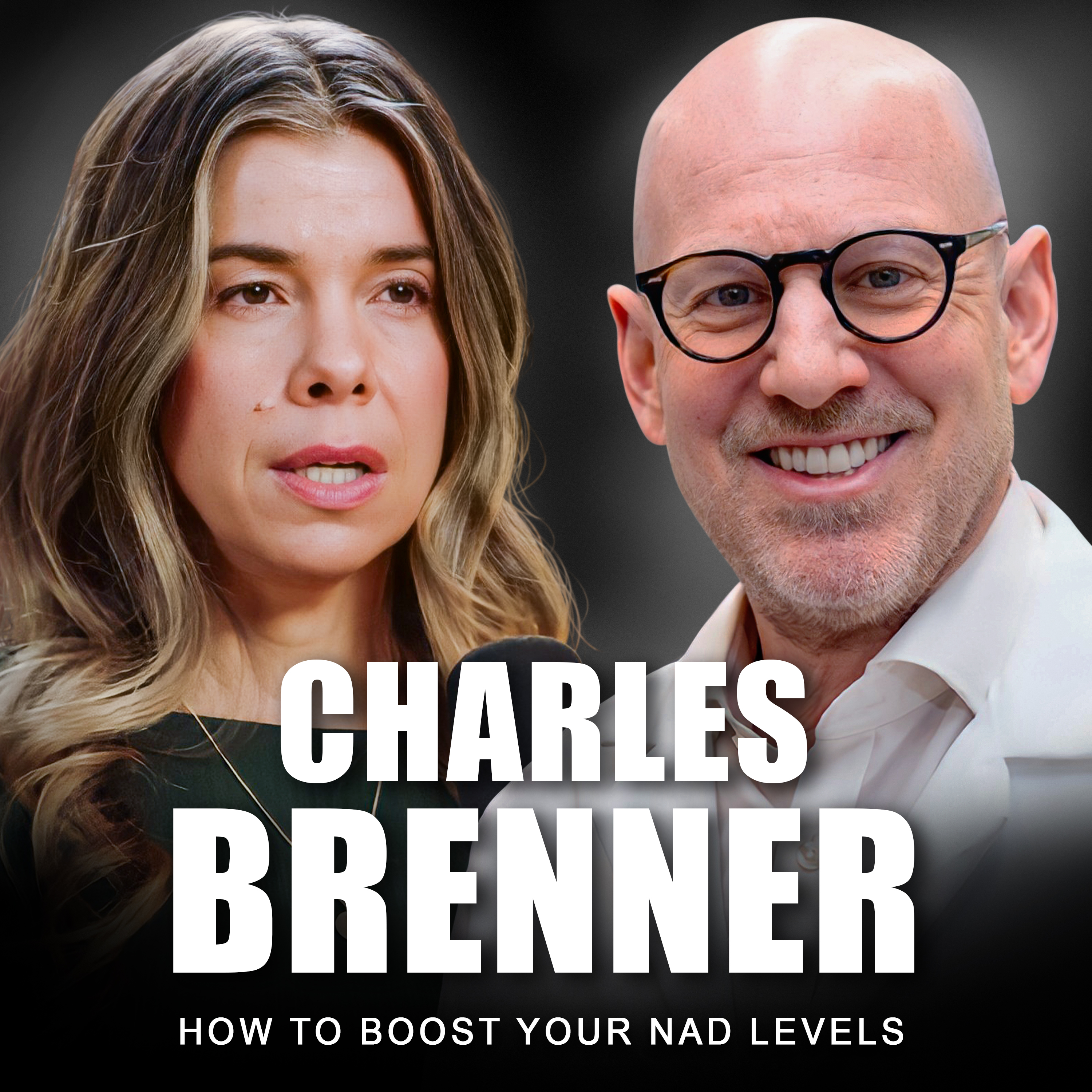
#109 How To Boost NAD Levels To Fight Inflammation, Improve Recovery, and Slow Aging | Dr. Charles Brenner
<p><a href= "https://www.foundmyfitness.com/aliquot?utm_campaign=charles_brenner_podcast&utm_medium=podcast&utm_source=podcast_description"> Get access to <strong>more than 200 episodes</strong> of my premium podcast (The Aliquot) when you sign up as a FoundMyFitness Premium Member</a></p> <p dir="ltr">Many symptoms attributed to aging are also consistent with chronic inflammatory stress and impaired NAD metabolism. <strong>Dr. Charles Brenner</strong> explains the mechanisms, the human data, and what interventions actually move the needle. He also cuts through the crowded world of NAD boosters, including oral NAD pills, NMN, NR, and NAD IV drips, clarifying what actually raises NAD in humans and what emerging research suggests about NR for lowering inflammation and improving recovery.</p> <p><strong>Timestamps:</strong></p> <ul> <li><strong>(00:00)</strong> Introduction</li> <li><strong>(05:36)</strong> Why disease states disrupt NAD levels</li> <li><strong>(10:20)</strong> How coronavirus infection impacts NAD levels</li> <li><strong>(13:34)</strong> Can diet and supplements artificially inflate NAD levels?</li> <li><strong>(15:27)</strong> Why blood NAD might not show the full picture</li> <li><strong>(16:59)</strong> How obesity and insulin resistance drain NAD resources</li> <li><strong>(19:40)</strong> Does poor sleep disrupt NAD levels?</li> <li><strong>(20:32)</strong> The anti-inflammatory effects of nicotinamide riboside (NR)</li> <li><strong>(25:17)</strong> Can a single lifestyle change restore NAD?</li> <li><strong>(28:01)</strong> Cognitive benefits of NAD precursors</li> <li><strong>(31:37)</strong> Should you measure your NAD levels?</li> <li><strong>(34:37)</strong> Does exercise boost NAD—and if so, which type?</li> <li><strong>(36:39)</strong> Can NAD precursors speed exercise recovery?</li> <li><strong>(39:14)</strong> Is acute sleep loss enough to lower NAD?</li> <li><strong>(40:46)</strong> Does NR supplementation during pregnancy benefit offspring?</li> <li><strong>(45:21)</strong> Safety of nicotinamide riboside during pregnancy</li> <li><strong>(47:27)</strong> Could NR supplementation support fertility?</li> <li><strong>(48:37)</strong> Shift work and jet lag—can NAD precursors help?</li> <li><strong>(51:19)</strong> Morning or night—when should you take NR?</li> <li><strong>(54:20)</strong> NAD supplements vs. precursors—what actually boosts NAD?</li> <li><strong>(58:07)</strong> NAD IV drips—real benefits or just hype?</li> <li><strong>(59:15)</strong> Oral vs. IV nicotinamide riboside—what's more effective?</li> <li><strong>(1:00:44)</strong> Do oral NAD supplements genuinely raise NAD levels?</li> <li><strong>(1:02:37)</strong> NMN vs. NR—does being 'one step closer' really matter?</li> <li><strong>(1:05:44)</strong> Does the gut microbiome influence NAD production?</li> <li><strong>(1:08:22)</strong> Could NR supplementation enhance immune function?</li> <li><strong>(1:11:41)</strong> Can NR supplementation improve peripheral artery disease?</li> <li><strong>(1:16:05)</strong> Can NR realistically reduce liver fat?</li> <li><strong>(1:21:12)</strong> Does NR supplementation give athletes a recovery edge?</li> <li><strong>(1:22:57)</strong> What's a safe dosage for nicotinamide riboside?</li> <li><strong>(1:25:00)</strong> Resveratrol and pterostilbene—beneficial pairing or pointless stack?</li> <li><strong>(1:26:35)</strong> NAD precursor supplements—why sourcing matters</li> <li><strong>(1:28:48)</strong> Do NAD precursors increase cancer risk?</li> <li><strong>(1:34:34)</strong> Is NR worth supplementing for healthy individuals?</li> <li><strong>(1:38:56)</strong> From enzyme nerd to NAD pioneer (Brenner's origin story)</li> <li><strong>(1:43:26)</strong> Simplifying NAD's role in energy and repair</li> <li><strong>(1:50:13)</strong> Why DNA repair depends heavily on NAD</li> <li><strong>(1:52:03)</strong> The PARP/NAD-consumption mechanism</li> <li><strong>(1:54:42)</strong> NAD's role in gene regulation</li> <li><strong>(1:57:02)</strong> Why NAD shortages hit the brain hardest</li> </ul> <p><a href= "https://www.foundmyfitness.com/episodes/charles-brenner?utm_campaign=charles_brenner_podcast&utm_medium=podcast&utm_source=podcast_description"> Show notes are available by clicking here</a></p> <p><a href="https://www.youtube.com/watch?v=ELcVYRJJdK4">Watch this episode on YouTube</a></p>
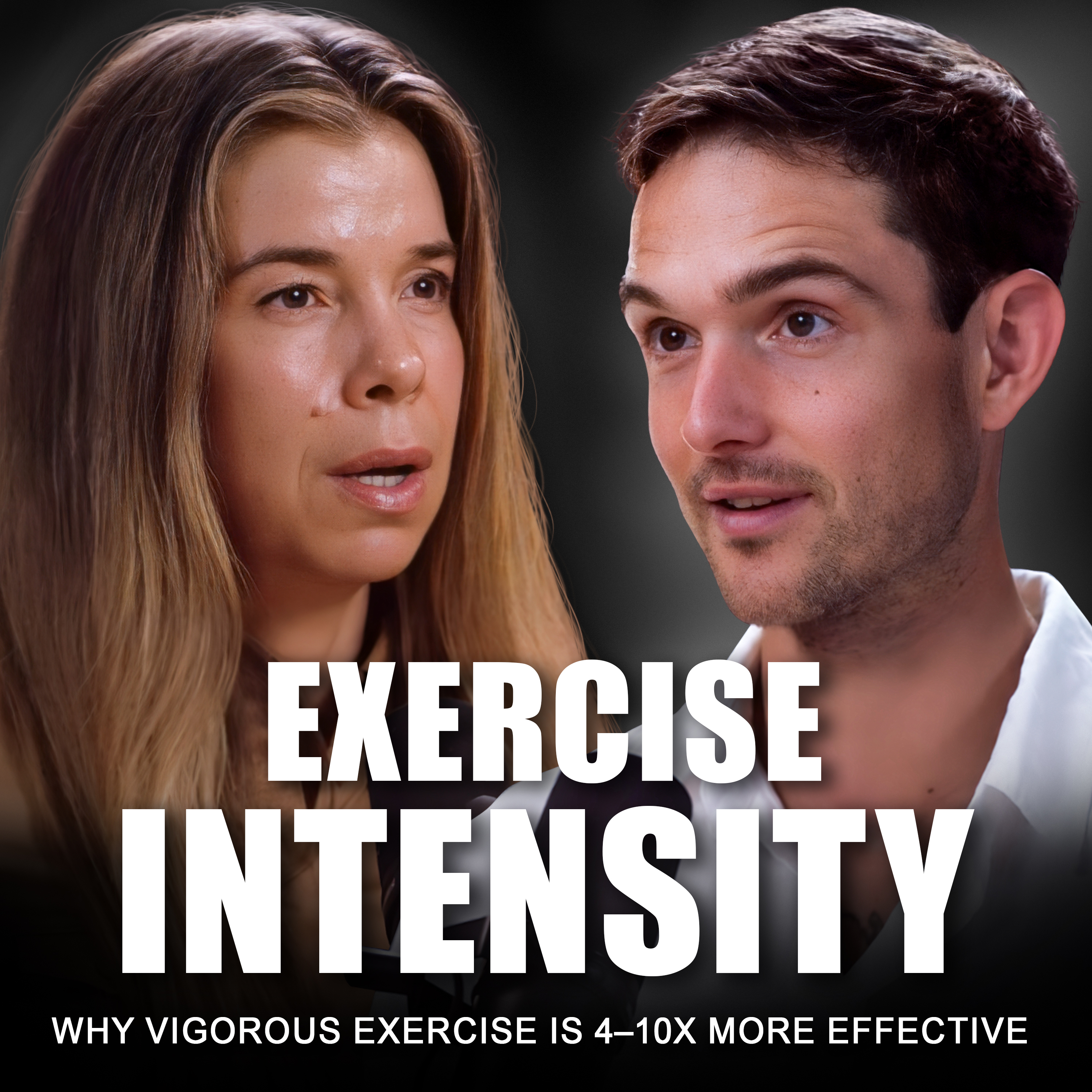
#108 The Best Type of Exercise for Longevity
<p><a href= "https://www.foundmyfitness.com/aliquot?utm_campaign=exercise_intensity_podcast&utm_medium=podcast&utm_source=podcast_description"> Get access to <strong>more than 200 episodes</strong> of my premium podcast (The Aliquot) when you sign up as a FoundMyFitness Premium Member</a></p> <p><a href="https://howtotrainguide.com/"><strong id= "docs-internal-guid-80a6590d-7fff-7e57-5350-88250b1f7732">Download my "How to Train According to the Experts" guide</strong></a></p> <p dir="ltr">One minute of vigorous exercise may be worth up to ten minutes of "moderate" cardio for extending lifespan and preventing chronic disease. In this Journal Club episode, Rhonda Patrick, PhD and endurance athlete Brady Holmer dissect a new Nature Communications study of more than 70,000 adults showing that vigorous intensity is roughly 4–10x more potent than moderate activity for reducing all-cause mortality, cardiovascular events, type 2 diabetes, and cancer outcomes—far beyond the long-standing 1:2 rule embedded in global exercise guidelines.</p> <p><strong>Timestamps:</strong></p> <ul> <li><strong>(00:00)</strong> Introduction</li> <li><strong>(07:01)</strong> What exactly is the 1:2 rule for exercise intensity?</li> <li><strong>(08:18)</strong> Calorie burn vs. longevity—origins of the 1:2 rule</li> <li><strong>(11:15)</strong> What counts as 'vigorous' exercise, really?</li> <li><strong>(13:35)</strong> Where the exercise guidelines fall short</li> <li><strong>(14:19)</strong> Can your wearable predict disease risk years in advance?</li> <li><strong>(20:11)</strong> Is vigorous activity easier to achieve than people think?</li> <li><strong>(22:47)</strong> How researchers avoided the 'healthy user bias'</li> <li><strong>(23:59)</strong> Health equivalence ratio—a better way to measure exercise benefits?</li> <li><strong>(25:45)</strong> Is vigorous exercise truly 4–10x more effective?</li> <li><strong>(29:55)</strong> Can one vigorous minute match an hour of gentle walking?</li> <li><strong>(32:02)</strong> Why vigorous activity—not gentle—offers dose-dependent benefits</li> <li><strong>(33:50)</strong> Is vigorous exercise 5x better at preventing heart attacks & strokes?</li> <li><strong>(34:24)</strong> Why vigorous activity stands out for cancer prevention</li> <li><strong>(34:59)</strong> Does zone 2 qualify as vigorous exercise?</li> <li><strong>(36:11)</strong> Dose-response comparison—vigorous vs. moderate vs. light activity</li> <li><strong>(37:22)</strong> Is vigorous exercise the secret to younger arteries?</li> <li><strong>(43:15)</strong> Why aging hearts need intensity</li> <li><strong>(46:09)</strong> Can vigorous exercise halt your VO₂ max decline?</li> <li><strong>(47:26)</strong> Why moderate exercise alone might not improve VO₂ max</li> <li><strong>(49:21)</strong> Is vigorous exercise 10x more powerful at preventing diabetes?</li> <li><strong>(55:48)</strong> Mitochondrial biogenesis—why intensity is essential</li> <li><strong>(58:40)</strong> Can you directly measure mitochondrial health?</li> <li><strong>(1:00:57)</strong> Does vigorous exercise kill circulating tumor cells?</li> <li><strong>(1:07:15)</strong> Why vigorous intensity triggers beneficial hormone changes</li> <li><strong>(1:08:05)</strong> Can vigorous activity protect older adults from falls?</li> <li><strong>(1:12:36)</strong> Does vigorous exercise combat inflammation?</li> <li><strong>(1:14:29)</strong> Is high-intensity training the key to a younger brain?</li> <li><strong>(1:16:01)</strong> Is vigorous exercise more powerful than we realized?</li> <li><strong>(1:17:50)</strong> Can the benefits of vigorous exercise fit into a pill?</li> <li><strong>(1:19:08)</strong> How small doses of intensity might extend your lifespan</li> <li><strong>(1:23:15)</strong> Do short bursts of vigorous movement match full workouts?</li> <li><strong>(1:27:26)</strong> Why your wearable might undervalue short vigorous bouts</li> <li><strong>(1:30:06)</strong> Can planned micro-workouts replace traditional gym sessions?</li> <li><strong>(1:35:10)</strong> Why exercise guidelines urgently need updating</li> <li><strong>(1:46:35)</strong> Does light activity still offer real benefits?</li> <li><strong>(1:49:04)</strong> Is vigorous exercise safe for older adults?</li> <li><strong>(1:53:28)</strong> Are high-intensity workouts detrimental to female hormones?</li> <li><strong>(1:58:02)</strong> Safe vigorous exercise options—even with chronic illness</li> <li><strong>(1:59:05)</strong> The 80/20 rule for balancing intensity and recovery</li> <li><strong>(2:01:30)</strong> Inside Brady's routine—how much vigorous exercise is optimal?</li> <li><strong>(2:05:17)</strong> Can vigorous activity boost kids' brainpower (and grades)?</li> <li><strong>(2:08:14)</strong> Are we significantly underestimating vigorous exercise benefits?</li> <li><strong>(2:10:03)</strong> Why chasing steps isn't the answer</li> </ul> <p><a href= "https://www.foundmyfitness.com/episodes/exercise-intensity?utm_campaign=exercise_intensity_podcast&utm_medium=podcast&utm_source=podcast_description"> Show notes are available by clicking here</a></p> <p><a href="https://www.youtube.com/watch?v=QnloZ45PVxQ">Watch this episode on YouTube</a></p>
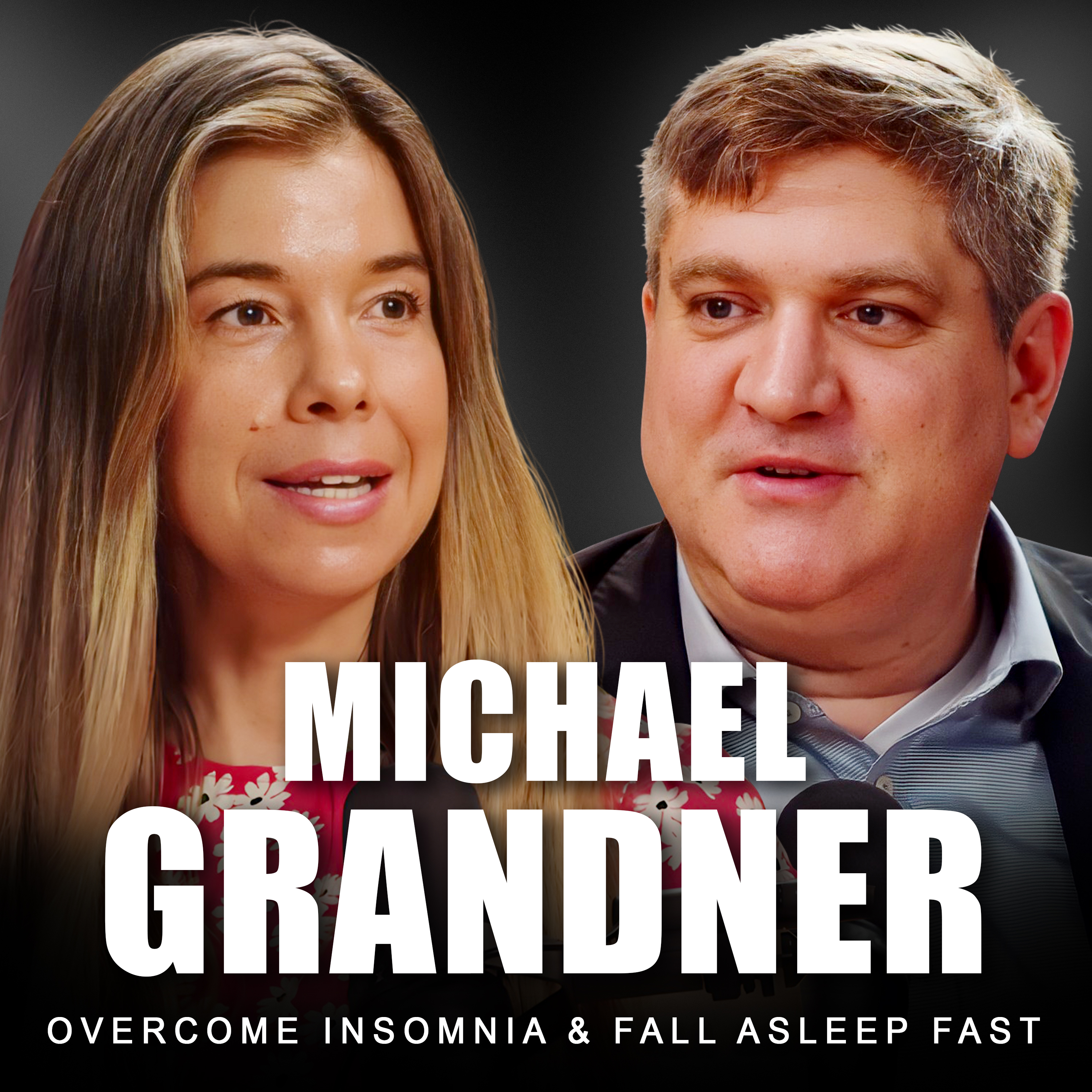
#107 Why You Can't Sleep (and How to Fix It) | Dr. Michael Grandner
<p><a href= "https://www.foundmyfitness.com/ask-me-anything?utm_campaign=michael_grandner_podcast&utm_medium=podcast&utm_source=podcast_description"> Get access to <strong>more than 70 Ask Me Anything episodes</strong> with Dr. Rhonda Patrick when you sign up as a FoundMyFitness Premium Member</a></p> <p dir="ltr">Chronic insomnia and untreated sleep apnea profoundly accelerate cognitive decline, impair performance, and diminish resilience. In this episode, <strong>Dr. Michael Grandner</strong> outlines practical, scientifically validated interventions, including CBT-I and stimulus control strategies, to retrain your body for consistently restorative sleep. He provides critical insights into detecting hidden sleep apnea and explains how precise timing of morning light, caffeine, and supplements like melatonin can dramatically enhance sleep quality and daytime performance. Dr. Grandner also shares actionable tips for falling asleep faster, managing nighttime awakenings, and provides an honest look at the accuracy and pitfalls of sleep trackers.<strong><br /></strong></p> <p dir="ltr"><strong>Timestamps:</strong></p> <ul> <li><strong>(00:00)</strong> Introduction</li> <li><strong>(04:45)</strong> Poor sleep vs. insomnia—how can you tell?</li> <li><strong>(07:11)</strong> Does stressing about sleep make insomnia worse?</li> <li><strong>(13:41)</strong> CBT-I's real target—wakefulness, not sleepiness</li> <li><strong>(16:11)</strong> Why your bed should be reserved strictly for sleep</li> <li><strong>(20:23)</strong> Can trying too hard to sleep backfire?</li> <li><strong>(21:38)</strong> Scrolling yourself awake? Try standing instead</li> <li><strong>(24:59)</strong> What should you do if you can't fall back asleep?</li> <li><strong>(27:51)</strong> Why effort keeps you awake</li> <li><strong>(29:30)</strong> Sleep restriction therapy—worst name, best solution?</li> <li><strong>(32:10)</strong> Can you train yourself to fall asleep faster?</li> <li><strong>(34:52)</strong> Why bedtime cliffhangers sabotage sleep</li> <li><strong>(36:32)</strong> Sedatives vs. CBT-I—which beats insomnia better?</li> <li><strong>(40:45)</strong> Insomnia by the numbers—is it affecting you?</li> <li><strong>(42:06)</strong> Why sleep apnea is shockingly common (and often unnoticed)</li> <li><strong>(45:44)</strong> Is nighttime waking a hidden sign of sleep apnea?</li> <li><strong>(51:50)</strong> Are at-home sleep apnea tests reliable?</li> <li><strong>(53:22)</strong> Allergies vs. sleeping position—what causes sleep apnea?</li> <li><strong>(56:05)</strong> What actually happens during REM and deep sleep?</li> <li><strong>(1:04:33)</strong> Are dreams your brain's way of decoding life?</li> <li><strong>(1:08:50)</strong> How apnea destroys sleep architecture</li> <li><strong>(1:10:20)</strong> Does untreated sleep apnea raise Alzheimer's risk?</li> <li><strong>(1:13:19)</strong> How poor sleep disrupts attention and memory</li> <li><strong>(1:16:36)</strong> Effective CPAP alternatives</li> <li><strong>(1:20:39)</strong> Mouth taping—sleep hack or hype?</li> <li><strong>(1:22:42)</strong> Measuring sleep apnea treatment success</li> <li><strong>(1:24:45)</strong> Advanced sleep hygiene for chaotic schedules</li> <li><strong>(1:28:13)</strong> Do blue-blocking glasses actually enhance sleep?</li> <li><strong>(1:28:58)</strong> Why morning light is key</li> <li><strong>(1:33:45)</strong> Should you delay your morning cup of coffee?</li> <li><strong>(1:37:43)</strong> Why consistent mornings are crucial—even if bedtime isn't</li> <li><strong>(1:41:14)</strong> Are you losing sleep to "revenge bedtime procrastination"?</li> <li><strong>(1:46:01)</strong> Why 5 mg of melatonin might be too much</li> <li><strong>(1:53:38)</strong> Do melatonin supplements contain more than advertised?</li> <li><strong>(1:56:31)</strong> Can melatonin boost your immune system?</li> <li><strong>(1:57:26)</strong> Debunking melatonin supplement safety myths</li> <li><strong>(2:01:48)</strong> Do magnesium, glycine, and L-theanine actually help sleep?</li> <li><strong>(2:04:49)</strong> Why glutamine and B12 might keep you awake</li> <li><strong>(2:06:21)</strong> THC and REM suppression—the hidden costs</li> <li><strong>(2:12:48)</strong> Does CBD genuinely improve sleep quality?</li> <li><strong>(2:15:21)</strong> Alcohol as a sleep aid—more harm than good?</li> <li><strong>(2:18:18)</strong> How late is too late for caffeine?</li> <li><strong>(2:22:31)</strong> Why staying up late leads to unhealthy eating</li> <li><strong>(2:27:21)</strong> Is shift work more harmful than smoking?</li> <li><strong>(2:31:04)</strong> What's the ideal power nap length?</li> <li><strong>(2:32:50)</strong> Strategic napping advice for shift workers</li> <li><strong>(2:34:58)</strong> Optimal caffeine timing for shift workers</li> <li><strong>(2:35:31)</strong> The fastest way to adjust to a new time zone</li> <li><strong>(2:41:02)</strong> How exercise and light help beat jet lag</li> <li><strong>(2:43:34)</strong> Can sleep trackers accurately detect wakefulness?</li> <li><strong>(2:47:09)</strong> Sleep stage tracking—useful data or misleading?</li> <li><strong>(2:51:36)</strong> Should you trust your wearable's sleep score?</li> <li><strong>(2:55:54)</strong> How to use sleep tracker data effectively</li> <li><strong>(3:01:08)</strong> Evening habits elevating your heart rate</li> <li><strong>(3:03:11)</strong> Troubleshooting insufficient REM and deep sleep</li> <li><strong>(3:06:07)</strong> Is your sleep tracker doing more harm than good?</li> <li><strong>(3:10:25)</strong> Does better sleep boost cognitive resilience?</li> <li><strong>(3:12:54)</strong> Why school start times clash with teen biology</li> <li><strong>(3:15:32)</strong> Shifting your circadian rhythm with light and exercise</li> <li><strong>(3:17:38)</strong> Can 15 minutes extra sleep boost athletic performance?</li> <li><strong>(3:19:48)</strong> Is "sleep banking" a competitive game-changer?</li> <li><strong>(3:22:15)</strong> Does poor sleep predict injury risk?</li> <li><strong>(3:27:12)</strong> Why caffeine isn't enough to overcome poor sleep</li> <li><strong>(3:28:50)</strong> Do eye masks and earplugs significantly improve sleep?</li> <li><strong>(3:30:27)</strong> Proven techniques to fall asleep faster</li> <li><strong>(3:32:24)</strong> Does reading before bed shorten sleep onset?</li> <li><strong>(3:33:14)</strong> Can't fall back asleep? Try this</li> <li><strong>(3:34:16)</strong> One proven strategy for deeper sleep</li> <li><strong>(3:35:40)</strong> Reducing nighttime urination awakenings</li> <li><strong>(3:37:23)</strong> Is sharing a bed disrupting your sleep?</li> <li><strong>(3:39:02)</strong> How to tell if you're truly sleeping enough</li> <li><strong>(3:40:40)</strong> Do you really need 8 hours of sleep?</li> <li><strong>(3:41:55)</strong> Adjusting your routine to your chronotype</li> </ul> <p><a href= "https://www.foundmyfitness.com/episodes/michael-grandner?utm_campaign=michael_grandner_podcast&utm_medium=podcast&utm_source=podcast_description"> Show notes, transcript, and summary are available by clicking here</a></p> <p><a href="https://youtu.be/AQF_eopP1ys">Watch this episode on YouTube</a></p>