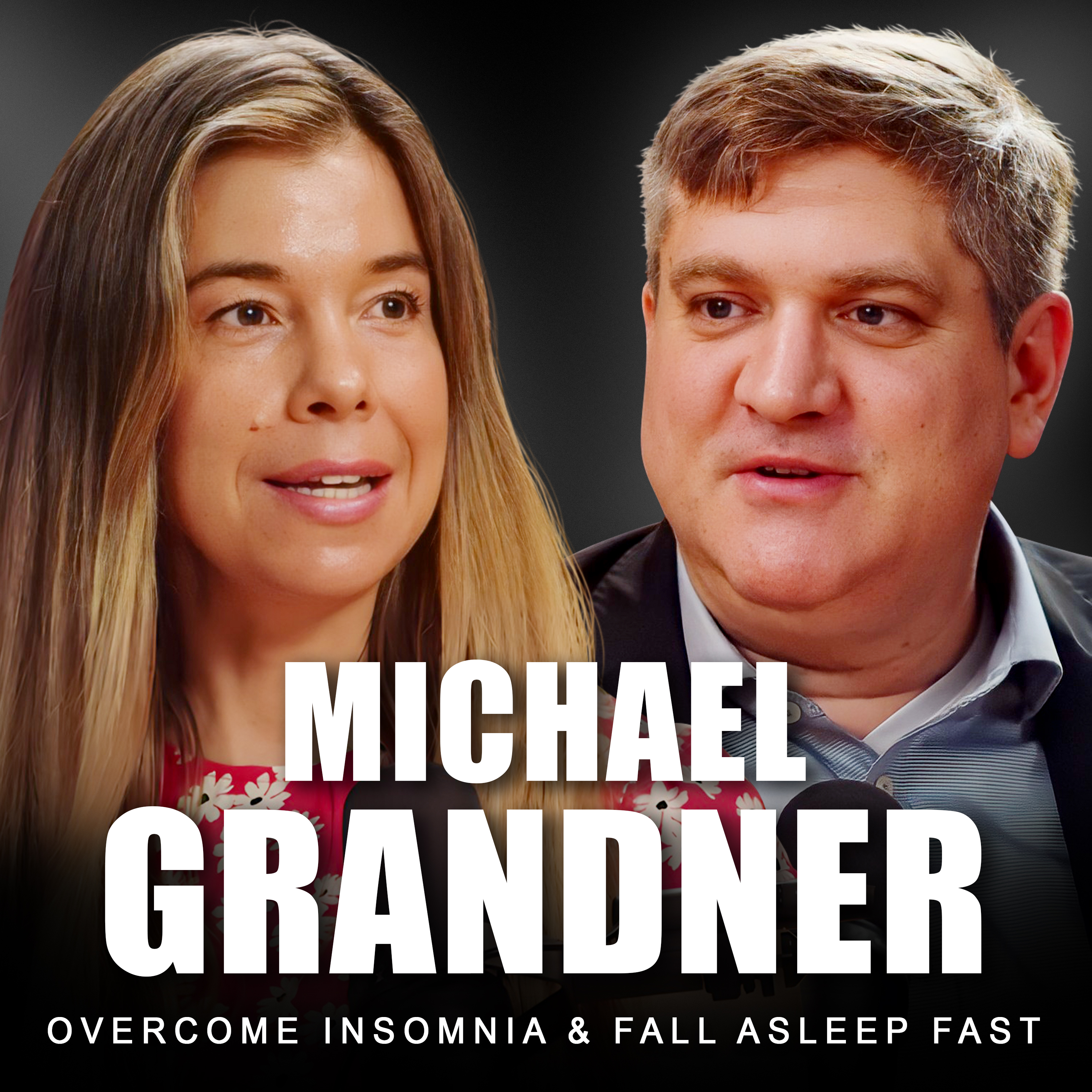
Overview of #107 Why You Can't Sleep (and How to Fix It) — Rhonda Patrick with Dr. Michael Grandner
This episode is a deep, practical exploration of sleep science and sleep medicine with Dr. Michael Grandner (University of Arizona). It explains why people can’t sleep (acute vs chronic insomnia, conditioned arousal), why cognitive behavioral therapy for insomnia (CBT‑I) is the first‑line treatment, and gives evidence‑based, actionable protocols for common problems (falling asleep, middle‑of‑night awakenings, sleep apnea, shift work, jet lag). The conversation also covers supplements and substances (melatonin, THC/CBD, alcohol, caffeine, magnesium/glycine), advanced sleep hygiene techniques (morning light, temperature, routines), use and limits of consumer wearables, and how sleep manipulation affects athletic and cognitive performance.
Key takeaways (quick)
- Insomnia disorder (clinical) ≠ occasional bad night(s): clinical insomnia = difficulty initiating/maintaining sleep or early awakening, ≥3 nights/week, ≥3 months, with daytime impairment, and with adequate time opportunity to sleep. A practical behavioral threshold is ~30 minutes to fall asleep or to stay awake during a night awakening.
- Chronic insomnia often becomes self‑sustaining via conditioned arousal: the bed (and the act of trying to sleep) becomes associated with stress/activation.
- CBT‑I is the gold standard for chronic insomnia because it targets conditioned arousal (stimulus control, sleep restriction, cognitive restructuring, relaxation). It works for many populations (cancer survivors, athletes, chronic pain) and is durable.
- Wearables are useful but limited: sleep/wake (actigraphy) and heart‑rate measures are reasonably reliable; sleep staging and proprietary “readiness” scores are noisy and should be interpreted cautiously.
- Sleep apnea is very common (especially in men and with higher BMI), often presents non‑obviously (fragmented “shallow” sleep, waking with gasping/snorting, mid‑night awakenings that later become “stress”), and is treatable by CPAP and several non‑CPAP options (oral appliances, positional therapy, myofunctional therapy, hypoglossal nerve stimulators).
- Simple, high‑impact behavior tweaks: make bed = sleep (and sex) only; protect sleep environment; get bright morning light + daytime outdoor exposure; avoid blue/bright light in evening; time caffeine and alcohol strategically.
- Melatonin is primarily a circadian “night signal” (not a sedative). Low doses (≈0.3–0.5 mg) given hours before desired bedtime can phase‑shift the clock; higher doses (1–5+ mg) close to bedtime can help sleep onset but risk morning grogginess and variability across products.
- Substances: THC can help short‑term but tolerance, REM suppression and withdrawal/rebound nightmares are real risks; CBD evidence is mixed; alcohol initially sedates but fragments/activates later; caffeine peaks ~30 min and often recommended no later than 4–6 hours before sleep (and consider waiting ≈1 hour after waking to drink coffee).
- For performance: “sleep banking” (good sleep in the days before contest) matters more than the single night before; naps can be powerful (short power naps vs full‑cycle replacement naps).
Insomnia — cause, mechanism, clinical criteria
- Acute insomnia: many triggers (stress, illness, travel). Evolutionarily useful.
- Chronic insomnia: usually one primary mechanism — conditioned arousal. The cycle:
- An acute trigger causes poor sleep.
- Effort to fall back asleep and repeated arousals create predictable stress in bed.
- The brain learns “bed = struggle,” increasing arousal and perpetuating insomnia.
- Clinical criteria (useful checklist):
- Difficulty initiating/maintaining sleep or early awakening
- ≥3 nights/week
- Duration ≥3 months (chronic)
- Daytime impairment
- Adequate opportunity/time for sleep
- Rule of thumb: sleep latency or nighttime awake time ≥ ~30 minutes is a red flag
Notable quote: “The enemy of sleep is effort.” — trying harder to sleep often worsens it.
CBT‑I: components and why it works
- Main mechanisms: reduce conditioned arousal and re‑train associations between bed and sleep.
- Core tools:
- Stimulus control (bed = sleep/sex; get out of bed if not sleeping; keep bed just for sleep)
- Sleep restriction / restriction of time in bed (compress time in bed to approximate actual sleep, then titrate up)
- Cognitive strategies (reduce worry/performance anxiety about sleep)
- Sleep hygiene (but hygiene alone is rarely sufficient for insomnia)
- Relaxation techniques
- Practical stimulus‑control rules (simple checklist):
- Go to bed only when sleepy and intending to sleep.
- Use the bed only for sleep and sex (no work, scrolling, TV in bed).
- If you can’t sleep within ~20–30 minutes, get out of bed, do a quiet non‑stimulating activity (sitting up, standing, dim light), then return when sleepy.
- Wake at the same time each morning (consistency) regardless of sleep duration.
- Sleep restriction concept (practical):
- If time in bed >> actual sleep (e.g., 8 h in bed, 6 h asleep), limit time in bed initially to the average sleep (6 h), then increase gradually when sleep efficiency improves.
- This “drives sleep pressure” and reduces time awake in bed; short term may temporarily reduce total sleep as behavior adjusts.
Efficacy: CBT‑I is highly effective (≈80–85% show marked improvement in trials). It can be practiced with a trained clinician, via telehealth or validated online programs for many people.
Practical protocols — falling asleep and middle‑of‑night awakenings
- Falling asleep:
- Apply stimulus control (bed = sleep). Avoid screens in bed; if you must use a phone, sit up or stand next to bed to preserve the bed→sleep association.
- Wind‑down routine: dim orange/red lights for at least ~30 minutes; prefer low‑arousal activities (reading paper book, light stretching, breathing exercises).
- If going to bed earlier than usual, use stimulus control and/or gradual bedtime shifts (e.g., 15‑minute earlier increments) to avoid conditioned arousal.
- Middle‑of‑night awakening:
- Don’t panic — stress increases arousal and prolongs the awakening.
- If you can’t fall back asleep in a few minutes, get out of bed for brief, low‑stimulus activity (drink water, sit up), then return when sleepy.
- Surrendering control (accepting you may be awake briefly) often resolves awakenings faster than trying harder.
- Consider medical causes (pain, reflux, sleep apnea, environmental factors) if awakenings are frequent and disruptive.
Sleep apnea — prevalence, non‑obvious signs, testing, and treatment options
- Prevalence:
- Very common. Rough estimates: ~1 in 4–5 men >30 may have sleep‑related breathing issues; women less but still common; increases with BMI and age.
- Mild disease is common; severe disease (≥30 events/hr) is strongly associated with cardiometabolic and neurodegenerative risk.
- Non‑obvious presentations:
- Not everyone reports daytime sleepiness. Common clues:
- “Shallow” or fragmented sleep; frequent brief awakenings you remember
- Waking with gasping/snorting or with sudden arousals that later become "stress"
- Feeling unrefreshed despite apparently “enough” time in bed
- Middle‑of‑night awakenings that escalate into rumination
- Not everyone reports daytime sleepiness. Common clues:
- Testing:
- Home sleep apnea testing is now common and often sufficient for most suspected obstructive sleep apnea (measures airflow/respiration/SpO2/position).
- Lab polysomnography reserved for complex cases (narcolepsy, limb movement disorder, inconclusive home tests, complicated medical conditions).
- Treatments:
- CPAP: most effective but adherence can be poor (blunt instrument that keeps airway open with positive pressure).
- Mandibular advancement devices (oral appliances): push jaw forward, effective especially for mild/moderate OSA; work well in many athletes.
- Positional therapy (e.g., vibratory or “tennis ball” approaches; modern belts) for supine‑dominant apnea.
- Myofunctional/training exercises (tongue and airway muscle training; didgeridoo breathing studies showed benefit in some).
- Hypoglossal nerve stimulators (Inspire®) — implantable device for selected patients.
- Mouth taping/chin straps: reasonable for patients who mouth‑breathe but contraindicated if the mouth opening is compensatory for airway obstruction (i.e., if they need to open mouth to breathe).
- Re‑test after treatment to confirm effectiveness (home or lab).
Why apnea matters: OSA fragments sleep, reduces slow‑wave and REM sleep, generates intermittent hypoxia/oxidative stress and inflammatory responses — links to hypertension, arrhythmia, metabolic disease, and likely neurodegeneration.
Sleep architecture — stages and why they matter
- Broad overview:
- Stage 1: very light transition sleep.
- Stage 2: the majority of normal sleep (procedural maintenance/“vanilla” sleep).
- Stage 3: slow‑wave/deep sleep (highest arousal threshold; linked to physical recovery, growth hormone, synaptic homeostasis).
- REM: active brain state (dreaming), muscle atonia; associated with emotional memory processing and synaptic strengthening.
- Effects of fragmentation/OSA:
- OSA reduces deep sleep and REM (especially REM), increases stage‑1/fragmentation, and produces overall shallower sleep. That impacts cognitive function, attention, recovery, and long‑term brain health.
Light, circadian timing, and practical sleep hygiene (advanced)
- Morning light:
- Early, bright outdoor light (15–30+ minutes) is highly effective: it strengthens circadian amplitude, sets the clock, and “inoculates” you against nighttime light exposure.
- Earlier = generally better; 15–30 minutes outdoors in morning ideal if feasible.
- Evening light:
- Avoid blue/bright light in the 30–60+ minutes before bed. Orange/red glasses (true blue‑blocking) work if you must use screens.
- Dimming lights and consistent wind‑down routines (same order of activities) are powerful cues.
- Temperature: an appropriately cool bedroom and pre‑bed cooling can help sleep onset and quality (thermoregulation is important).
- Predictability: If you can’t keep fixed sleep times (shift work / travel), create predictable routines (e.g., same toothbrush, same pillowcase, same pre‑sleep sequence) that act as conditioned cues.
- Meal timing: late‑night eating tends to be higher‑calorie, palatable, and is associated with worse sleep and metabolic outcomes. Avoid heavy meals close to bedtime; consider a 2–3 hour window before bed where possible.
Supplements and substances — evidence and practical guidance
- Melatonin:
- Not a sedative per se; a “darkness”/circadian signal.
- Low doses used as a clock‑shift: ~0.3–0.5 mg (often given 1.5–5 hours before desired bedtime) can phase‑advance evening melatonin onset. This is a small “clock” signal dose.
- Higher doses (1–5+ mg) near bedtime can help sleep onset for some, but risks: morning grogginess, variability across products, and product quality concerns. Start low; if groggy next day, halve the dose.
- Many OTC products contain overage to ensure label amount at expiry — product content varies; prefer reputable brands and lower doses for phase shifting.
- Magnesium / glycine:
- Modest evidence for improving sleep onset/quality in some people. Glycine has small but consistent effects on sleep onset and subjective quality.
- Valerian:
- Some sedating effects; pooled insomnia data do not show superiority vs placebo for treating chronic insomnia.
- CBD / THC:
- THC: reliably sleep‑promoting short term (falls asleep faster, may increase perceived refreshment early), but tolerance, REM suppression, and withdrawal (REM rebound, nightmares) are common. Can impair coordination/decision‑making (athletes: injury risk).
- CBD: mixed evidence; may help anxiety which secondarily helps sleep in some people. Dosing and timing effects inconsistent.
- Alcohol:
- Improves sleep onset but fragments sleep later (metabolic rebound, awakenings). Not a recommended sleep aid.
- Caffeine:
- Peaks ~30 minutes after ingestion; effects last several hours (typical advice: avoid within 4–6 hours of bedtime, but some people need longer). Consider waiting ~60 minutes after waking to have coffee (early light + wakefulness may already be restoring alertness; delay avoids using caffeine for normal sleep inertia).
- Supplements research caveat:
- High‑quality studies are scarce (cost, lack of patentable IP, limited funding). Most claims are weak or mixed; use cautiously and assess individual response.
Shift work and jet lag — practical strategies
- Shift work:
- Permanent, consistent shifts are less harmful than rotating schedules. Repeated shifting is especially deleterious.
- Use strategic light, exercise, and melatonin to adapt if you are trying to permanently switch to night schedule (start morning darkness + daytime sleep routines).
- Use naps & food planning: healthy, palatable night‑snacks and scheduled caffeine (front‑load caffeine early in the shift; avoid late‑shift caffeine).
- Jet lag:
- Shift your behavior to local destination time as soon as you board (think in destination time).
- Morning light and daytime outdoor exposure at destination accelerate re‑entrainment; exercise is an activating daytime signal.
- Use timed low‑dose melatonin for phase‑shifting (small dose hours before desired bedtime) and avoid naps early in adaptation.
- Where possible, schedule flights to land in local morning and try to stay awake until local bedtime.
Wearables: what to trust, what to treat cautiously, and how to use them
- Strengths:
- Actigraphy/motion = surprisingly effective for sleep/wake classification (minute‑by‑minute sleep vs wake ≈ ~90% accuracy vs polysomnography for detection of sleep/wake).
- Heart rate and HR variability from wrist PPG are typically good quality measures and helpful for detecting strangeness (nighttime elevation, spikes).
- Useful for longitudinal trends (weekly/monthly), detecting fragmentation, and measuring response to interventions.
- Limitations:
- Sleep staging (light/deep/REM) from wrist are approximations — expect ~60–80% accuracy depending on device and person; do not treat staging minutes as gold standard.
- Proprietary composite “sleep scores” or “readiness” metrics are often proprietary, poorly validated, and sometimes marketed without transparent validation — interpret cautiously.
- Small single‑night anomalies are often noise; focus on trends and context.
- Actionable way to use wearable data:
- Use sleep/wake continuity to detect fragmentation and large awakenings.
- Use heart rate/HRV trends to see whether your night shows elevated activation (sustained HR) or spikes that could indicate arousal/apneas.
- Re‑test after interventions (oral appliance, positional therapy, CPAP, mattress change).
- If wearable suggests severe fragmentation or oxygen dips, seek clinical evaluation (home sleep test or clinic).
- Orthosomnia:
- Excessive focus on device metrics can create performance anxiety and worsen sleep; if data triggers anxiety/obsession, consider removing device or consulting a clinician/CBT‑I specialist.
Napping & performance: practical nap protocols
- Power nap: 10–20 minutes — alertness/attention boost without deep sleep inertia.
- Full‑cycle (“sleep replacement”) nap: ~90–120 minutes — allows one full cycle (including deep sleep) if you have the time and need for recovery (useful pre/post late competitions or long travel).
- Timing: avoid napping during your biological night (more likely to enter deep sleep and cause sleep inertia). Short naps earlier in the day are easier to wake from.
Sleep & athletic/cognitive performance — how to prioritize
- “Bank” sleep: multiple nights of adequate sleep before high‑stakes events produces more robust performance and resilience than trying to fix the night before.
- Even modest increases in sleep duration/quality (especially in young athletes) often yield measurable gains in reaction time, strength, decision‑making, and injury prevention.
- Key targets for teams/athletes:
- Stimulus control and a consistent pre‑sleep routine
- Protecting sleep continuity (earplugs/eye masks/individual covers)
- Morning light and scheduled naps as applicable
- Screen and stimulant timing (caffeine, alcohol, THC considerations)
Quick, practical checklist — what to do first (action items)
- If you suspect insomnia disorder (≥3x/week, ≥3 months, daytime impairment): seek CBT‑I (telehealth/board‑certified providers available).
- If you have loud snoring, gasping, unexplained middle‑of‑night arousals, or feeling unrefreshed → get screened for sleep apnea (home test is often fine).
- Stimulus control, starting today:
- Bed = sleep/sex only; get out if not sleeping; consistent wake time.
- Build a predictable wind‑down: dim orange lights 30+ min, low‑arousal activities, avoid intense screens in bed.
- Morning light: 15–30 minutes outside sunlight as early as feasible; pair with activity.
- Time substances: coffee ~wait 60 min after waking; stop caffeine 4–6+ hours before bed (individualize); avoid alcohol and THC for sleep aid; try low‑dose melatonin (0.3–0.5 mg) for circadian shifting (timing matters).
- Use wearables for trends and fragmentation detection — don’t obsess over single‑night staging or proprietary scores.
- If you need an immediate evaluation for breathing problems, ask for a home sleep apnea test or referral to sleep medicine.
Notable quotes from the episode
- “The enemy of sleep is effort.” — Dr. Michael Grandner
- “Sleep is not something you do. Sleep is something that happens to you when the situation allows for it.” — Dr. Michael Grandner
Resources & next steps
- If you have chronic insomnia: look for CBT‑I providers (telehealth available) or validated online CBT‑I programs.
- If you suspect sleep apnea: ask your clinician about a home sleep test or referral to a sleep center; consider positional therapy, oral appliance, or CPAP depending on severity and tolerance.
- If you use wearables: focus on trend data (continuity and HR), not single‑night staging; avoid letting device metrics create anxiety.
If you want, use the actionable checklist above to pick 1–2 changes to implement this week (e.g., stimulus control + morning light) and track subjective sleep and daytime function for 2–4 weeks to judge impact.