a16z Podcast

by Andreessen Horowitz
The a16z Podcast discusses tech and culture trends, news, and the future – especially as ‘software eats the world’. It features industry experts, business leaders, and other interesting thinkers and voices from around the world. This podcast is produced by Andreessen Horowitz (aka “a16z”), a Silicon Valley-based venture capital firm. Multiple episodes are released every week; visit a16z.com for more details and to sign up for our newsletters and other content as well!
Episodes
What Comes After ChatGPT? The Mother of ImageNet Predicts The Future
Fei-Fei Li is a Stanford professor, co-director of Stanford Institute for Human-Centered Artificial Intelligence, and co-founder of World Labs. She created ImageNet, the dataset that sparked the deep learning revolution. Justin Johnson is her former PhD student, ex-professor at Michigan, ex-Meta researcher, and now co-founder of World Labs. Together, they just launched Marble—the first model that generates explorable 3D worlds from text or images. In this episode Fei-Fei and Justin explore why spatial intelligence is fundamentally different from language, what's missing from current world models (hint: physics), and the architectural insight that transformers are actually set models, not sequence models.
Can Community Banks Survive the Next SVB? | ModernFi CEO Paolo Bertolotti and Former Comptroller Gene Ludwig
The former bank regulator who invented deposit networks just revealed why SVB's collapse was inevitable—and why the solution that could have saved them is finally being rebuilt. Gene Ludwig ran the OCC during the Clinton administration, created a half-trillion-dollar market solving a problem his Aunt Betty faced riding buses between banks, then watched his invention fail to save Silicon Valley Bank because the technology, economics, and incentives were fundamentally broken. Now he's partnered with Paolo and ModernFi to build what could become America's eighth systemically important financial utility: a bank-owned consortium that's signing 25 institutions per week and racing to protect the 4.8 trillion in uninsured deposits that make the next crisis inevitable.
Ben Horowitz & Marc Andreessen: Why Silicon Valley Turned Against Defense (And How We’re Fixing It)
Palmer Luckey got fired from Meta for backing the wrong candidate—now he's the hero saving American defense, and that shift tells you everything about how fast the ground moved beneath Silicon Valley's feet. For decades, tech and defense were allies, then came 15 years of hostility so visceral that Google employees revolted over a Pentagon AI contract, and when leadership caved, only three people showed up to hear what border security actually involves. But something broke: COVID exposed our inability to make things, Ukraine revealed wars now iterate in days not decades, and suddenly the Harvard dorm room generation realized the people building satellites and drones weren't just necessary—they were the future, while legacy defense contractors still operate on Soviet-style five-year plans that guarantee cost overruns and obsolescence. Now the question isn't whether Silicon Valley returns to its Cold War roots, but whether America wins by becoming more like China's centralized system or doubles down on the chaotic creativity that built nine of the world's ten most valuable companies in 25 years—and the founders flooding into defense, energy, mining, and manufacturing suggest the second American century is just getting started.
Emmett Shear on Building AI That Actually Cares: Beyond Control and Steering
Emmett Shear, founder of Twitch and former OpenAI interim CEO, challenges the fundamental assumptions driving AGI development. In this conversation with Erik Torenberg and Séb Krier, Shear argues that the entire "control and steering" paradigm for AI alignment is fatally flawed. Instead, he proposes "organic alignment" - teaching AI systems to genuinely care about humans the way we naturally do. The discussion explores why treating AGI as a tool rather than a potential being could be catastrophic, how current chatbots act as "narcissistic mirrors," and why the only sustainable path forward is creating AI that can say no to harmful requests. Shear shares his technical approach through multi-agent simulations at his new company Softmax, and offers a surprisingly hopeful vision of humans and AI as collaborative teammates - if we can get the alignment right.
Can America Win The AI Biotech Race Against China? | Lada Nuzhna & Elliot Hershberg
Two venture capitalists dissect why biotech burns billions while China runs trials in weeks—and why the next Genentech won't look anything like the last one. Elliot Hershberg reveals the "three horsemen" strangling drug development as costs explode to $2.5 billion per approval, while Lada Nuzhna exposes how investigator-initiated trials in Shanghai are rewriting the competitive playbook faster than American founders can file INDs. When the infrastructure that built monoclonal antibodies becomes the commodity threatening to hollow out an entire industry, the only path forward demands inventing medicines that are literally impossible to make without tools that don't exist yet—and they're betting everything on which approach survives.
The Frontier of Spatial Intelligence with Fei-Fei Li
Fei-Fei Li and Justin Johnson are pioneers in AI. While the world has only recently witnessed a surge in consumer AI, they have long been laying the groundwork for the innovations transforming industries today. With the recent launch of Marble, the first product from their company World Labs, we are revisiting this conversation to explore the ideas that started it all. World Labs is focused on spatial intelligence, building Large World Models that can perceive, generate, and interact with the 3D world. Marble brings that vision to life, allowing anyone, from individual creators to major platforms, to generate 3D scenes directly from text or image prompts and turn complex 3D creation into a simple, creative process. In this episode, a16z general partner Martin Casado talks with Fei-Fei and Justin about the journey from early AI winters to the rise of deep learning and multimodal AI. From foundational breakthroughs like ImageNet to the cutting-edge realm of spatial intelligence, they discuss the evolution of the field and what is next for innovation at World Labs.
Rocket Companies CEO: Here’s How to Fix the Housing Crisis
The Empire State Building took 110 days to build—today, changing a window would take two years. Alex Rampell (a16z) and Varun Krishna (Rocket CEO) expose how asset inflation turned housing from the American Dream into a wealth transfer machine where the median homebuyer age jumped from 30 to 38 in just fourteen years. While Silicon Valley burns billions on products people use daily but never pay for, Rocket quietly assembled a $10 billion profit engine and is now buying up the entire housing funnel—from Redfin's 50 million monthly searchers to one in six US mortgages—betting they can crack the code everyone else gave up on: turning a once-in-a-lifetime transaction into an everyday relationship.
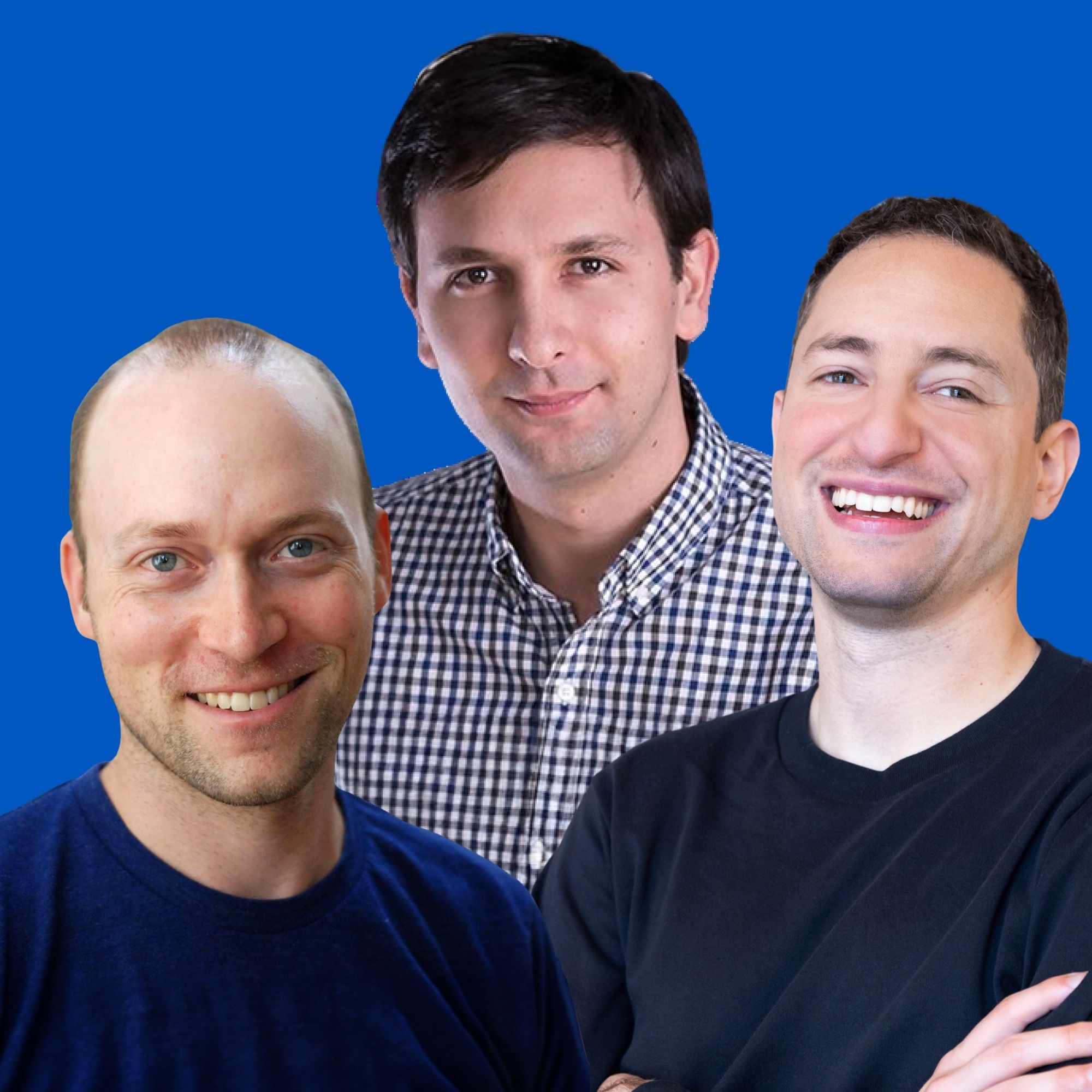
How to Build a Real Estate Marketplace - Kaz Nejatian, Opendoor CEO
Opendoor is trying to make it easier to buy a home. Kaz Nejatian just joined as CEO to help them succeed. In this episode, a16z General Partners Alex Rampell and Erik Torenberg sit down with Kaz to cover all things real estate and marketplaces. They cover Kaz’s vision for Opendoor, the problem with copying the hedge fund model, how to build through economic downturns, and the importance of ambition and long-term thinking.