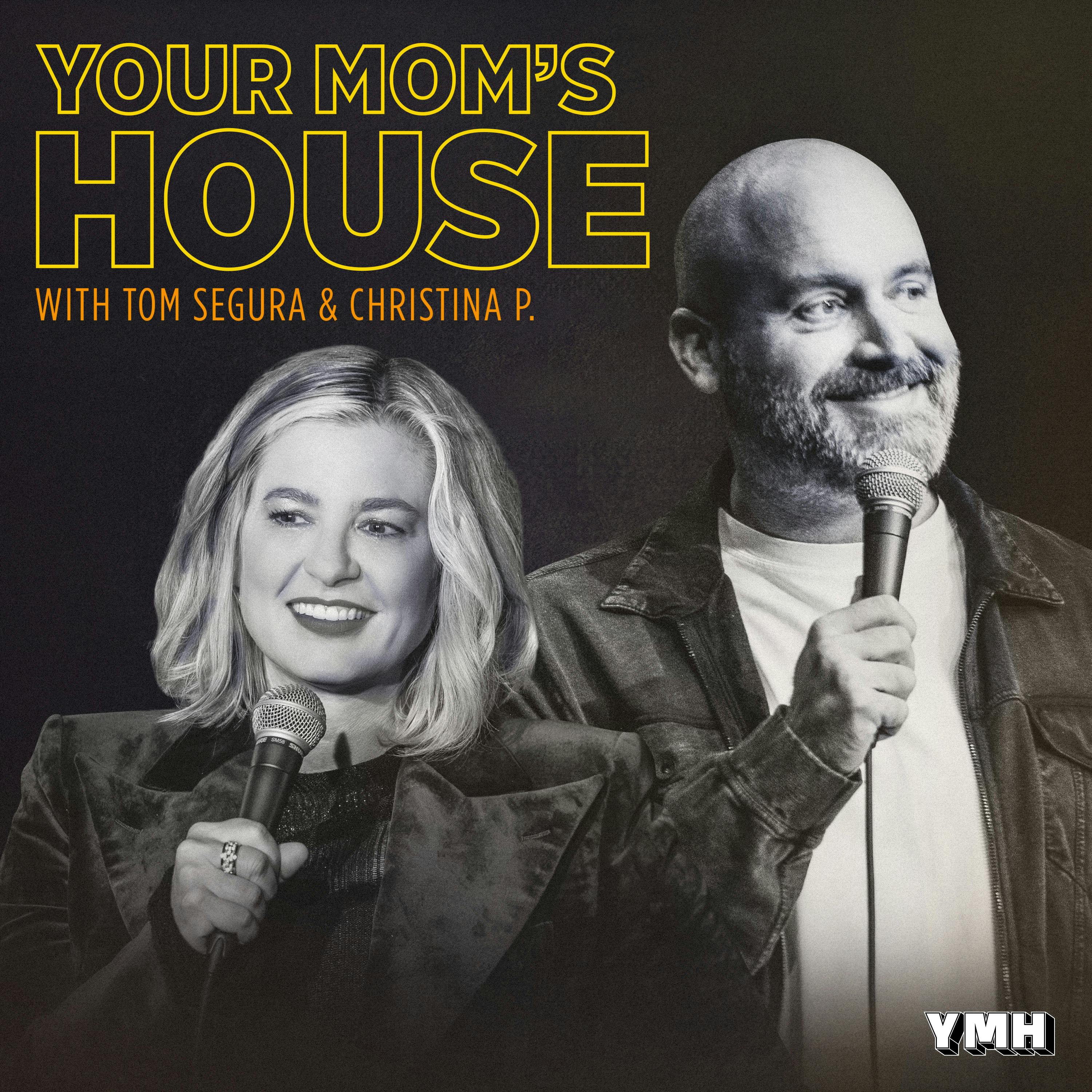
Overview of Brian Simpson Almost Died | Your Mom's House Ep. 852
This episode of Your Mom's House (YMH) features co-host Christina Pazsitzky interviewing comedian Brian Simpson about a recent near‑death experience: a heart attack in Atlanta caused by a blood clot. The conversation mixes a blow‑by‑blow account of the medical emergency, hospital/ICU experiences, prescription and insurance headaches, and broader reflections about health and lifestyle changes. As usual for YMH, the heavy material is interspersed with comedic tangents, pop‑culture clips, listener‑culture critiques, and sponsor reads.
Main story — Brian Simpson’s medical emergency
- Timeline: Symptoms began several days before the event (heartburn‑like chest pain, brain fog, extreme fatigue). He flew to Atlanta, performed, and experienced worsening chest pain in his hotel. He collapsed at his hotel front desk and paramedics/ambulance were called.
- Diagnosis/treatment: EMS suspected a cardiac event; he was given aspirin (miscommunication over chewing), nitroglycerin, morphine (multiple doses), then transported to a top cardiac center nearby where they placed a stent via the groin to open a clogged artery.
- Hospital stay: He spent several days in ICU (out by Super Bowl Sunday), monitored on many machines, had discomfort from repeated cuff readings and alarms, and was started on additional blood thinners/anticoagulants because a new clot was forming.
- Outcome: He was released and is recovering. He describes improved mental clarity and a renewed commitment to health.
Hospital, logistics and pharmacy issues
- Emergency care observations:
- EMS/ambulance response made a critical difference; the ambulance paramedic’s competency was praised.
- Frustration with redundancy in hospital intake questions and the “corporate” feel of multi‑person handoffs.
- ICU monitoring can be noisy and uncomfortable; staff-to-patient variability matters.
- Procedure specifics:
- Stent placed via groin (percutaneous coronary intervention), not open‑chest surgery.
- Post‑stent clot risk required extra medication (with unpleasant side effects).
- Prescription nightmare:
- Hospital sent prescriptions to a CVS that closed at 5pm on Super Bowl Sunday; CVS initially claimed he had no insurance and didn’t fill meds.
- Pricing confusion: some meds quoted at very high prices (>$1,000) before applying discounts; eventual fill required persistence, switching CVS locations, and VA follow‑up.
- VA interaction: Brian chose VA follow‑up for care coordination; he describes the VA system as bureaucratic but ultimately the route he used to stabilize prescriptions.
Health, identity and lifestyle takeaways
- Immediate lessons:
- Persistent chest pain, especially with nausea, fatigue, or mental fog, should be evaluated — don’t assume heartburn.
- Use EMS/ambulance when possible — it speeds triage and cardiac care.
- Chew aspirin if first‑aid guidance requires it; small details matter in early minutes.
- Broader reflection (host and guest):
- Christina discusses her own cancer and reconstructive surgery (DIEP flap — using abdominal tissue for breast reconstruction), body identity, and the emotional “reset” that follows life‑threatening illness.
- Brian reflects on lifestyle (smoking, sedentary habits) and the question: if you survive, will you change your life or return to old patterns? “What scared me the most was living fucked up.”
- Both emphasize re‑evaluating habits after near‑death events and using the experience to make meaningful change.
Other segments and notable tangents
- Hospital anecdotes: food irony (unhealthy meals in cardiac unit), catheter/urine bag logistics, nurse praise and horror stories.
- Pop culture clips/discussions:
- Justin Timberlake bodycam/DWI reaction — hosts debate sympathy vs. accountability.
- “Fart lady” controversy and public apologies — discussion of whether media apologies/PR appearances actually rehabilitate image.
- “Looks‑maxing,” plastic surgery, Dolly Parton history, shapewear/Spanx, OnlyFans/older performers, and body policing at pools (swastika tattoos at pool controversy).
- Viral internet absurdities: “joy maker” adult summer camp, sniffing urine/pineal gland rituals (mocked), and various NSFW clips (played for comic effect).
- Recurring YMH humor: riffs on race, culture appropriation, medical mistrust and “white people” wellness trends (satirical).
Sponsors and plugs mentioned in episode
- RedCircle (podcast hosting & ad platform) — repeated read.
- PreNuvo (whole body scan) — health screening sponsor.
- Ram Trucks (vehicle financing promo).
- Pocket Hose (expandable hose) — special offer via SMS code.
- Factor Meals (prepared meals) — promo code YMH50OFF.
- Christina P. Cosmetics — host’s own product plugs (lipstick, Velvet Crush blush).
Notable quotes
- “The secret to the ER is always get in the ambulance — don’t drive yourself.”
- “If you think you’re doing something to save someone’s life, you can justify any behavior.” (on hospital/ICU intensity)
- “What scared me the most was living fucked up.” (Brian, on his post‑recovery perspective)
Practical takeaways & advice for listeners
- Medical:
- Don’t ignore recurrent chest pain, indigestion that’s unusual for you, or chest pain accompanied by nausea/fatigue/fog — seek immediate care.
- Call 911/EMS rather than driving yourself to the ER when you suspect a heart attack.
- Chew aspirin (if advised) and communicate clearly with first responders.
- Keep a printed/phone list of all your current meds and allergies; bring it to the ER to avoid repeated intake friction.
- Insurance/meds:
- Be prepared for pharmacy closures on weekends/holidays; verify pharmacies will fill urgent discharge meds before leaving.
- If cost is an issue, ask inpatient staff if they can provide a temporary dose, or explore discount programs and VA support promptly.
- Recovery:
- Follow up with a cardiologist/primary care for medication management and cardiac rehab when recommended.
- Use a near‑death event as a trigger for practical lifestyle changes (smoking cessation, diet, exercise, mental‑health work).
Bottom line
This episode combines a raw, first‑person medical emergency account with YMH’s characteristic comedic detours. Brian Simpson’s story is a serious reminder about heart‑attack signs, the value of competent EMS, the messiness of US medical logistics, and the opportunity for life reassessment after surviving a close call. The hosts mix usable health advice (call EMS, be persistent with prescriptions, follow up) with humor and cultural commentary.