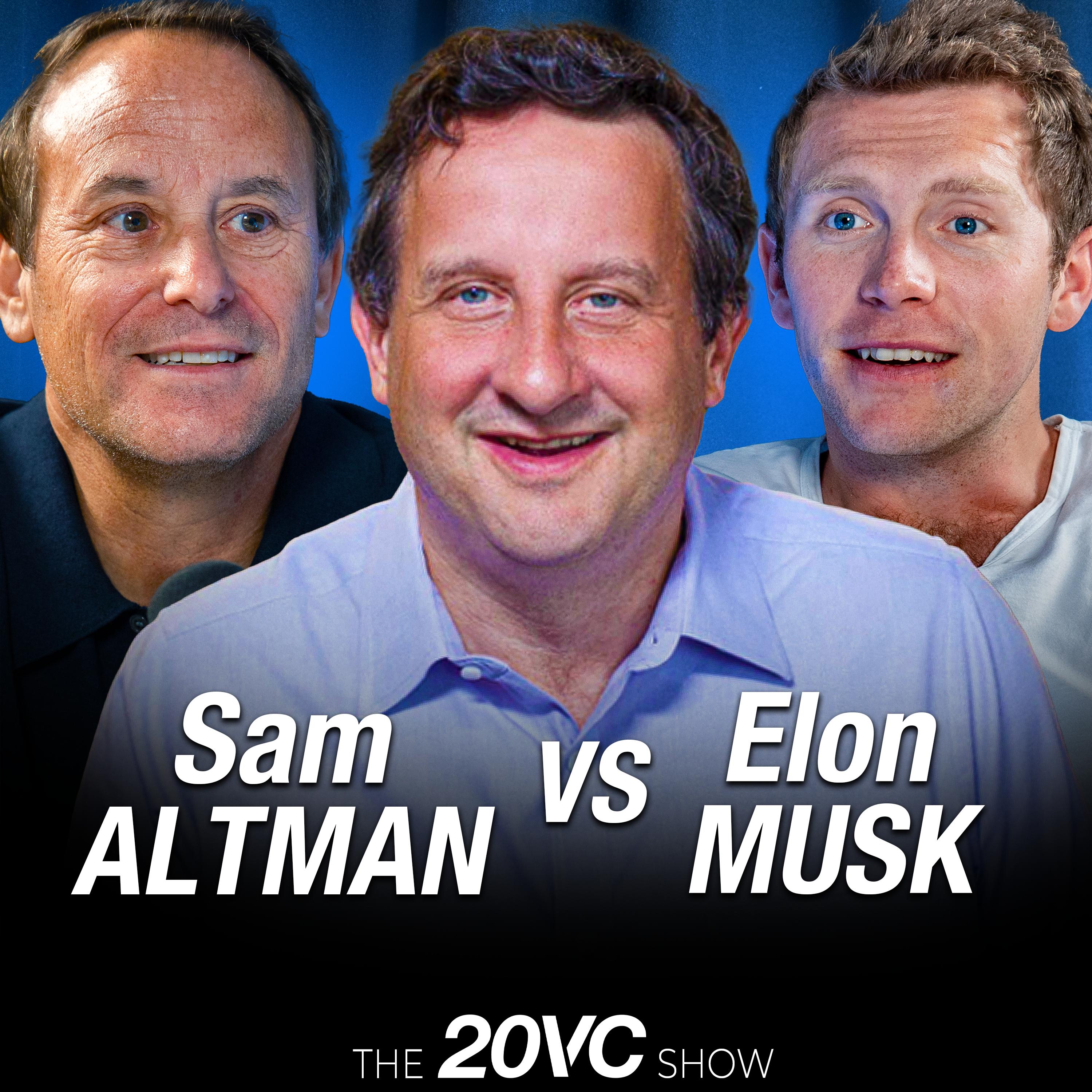
Overview of 20VC: Sam Altman vs Elon Musk — The $100BN Battle | The Implosion of Thinking Machines | Can VC Survive Public Market Pricing Today? | ClickHouse and Replit's New Rounds: Analysed
Harry Stebbings hosts Jason Lemkin and Rory O'Driscoll for a wide-ranging episode covering: the state of public markets and what that means for venture; the Sam Altman vs Elon Musk lawsuit and its implications for OpenAI; the Thinking Machines founder implosion; monetization moves at OpenAI (ads) and whether they can be a big revenue engine; and recent late-stage financings (ClickHouse, Replit, Cerebras). The discussion mixes macro market framing, legal/political drama, product/market judgments and tactical advice for founders and VCs navigating AI-led change.
Key topics covered
- Public market multiple compression and what it means for VC returns and late-stage valuations
- Figma’s post-IPO performance as an anchor for public-market anxiety
- Whether venture can still win when public markets “price” assets lower
- The OpenAI vs Elon Musk litigation: claims, likely outcomes, and strategic consequences
- The collapse at Thinking Machines (founder departures) and seed-stage founder risk
- OpenAI monetization — ads/Discovery as a potentially large revenue stream
- Deep-dives on late-stage financings: ClickHouse ($15B), Replit (
$9B), Cerebras ($22B) - Competitive investing trends among mega-funds (Sequoia, Andreessen) and LP behavior
- Practical advice for founders: attach to AI trends or run as a scaled, self-financing business
Main takeaways and arguments
- Public market sorting isn’t the death of tech — it rewards high-growth winners and punishes slow growers. For VC this means: be in the “hot stuff” (AI) or accept lower exits.
- Venture’s historical role: converting huge revenue multiples into cash via IPOs/M&A. If markets shift to EPS/free-cash-flow valuation, VC returns face structural pressure unless the winners still emerge.
- Mid-stage SaaS (e.g., $50–100M ARR growing at ~50–100%) faces fundraising friction unless they can secure AI tailwinds or change their operating model to need less external capital.
- Practical founder playbook: (1) run your business so you can operate with less venture capital if necessary; (2) embed AI/agents to create new product-led upside; (3) accelerate revenue conversion of any AI-driven usage gains.
- Thinking Machines’ meltdown is a classic seed/early-stage risk: founder-team fit and mission/technical credibility matter — big checks don’t eliminate core operating and cultural risks.
- OpenAI vs Elon Musk: Elon’s suit claims he was misled (donation framed as charity) and seeks a massive dilution or damages tied to current OpenAI value. Legally hard to prove but discovery/depositions will be reputationally damaging and could complicate financings; Elon has asymmetric upside (can litigate for psychic and strategic impact).
- Ads in LLMs/Chat interfaces are likely inevitable and could be valuable for discovery — potentially a meaningful revenue stream for OpenAI if executed well (auction model, relevance). Could scale to large numbers rapidly.
- ClickHouse and Replit are examples of older products that found AI tailwinds and rapidly re-rated; late-stage investors are paying for growth persistence and category leadership — high risk if growth decelerates.
Notable quotes / soundbites
- “If Figma isn’t good enough, what hope is there for the rest of us in software?”
- “Venture is nothing if not a trend business.”
- “Our job is to convert very high revenue multiples into cash almost unnaturally.”
- “Elon’s in an asymmetric win-win situation, and OpenAI is not.”
- “Ads are inevitable — America wants free stuff, and the way to fund it is advertising.”
Company / story breakdowns
- Figma: Still large and growing (cited ~30%+), trading at lower forward-sales multiples — used as a benchmark for public market recalibration.
- OpenAI / Sam Altman vs Elon Musk: Elon alleges fraud/misrepresentation over early donations when OpenAI was a nonprofit; seeks outsized damages (dilution/shares tied to today's valuation). Trial likely to be messy; outcome uncertain — significant reputational and financing noise regardless.
- Thinking Machines: Founder departures highlight seed-stage founder-fit risk; large capital doesn’t immunize teams from breakups.
- ClickHouse: Open-source OLAP turned hosted SaaS — fits AI/analytics tailwinds; the late-stage $15B price reflects underwriting of sustained hyper-growth and category leadership.
- Replit: Product matured significantly; agent-based dev workflow is materially better, supporting the higher valuation if revenue acceleration persists.
- Cerebras (Cerebris in transcript): large AI-infrastructure plays are capturing investor enthusiasm — valuations assume continued AI compute demand.
Implications for founders and VCs — actionable recommendations
For founders:
- If you’re a mid-stage SaaS company, prioritize attaching to AI (agents or substantive AI features) or restructure to reduce capital dependency.
- Focus on converting usage and developer adoption into sustainable revenue (RevenueCat-style playbooks).
- Product-first: ship agents and meaningful AI features — being “AI-adjacent” is insufficient.
For VCs / investors:
- Re-evaluate late-stage underwriting assumptions: you’re paying for growth persistence and category dominance.
- Expect to pay for access to mega-rounds; many large LPs will accept small ownership to get exposure to perceived category winners.
- Treat litigation/PR risk (e.g., OpenAI’s trial) as an asterisk when pricing rounds — assign probabilities for dilution events, but don’t assume binary outcomes.
For operators:
- Prepare for LLM ad ecosystems: think about discovery signals, SEO/AEO, and how your product can surface in LLM-generated recommendations.
- Invest in data instrumentation and OLAP/analytics infrastructure — systems like ClickHouse can be strategic.
What to watch next (predictions / signals)
- Outcome and discovery from the OpenAI vs Musk litigation: reputation & fundraising impact over the next 12–36 months.
- Speed and effectiveness of LLM ad monetization (initial revenue trajectory; CPMs; AUCTION workings).
- Revenue growth persistence at ClickHouse and Replit — whether growth continues to justify late-stage multiples.
- Degree to which mid-stage SaaS companies successfully attach to AI (product-led growth) versus carving a hard path as profitable, self-sustaining businesses.
Sponsors & brief practical plugs (from episode)
- Founder advice: pick a .tech domain for early-stage tech startups.
- Checkout.com: payments for digital commerce and agentic commerce integrations.
- Invisible: operationalizing AI models into real business outcomes (data wrangling + model adaptation).
This episode is a dense mix of tech market framing, legal drama and tactical advice — essential listening for founders and investors deciding how to position for AI’s next phase.