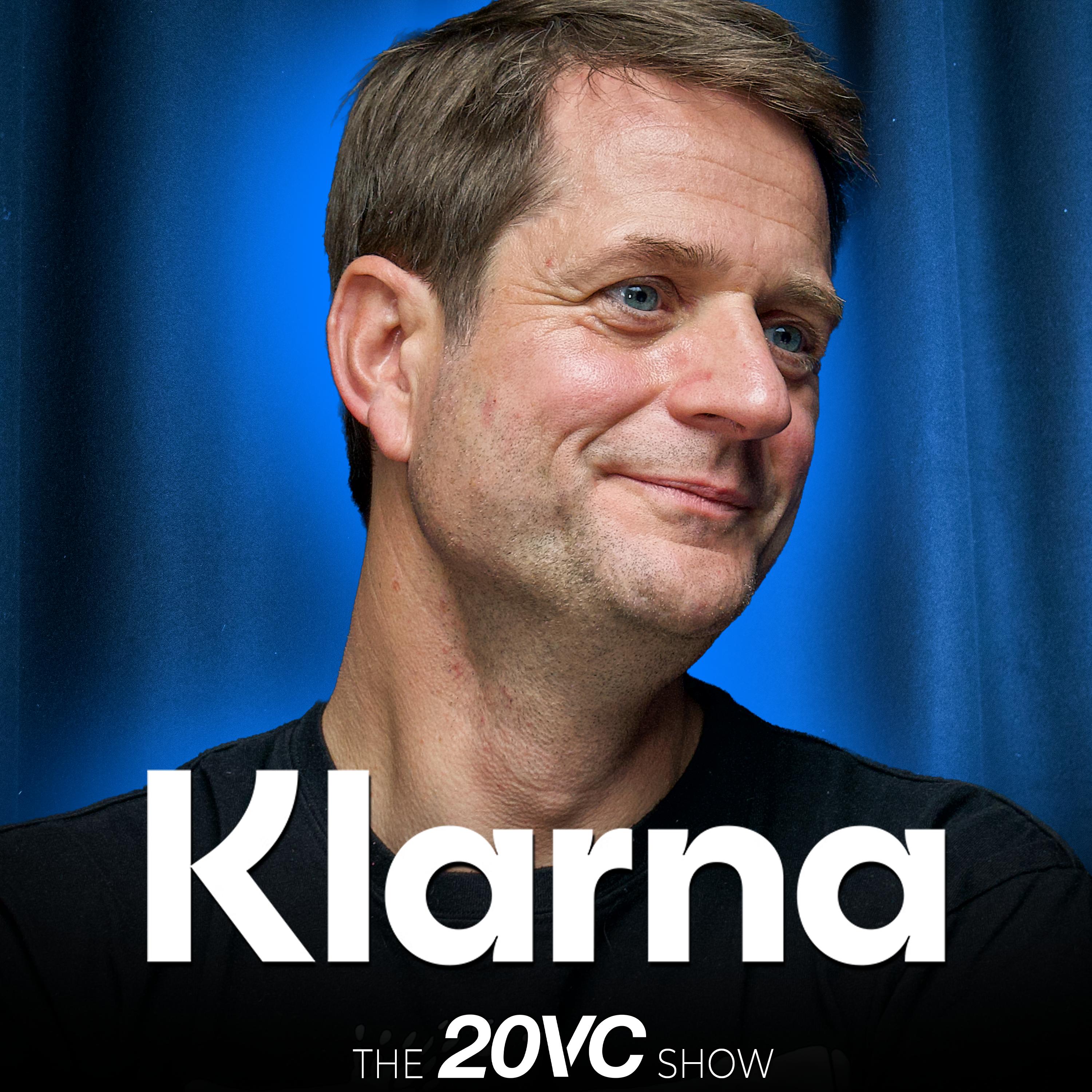
Overview of 20VC: SaaS is Dead — Sebastian Siemiatkowski on AI, headcount, and the future of finance tech
In this wide-ranging interview Harry Stebbings speaks with Sebastian (Seb) Siemiatkowski, Klarna’s CEO, about how AI is reshaping software economics, enterprise tech, customer service, hiring, fintech competition, and Klarna’s strategy. Seb argues we’re entering an “agentic” world where software creation costs approach zero, data switching costs collapse, and large parts of the existing SaaS/systems-of-record model will be disrupted — with material consequences for valuations, headcount and tech stacks.
Key themes and main takeaways
-
AI is a compression and assembly technology
- Large models compress repeated human knowledge; this enables powerful, smaller deployable models and explains why models can seem “small” but be highly capable.
- AI will both reduce redundant enterprise compute (via reuse/compression) and increase generation compute (media/entertainment/customization). Net demand is uncertain.
-
Software economics will change dramatically
- Cost of creating software is falling toward zero; the next big disruption is reducing the switching cost of data.
- Agents (AI-driven connectors/automations) will make migrating data between vendors easy — driving rapid SaaS churn and lowering the defensibility of many incumbents.
- Historical price-to-sales multiples for SaaS (20–30x) are likely over; a shift toward “utility” multiples (1–2x) is possible for many companies.
-
Enterprises will rearchitect AI-native stacks
- Firms that want high-quality AI outcomes will centralize data/context into AI-native operating systems rather than relying on many siloed SaaS products.
- Klarna is consolidating away from many SaaS products to offer richer context to AI and embed deterministic/probabilistic code into a single stack.
-
Labor and headcount impact
- Klarna shrank from ~7,000 to <3,000 employees (≈50%); much of the reduction came via attrition, supported by AI-driven productivity gains.
- AI replaced a portion of routine customer service tasks (equivalent of ~600 agents), prompting reframing of customer service: commodity tasks automated, human agents focused on VIP/high-touch relationships.
- Klarna increased per-employee compensation (~+50% per head) and shares productivity gains with staff.
-
Product strategy: extend BNPL into a broader banking relationship
- Klarna aims to move from infrequent-payment usage to a high-engagement banking platform (cards, deposits, services) using transaction-level data (digital receipts) as a moat.
- BNPL is seen as a healthier, more predictable form of consumer credit than traditional revolving credit if managed responsibly.
-
Advice for investors and VCs
- Investors should be hands-on with AI tools (build/test) before allocating capital to AI startups — otherwise they lack the context to evaluate claims and moats.
- SaaS as an asset class is riskier; consider infrastructure, data-centers, and non-SaaS sectors.
Notable quotes and sharp insights
- “The cost of creating software is going down to zero. That means everyone will be able to generate software at any point in time.”
- “The next thing that's going to hit everyone bad is the switching cost of data.”
- “If your data is separated in these silos… it's just harder to provide the appropriate context.”
- “AI is a compression technology.”
- “We didn't ask for a single dime to do all this… I've seen the acceleration of AI, and I know we can ship all these things on the existing organization.”
- “People buy you, not what you sell.” (on CEO storytelling and messaging)
Specific facts & company signals (from the interview)
- Klarna headcount: from ~7,000+ to under 3,000 (≈50% reduction). Much attrition, some 2020 layoffs.
- Klarna customer base: ~110 million global users; ~28–30 million in the US.
- Klarna converted millions of US customers to an active card base rapidly after launch.
- Klarna’s internal experiment: AI-enabled customer service replaced routine tasks equivalent to ~600 agents.
- Klarna increased employee compensation per head by roughly 50% during the AI transformation.
Topics covered (quick list)
- Impact of agents on SaaS and systems of record
- Data portability and one-click migrations
- Valuation pressure on SaaS (price-to-sales compression)
- Enterprise vs consumer AI adoption speed
- Klarna’s strategy: from BNPL to full banking OS
- Customer service automation and “Uber model” recruiting of passionate customers
- Stock-based compensation differences US vs EU
- The role of Sequoia / Michael Moritz in Klarna’s growth
- Anthropic (Claude) vs OpenAI (ChatGPT) positioning: advisor vs companion
- Data center / compute demand debates
- Personal motivations, upbringing, lessons running a public company
Actionable recommendations (for founders, execs, investors)
For founders / product leaders
- Treat AI as an OS-first design decision: consolidate context and data early — siloed SaaS will limit AI outcomes.
- Build with reuse and modular “Lego” components in mind; avoid reinventing the wheel.
- Pilot agents for data migration and internal process automation — switching costs fall quickly.
- Reframe customer service: automate routine tasks; invest in high-touch human experiences for VIPs and relationship-driven roles.
- Be conservative on hiring during the AI transition; prefer attrition and redeployment to mass hiring.
For investors / VCs
- Use AI tools hands-on before investing; evaluate claims by building simple prototypes.
- Reassess software multiples and SaaS defensibility; emphasize data moats, unique rails (e.g., payment receipts), and breadth of context.
- Consider infrastructure and data-center investments (but weigh compression risks vs regeneration demand).
For enterprise execs / CIOs
- Plan for data portability and single sources of truth; Wikipedia-like discipline (one canonical article/source) reduces duplication and cost.
- Reevaluate vendor strategy: buying AI-native stacks vs integrating many third-party SaaS tools.
- Share productivity gains with employees (compensation, retraining) to maintain morale and mitigate social impact.
Predictions & bets Seb makes or implies
- Many software companies’ multiples will compress closer to utility levels (1–2x sales) for those turned into commoditized services.
- Agents will drive much lower switching costs for data — accelerating churn in traditional SaaS.
- Enterprises will increasingly move to broad AI-native platforms (some incumbents will build their own; others will procure AI-enabled systems).
- Headcount will continue to shrink in many tech-first companies (Seb expects fewer employees in 2030 than now).
- The compute picture is ambiguous: enterprise compression could reduce demand; consumer/regeneration needs could increase it — net outcome unclear.
Criticisms, caveats and uncertainties Seb acknowledges
- Mass displacement will cause short-term turmoil and social friction — he’s optimistic long-term but realistic about near-term pain.
- Not every company should or will “vibe-code” mission-critical systems; many small businesses will simply buy off-the-shelf AI-enabled products.
- Public messaging can be misinterpreted and headlines matter — the “700 replaced” story sparked backlash even though Clarifications followed.
- AI adoption pace varies: consumers move fast; enterprises move slower due to habit and complexity.
Closing summary
Sebastian’s view: we’re at an inflection point where AI (agents + models + data portability) will rewrite the economics of software, labor, and financial services. Winners will be those who centralize context, treat AI as part of the core OS, and move quickly to redeploy human capital toward higher-value, relationship-driven roles. Investors and executives must re-evaluate SaaS defensibility, learn the tools, and plan for both technical and human transitions.