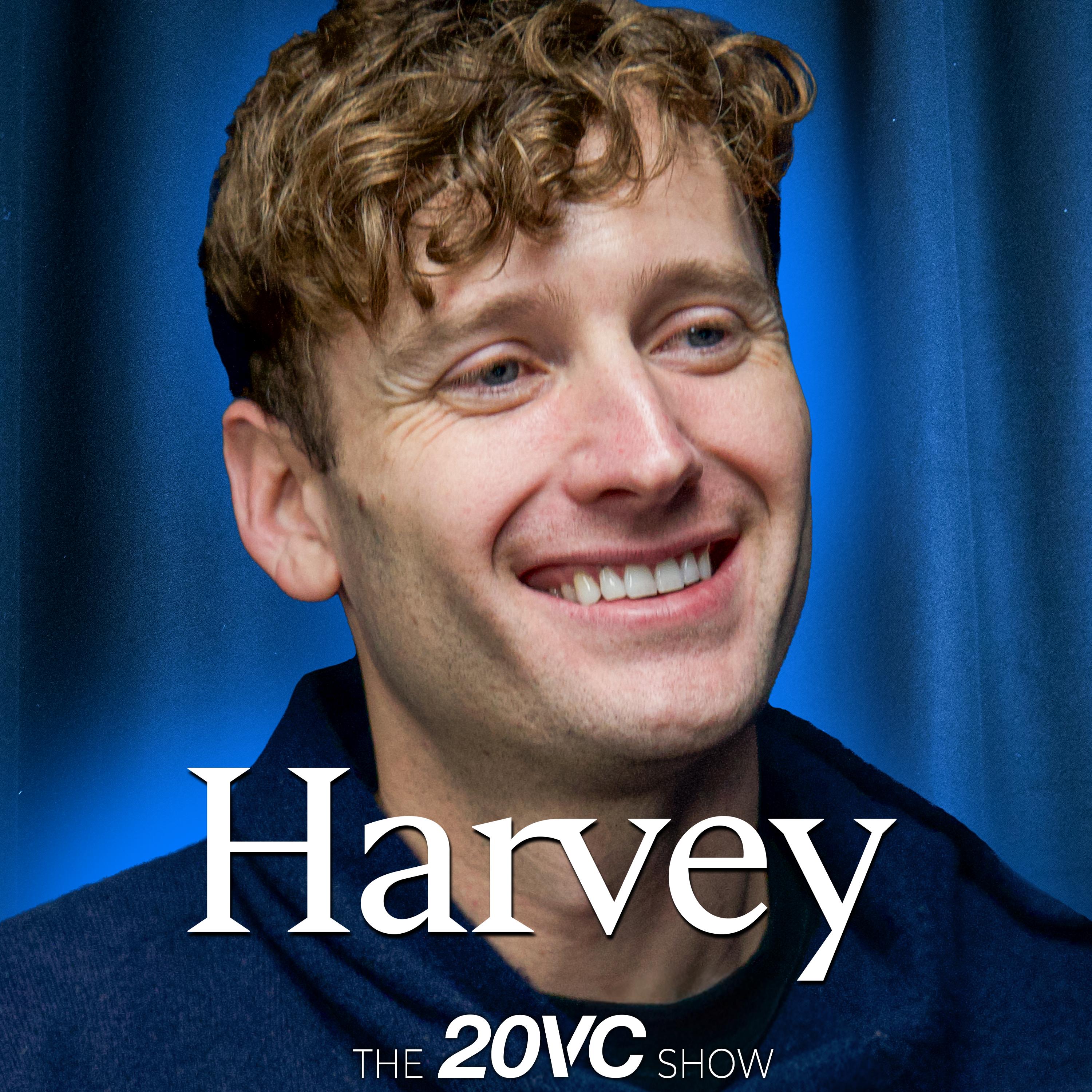
Overview of 20VC: How Model Performance is Plateauing | Harvey CEO Winston Weinberg (host: Harry Stebbings)
This episode is a deep conversation with Winston Weinberg, co‑founder and CEO of Harvey, about scaling an AI application company through explosive growth, product and company market‑fit cycles, fundraising and hiring lessons, the competitive landscape among model providers, and why enterprise AI adoption will take years despite rapid advances in models. Winston shares concrete metrics, hiring and infrastructure priorities, two simple deal‑making rules, and his perspective on how AI will reshape B2B value capture.
Key takeaways
- Harvey metrics & momentum: ~ $190M ARR, ~500 employees, >1,000 customers; rapid scaling with enterprise traction.
- Model landscape: consumer‑facing model improvements appear to be plateauing; enterprise value and code generation will continue to improve quickly.
- Enterprise adoption lag: Winston expects 3–5 years for “massive productivity gains” at scale in enterprises due to integration and data plumbing complexity.
- Product → Platform: the company’s next milestone is moving from multiple useful product features to a unified platform/OS for legal workflows (aiming for Slack‑level stickiness on power users).
- Infrastructure & GRR matter: investing early in infra and ensuring high gross revenue retention (GRR) is critical to avoid loss of customers after rapid signings.
- Fundraising & investors: start fundraising conversations months ahead, use small early checks with information rights to build trust, focus on partner quality over maximizing price.
- Hiring & culture: prioritize obsession and ownership; if you want to hire someone, give them what they ask for; be wary of overvaluing pedigree/brand (the “resume trap”).
- Two simple deal rules: listen more than you speak; know when not to negotiate — get the one thing you truly need and deprioritize the rest.
Notable quotes / pithy insights
- “A lot of people in deals, they think that movement is action. Not true.”
- “Know when to not negotiate… If you want to hire somebody, hire them, whatever they want to be hired, and put them in the position that they want.”
- “I think the value of B2B SaaS is about to become astronomical.”
- “We are in day one of product development. It's going to change astronomically.”
Topics discussed
- Harvey’s origin, fundraising and early investor relationships (OpenAI named as initial investor; angels included Sarah Guo)
- Daily routine and leadership habits: early rising, strenuous daily physical challenge to build stress tolerance and better decision‑making
- Product market fit → company market fit → re‑investing in product direction as the company scales
- Valuation and fundraising strategy: being picky on investors, preferring partners to price maximization
- Hiring lessons: when to hire senior execs, who to hire, and common mistakes (overly senior hires; hiring for pedigree vs. mission fit)
- Competition among model providers (OpenAI, Anthropic/Claude, others) and routing to best models per use case
- Plateau for consumer LLM performance vs ongoing gains in enterprise and code generation capabilities
- Enterprise adoption timeline and integration complexity (many systems, many data sources)
- Infrastructure scaling, engineering composition (shift from front‑end demos to infra and systems engineering)
- Gross revenue retention (GRR) as a leading signal of product durability
- Pricing evolution: seat vs consumption, and moving spend from professional services to software consumption
- Europe expansion considerations: slower hiring timelines, need for localized presence
Company & fundraising lessons (practical)
- Fundraising approach:
- Start the fundraising process ~6 months before you actually need capital.
- Consider small early checks with information rights to build trust and a track record with targeted partners — then scale into a larger round.
- Prioritize investor alignment/operating value over chasing the top price.
- When raising valuations feel high:
- Benchmark against market multiples of end‑of‑year ARR; think about end‑of‑year expected revenue × multiple, not just headline number.
- Winston found earlier rounds (Series C at ~1.5B) felt uncomfortably high; choose investors you trust rather than pushing price.
- Execution credibility:
- “When someone continuously hits plan, give them more money.” Repeated delivery builds investor trust.
Product, infra & enterprise adoption
- Consumer vs enterprise performance:
- Winston believes consumer USE‑CASES have less need for improved reasoning; they need richer context, integrations and product features.
- Enterprise use cases and code generation remain on an upward slope—big productivity gains still to come.
- Enterprise adoption lag:
- Even with capable models, end‑to‑end enterprise automation needs integration across many systems; Winston expects 3–5 years to see large, material productivity gains.
- Infrastructure priorities:
- Early emphasis on front‑end/demo wins can create customer demand that breaks systems if infra is neglected.
- After growth, Harvey shifted hiring to senior infra, data, and systems engineers (now a significant part of EPD).
- GRR focus:
- Net new ARR growth without high GRR is fragile. Rapid customer signings must be supported with product/infra to avoid churn.
Hiring & team building
- Traits Winston prioritizes:
- Obsession (deep engagement with the problem).
- Ownership — people who take clear responsibility and admit mistakes.
- Hiring rules:
- If a best‑in‑class candidate asks for X compensation, give X; small savings aren’t worth losing momentum or demoralizing a hire.
- Avoid hiring people who chase logos/short‑term equity flips; seek long‑term company builders.
- Europe vs US hiring:
- Talent quality comparable, but hiring takes longer in Europe (gardening leave, notice periods). Build with a multi‑quarter horizon and local presence.
Deal‑making rules (two actionable rules)
- Listen more than you speak — perceived activity doesn’t equal progress; reading people and context at scale is the core of dealmaking.
- Know when not to negotiate — if you truly value one term more than anyone else, concede on secondary points and secure that priority.
Additional practical pointers:
- Tie off one “rope” (priority) at a time when juggling multiple negotiations — reduces pressure and unlocks further leverage.
- Microsoft exemplifies partnering broadly as a winning strategy in ecosystems.
Competition & risks
- Main existential threat: not moving fast enough on product to create a moat vs. model providers (OpenAI, Anthropic, etc.).
- Winston is bullish on labs (OpenAI/Anthropic) but believes multiple enterprise winners will coexist—enterprises rarely allow a single winner.
- Risk from model commoditization: productization, data access, integration, and ROI alignment are the defensive levers for application companies.
- War for AI talent is intense; researchers have a tight, merit‑based community—VCs should consult researchers (not other VCs) to find top talent.
Quick facts & numbers (from the interview)
- Harvey: ~$190M ARR, ~500 employees, >1,000 customers (figures cited by Winston).
- Team composition trend: early hires skewed front‑end; later focus shifted to senior infra/data engineers after large user influx.
- DAU/MAU for users who use 4+ Harvey product lines: ~74% (high engagement, comparable to Slack levels).
Actionable recommendations (for founders & investors)
For founders:
- Start fundraising conversations early; use small strategic investors to build momentum and trust.
- Prioritize early infra and enterprise readiness if you sell into large customers—support promises before over‑booking.
- Measure and obsess over GRR as a leading indicator of sustainable growth.
- Hire for obsession + ownership, and give top candidates the offers they want to win them.
- Be ruthless about saying no — prioritize P0s and accept the pain of missing out on “nice” features.
For investors:
- Look past logos and resumes in AI—triangulate with the researcher community for true technical talent.
- Evaluate AI app companies on GRR and infra readiness, not just net new ARR and demos.
- When backing founders, focus on partners who have consistently hit plan and can demonstrate execution discipline.
Episode wrap / tone
Winston is candid, execution‑oriented, and focused on discipline (product prioritization, infrastructure, retention). He balances optimism about AI’s long‑term economic impact with pragmatic warnings about the hard operational work required to make application companies durable. The conversation mixes tactical operational advice, high‑level market perspective, and concrete rules for deals and hiring.