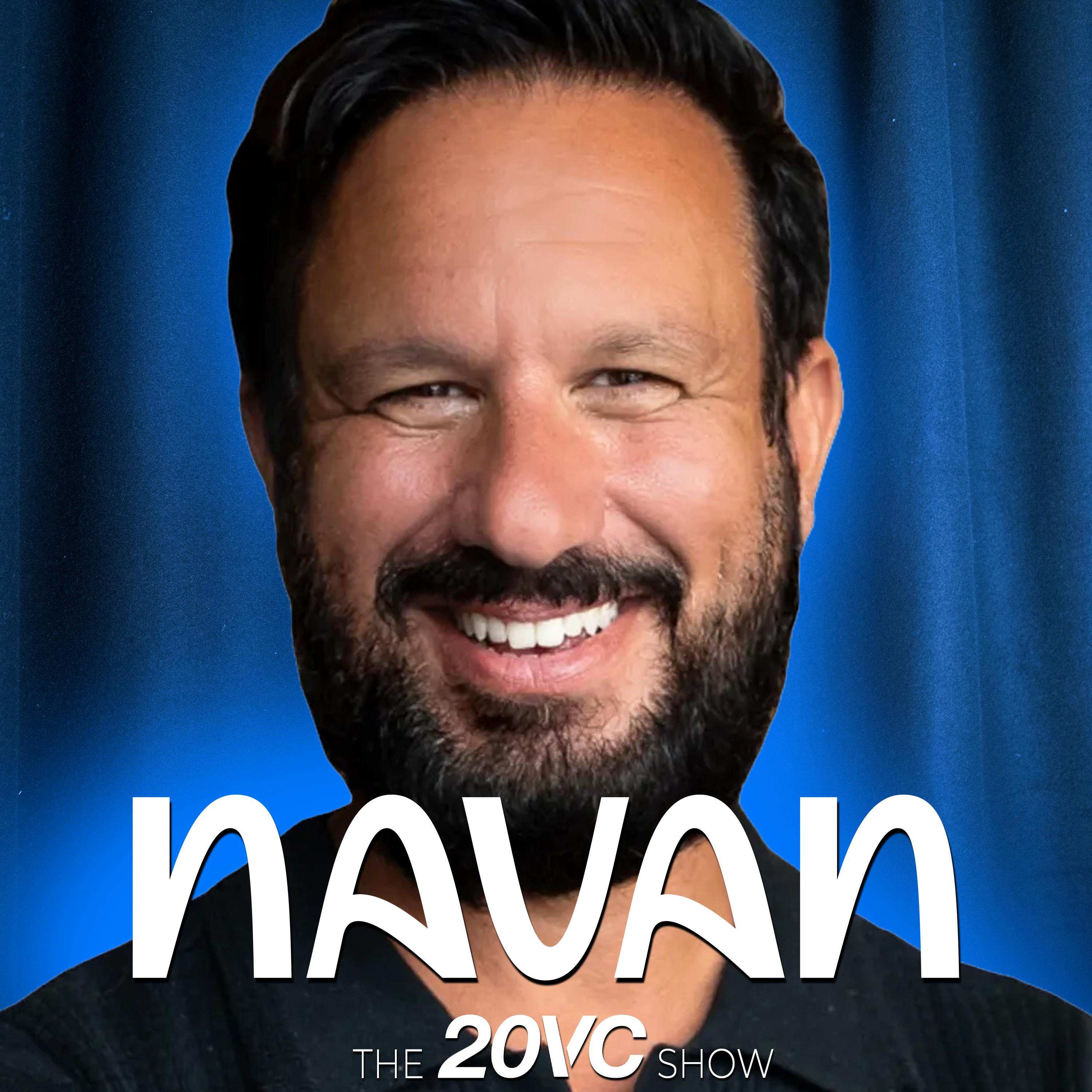
Overview of 20VC: From $6.2BN Market Cap to $2.8BN — Ariel Cohen on Navan, IPO timing, AI and customer service
Harry Stebbings interviews Navan co‑founder & CEO Ariel Cohen about Navan’s recent IPO (priced at a >$6.2B valuation and now ~ $2.8B), why they chose to go public, what the market is missing about Navan’s story, and why Navan built its own vertical AI platform for customer service. The conversation weaves company strategy, public‑market dynamics, product/tech choices (agentic AI, in‑house models, Cognition/Ava), competition, talent, and personal reflections on leadership and family.
Key takeaways
- Why go public: multiple reasons — capital structure (debt/capital needs, especially for payments), enterprise customer expectations (transparency/reliability), and a long‑term strategic trajectory. Timing was difficult but deliberate.
- What public markets miss: Navan is a hybrid — tech/SaaS characteristics plus a consumption/transactional business where revenue and go‑to‑market costs happen upfront. Investors are not fully pricing future payoffs or the company’s AI/operational moats.
- AI strategy: Navan built its own agentic AI platform (Cognition) and support assistant (Ava) rather than purely buying general LLM services. Travel’s complexity (licensing, non‑hallucinatory operations, integrations to airlines/GDS/APIs) requires verticalized control and proprietary data.
- Product moat: Deep operational plumbing — direct airline connections, global licensing, and transaction capabilities — are substantial and hard to replicate. Low churn and high user adoption validate product stickiness.
- Developer productivity & product dev: “Vibe‑coding” / low‑code and model‑assisted development accelerate delivery; Navan uses AI to speed engineering and reduce configuration work.
- Founder mindset: Ariel emphasizes long‑term focus, culture, and obsessing about customers/users rather than short‑term market noise (though the latter affects employee morale).
- Talent & culture: Talent gravitates to “shiny” AI darlings, but resilient, mission‑aligned employees stay. Culture is a critical defensive asset.
Topics discussed
IPO timing, pricing and public market experience
- Ariel enjoyed telling Navan’s 10‑year story to a broader audience but found disclosure constraints and market scrutiny to be burdensome.
- IPO decision drivers: capital structure (post‑COVID financing needs), payments business growth that benefits from public status, and enterprise customer expectations for transparency and financials.
- Pricing philosophy: Ariel focuses less on day‑one pop vs. pricing to perfection—he wants investors to take a long‑term view on Navan’s total addressable market (frequent travelers across managed and unmanaged segments).
Competition and market threats
- Traditional competitors (Amex, Concur) are obvious but less concerning than unknown, scrappy startups that can reinterpret the problem.
- Ramp or other private players aren’t top of mind; Ariel’s paranoia centers on new entrants that reimagine the space.
- Culture, operational moats and product experience (low churn) are his main defenses.
Navan’s AI choices — build vs buy
- Navan built Cognition (agentic platform) and Ava (customer support assistant) because off‑the‑shelf LLMs/APIs can hallucinate and cannot handle travel’s legal, financial and operational constraints.
- System uses a mix of models (open‑source, Anthropic, Google, etc.) plus proprietary data and orchestrates models according to task.
- Example: during a major NY airport shutdown, Ava handled ~55% of chats and kept average wait times at ~16 minutes — better than competitors in the crisis.
Product & engineering changes
- Deep plumbing to buy/change airline tickets, apply credits, and meet regulatory requirements worldwide is a major moat.
- Low‑code / “vibe coding” and model‑assisted development are changing how product managers and engineers ship — shortening cycles and enabling product people to prototype more directly.
- Most engineering investment has shifted toward AI projects.
Economics, margins and unit economics
- Short‑term go‑to‑market spend depresses P&L metrics; investors may not appreciate the delayed returns inherent to Navan’s consumption model.
- Ariel’s view: if you create measurable value (e.g., direct airline connections that improve customer experience), the market will eventually pay for it and margins can recover.
Being a public CEO and company morale
- Ariel is broadly happy being public (likes the storytelling and new relationships) but dislikes the continuous share‑price noise and its impact on employee morale.
- He sees a CEO’s role as keeping employees focused on long‑term outcomes, not short‑term market noise.
Notable stats & examples
- IPO market cap at listing: >$6.2B; current (at interview): ~$2.8B.
- Navan booking experience: ~7 minutes vs. industry average ~45 minutes.
- During a major NYC airport shutdown: Ava handled ~55% of chats; peak wait time ~16 minutes.
- In Navan’s history they lost six enterprise customers — five returned.
Notable quotes (paraphrased)
- “If we will not build our own platform right now, we are so dead.” — on urgency to build internal AI after seeing early ChatGPT demos.
- “The one competitor I’m worried about is the one I don’t know about.” — on scrappy, unexpected startups.
- “Start with the customer. If the user is happy, the shareholders will be happy.” — on product first philosophy.
- “Software that people don’t like using will get disrupted.” — on user experience as a moat.
Actionable insights / recommendations
For investors
- Evaluate hybrid business models carefully: distinguish upfront GTM spend vs. long‑term consumption economics and customer stickiness.
- Look for companies with verticalized agentic platforms and proprietary data in complex domains — they’re harder to replicate and may be underpriced today.
For founders / operators
- In complex regulated verticals (travel, fintech), build verticalized AI capabilities when correctness and non‑hallucination are critical.
- Invest in operational plumbing and direct integrations (e.g., airlines) even if short term economics look worse — user value can unlock future monetization.
- Prioritize culture and product experience to reduce churn; that is as defensible as any technical moat.
For product/engineering leads
- Adopt model‑assisted development and low‑code/prototyping to accelerate iteration — but pair with rigorous backend/integration work for production readiness.
- Reassess where engineering time is spent: more AI projects now, but don’t neglect reliability, compliance and core plumbing.
Quickfire highlights (Ariel’s rapid responses)
- Biggest mindset shift: think long‑term; stop obsessing about short‑term noise.
- How money changed life: gives convenience and time — frees capacity to focus on meaningful things.
- Parenting advice: invest time in your kids — time matters more than money.
- What excites him next decade: people having more time for experiences, spirituality and life beyond pure technology.
Final observation
Ariel’s central argument: Navan’s public‑market valuation and narrative currently underappreciate a unique hybrid business — deep operational infrastructure + a verticalized, agentic AI stack that materially improves user experience and crisis handling. The company is making long bets (payments, enterprise traction, AI integrations) that will take quarters/years to fully reflect in public P&L and stock price. For founders and investors, this episode is a useful case study on choosing when to IPO, why vertical AI often requires build vs. buy, and how culture + deep plumbing create durable moats in complex industries.