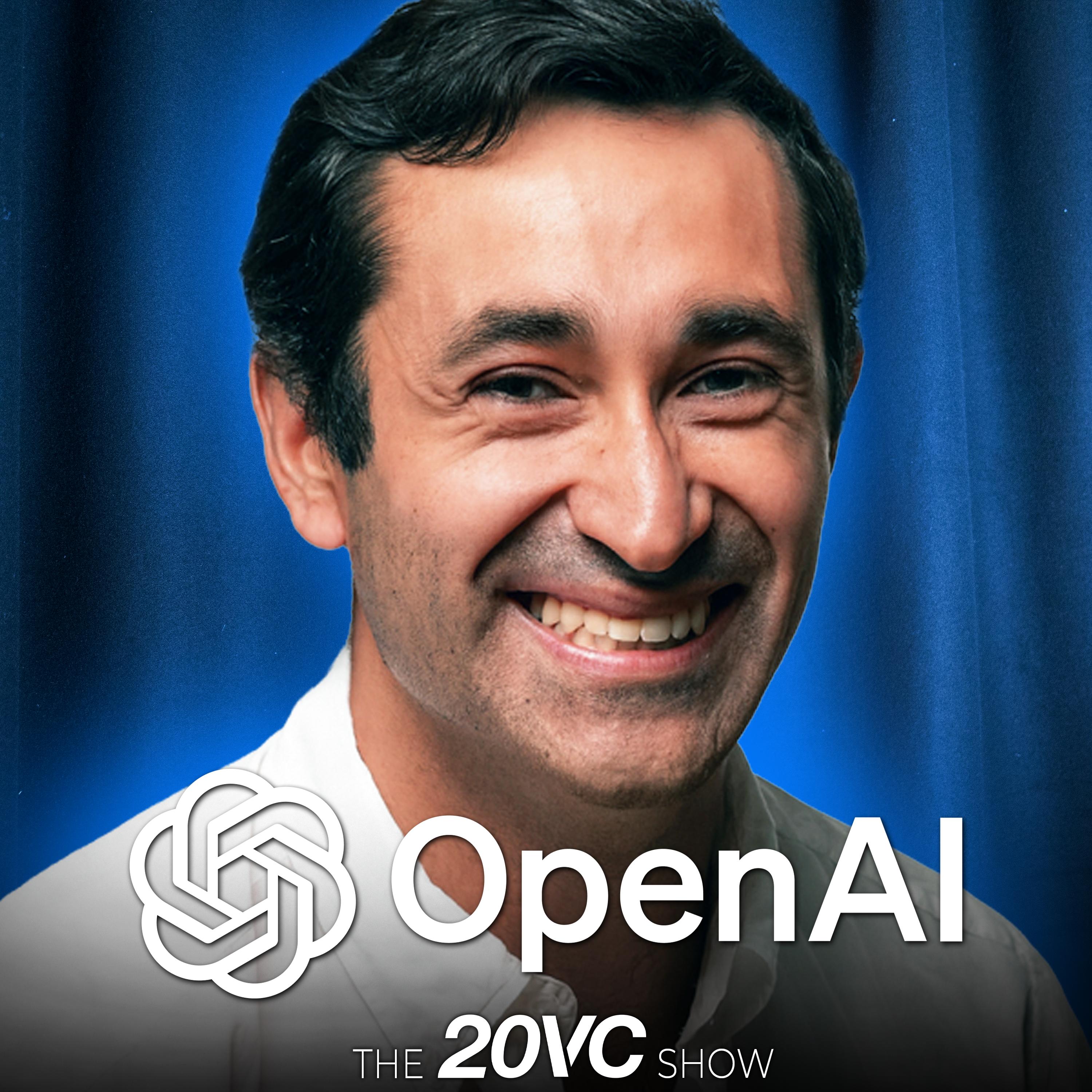
Overview of 20VC: Codex vs Claude Code vs Cursor (feat. Alex Embiricos, Head of Codex at OpenAI)
This episode of 20 Product (hosted by Harry Stebbings) is a wide-ranging conversation with Alex Embiricos — product lead for Codex at OpenAI — about the present and near-future of AI coding agents, what really limits AGI adoption, product & go-to-market strategy for agent products, competition (Codex vs Claude Code vs Cursor), enterprise trade-offs, and practical advice for builders, investors and engineers.
Key topics covered
- Whether coding will be automated and what “automation” actually means for engineers
- Alex’s view that the real bottleneck to broad AGI adoption is human typing/validation and prompting, not compute or model architecture
- The three phases of agent adoption and productization
- Codex product strategy, app vs CLI, open standards (agents.md, skills), and partnerships (inference speed)
- Code generation, review, and how workflows change when AI writes most code
- Enterprise adoption: FDEs, security, sandboxing, and local/cloud hybrids
- Competitive landscape: Codex, Claude Code, Cursor, and where winners emerge
- Metrics and retention (weekly → daily active users), pricing and growth trade-offs
- Advice for investors, founders, and engineers entering the AI era
Main takeaways and insights
- Automation ≠ job elimination: Historically, automation increases product output and demand. Codex will change engineers’ tasks and compress the talent stack (more full-stack builders), but Alex expects more builders overall, not fewer.
- Human action is the bottleneck: Alex argues the principal adoption friction is human effort to prompt, validate and integrate AI — “human typing speed and validation work” — which means productizing prompts and flows (not only improving models) is crucial.
- Three phases of agent adoption:
- Agents excel at coding (current PMF).
- Agents become powerful by operating on users’ computers — coding is the best way for agents to use digital tools.
- Productize successful patterns into point solutions for non-experts (domain-specific, out-of-the-box features).
- Build for people first: Start with easy-to-use tools for individuals so users can get fluent and then scale to automation and enterprise workflows.
- Speed & latency matter: Fast inference (model+infra) is a key UX constraint. Partnerships and optimizations can materially improve developer experience.
- Open standards and portability: Codex team intentionally pushed open conventions (agents.md, skills in neutral folders) to make agents interoperable and reduce vendor lock-in — easier switching increases developer trust and ecosystem growth.
- Code reviews and safety: As models write more code, planning/spec review becomes crucial; Codex is trained for high-quality code review and is used to auto-review PRs internally.
- Enterprise adoption is two-pronged: top-down (FDE, connectors, compliance) is necessary for secure automation at scale, but bottom-up rollout (empowering users) increases adoption and reduces fear/disempowerment.
- Long-term market shape: Likely fewer, central “super-assistants” emerge (one assistant that can do many things) rather than many disjoint agents; winners will combine strong models, distribution and trust/sandboxing.
- SaaS durability: Companies that own human relationships and/or systems of record remain defensible; routine glue-layer SaaS without either is more at risk.
Notable quotes (Alex Embiricos)
- “Human typing speed and validation work is the key bottleneck to AGI, not model, compute, or architecture.”
- “Coding is just the best way for an agent to use a computer.”
- “The code itself is not being written by humans anymore.” (on delegation vs pairing)
- “Build products for individuals and then allow people to become fluent — that drives more impact than only top-down enterprise automation.”
Product & go-to-market lessons
- Meet people where they are: CLI/IDE integrations (Cursor) and terminal-first tools helped early adoption; but broader UX (Codex app) lowers the barrier to non-power users and enables delegation.
- UX and “vibes” matter: Beyond benchmarks, how pleasant/intuitive the model feels to use drives retention and word-of-mouth.
- Metrics to optimize: Active users (weekly → daily) is the primary north star for agent products; usage frequency indicates fluency and propensity to automate.
- Pricing/practicality: Be cautious with “unlimited” constructs — they are hard to reverse and create community backlash when limited later.
- Enterprise sales still matters: For broad enterprise deployments, education, configuration, and custom integrations can’t be fully replaced by inference-driven discovery.
Technical & safety points
- Sandboxing and local control: OpenAI is investing in OS-level sandboxing and a secure browser (Atlas) to allow agentic browsing and safe local automation — critical for enterprise trust.
- Code review automation: Codex can and does auto-review code; plan/spec review becomes more central when delegating tasks to agents.
- Data landscape: Large-scale coding training data is available; the scarcer, more valuable data is enterprise/knowledge-work trajectories — collecting or acquiring that data matters for broader knowledge work agents.
- Benchmarks matter, but not alone: Evals indicate capability progress, but real-world UX and developer vibes are equally important when assessing model usefulness.
Competitive landscape: Codex vs Claude Code vs Cursor (summary)
- Codex (OpenAI): Advantages — model capability, distribution (ChatGPT backbone), open standards push, investments in safety/sandboxing, fast inference partnerships. Strategy: build easy-to-use app for delegation, expand cloud automation when users are fluent.
- Cursor: Strength — meets developers exactly where they are in IDE workflows; strong developer UX and quick wins (pairing). Possible path: build fast proprietary models to optimize latency and deeper agent features.
- Claude Code / Anthropic: Early wins in product packaging and domain-specific experiences (legal, docs, etc.) — demonstrated value in specific verticals. Market remains competitive; Alex sees value in learning from each other and open innovation.
Advice & practical recommendations
For product teams
- Start with individual power users: build delightful, low-friction interfaces that let users become fluent before pushing automation at enterprise scale.
- Prioritize speed/latency and UX; invest in sandboxing and safe default behavior.
- Adopt (and contribute to) open standards (agents.md, skills) to increase portability and trust.
For enterprise buyers / internal teams
- Expect both top-down (FDEs, connectors, compliance) and bottom-up (user empowerment) paths; combine them.
- Focus on making systems easy for both humans and agents (e.g., structured test output, clear APIs).
For investors & founders
- Look for durable advantages: customer relationships, systems of record, regulatory/market complexity (fintech, healthcare), or physical infrastructure.
- Be wary of "build-only" founders; distribution, GTM and domain expertise regain importance as product building becomes commoditized.
For engineers / students
- Build demonstrable projects showing agency, taste and quality — these beat resumes.
- Use AI tooling to accelerate learning and shipping, but highlight higher-order judgment and product sense in your portfolio.
Action items / checklist (quick)
- Product leaders: measure daily active usage and design for delegation flows (not just completion).
- Engineering leads: add AI-friendly signals in repos (fewer noisy logs, clearer test failures) to help agents and humans.
- Security teams: prioritize sandbox design and auditable connectors before large-scale automation.
- Investors: prioritize founders with deep distribution channels, customer relationships, or regulatory moats.
Quickfire highlights (concise)
- Biggest rethink: progress to date showed coding/agentic interactions on users’ computers provide more immediate PMF than broad multimodal video/audio-first bets.
- What's underinvested: bottlenecks such as reliable code-review, safety, and deploy/monitoring loops for delegated agents.
- Longevity of SaaS: companies owning human relationships and systems of record are more durable; generic glue SaaS is riskier.
- Excitement for the future: agents that help everyone (including non-technical people and elders) seamlessly — e.g., an agent in a family WhatsApp being genuinely useful.
This episode is a practical, tactic-rich discussion blending product strategy, technical constraints, and go-to-market judgment. It’s especially valuable for product leaders, engineers, founders and investors thinking about how agentic AI will change workflows, product design, and industry structure over the next 12–36 months.