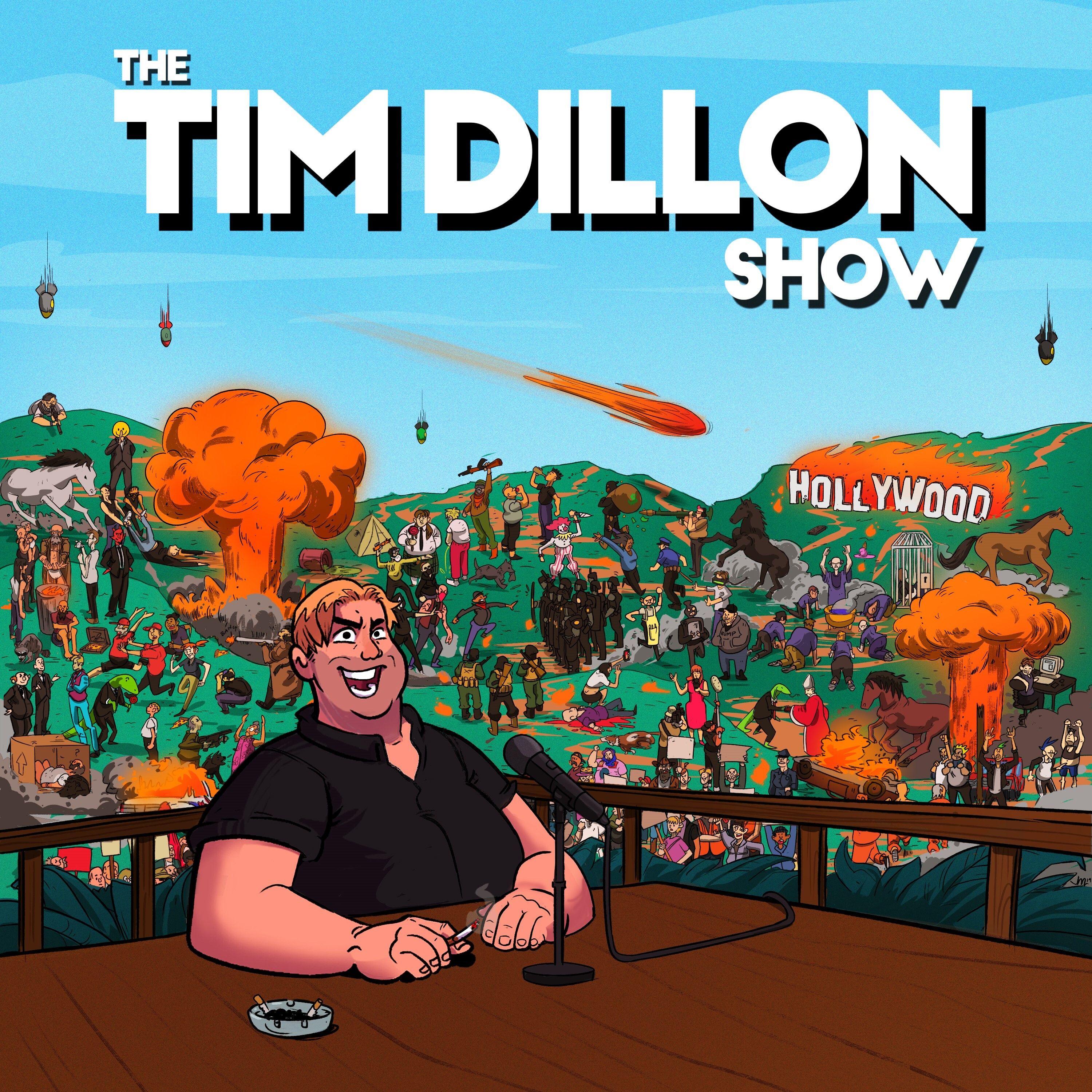
Overview of The Tim Dillon Show
This episode (482 — "Epstein Files & A Head In The Fryer") is comedian Tim Dillon’s lengthy, opinionated response to the partial public release of the Jeffrey Epstein case files. Dillon mixes reportage, outrage, conspiracy-minded speculation, dark humor, and extended metaphors to argue that the released documents confirm a trafficking/torture network among wealthy elites, condemns political figures he sees as complicit or evasive, and imagines a theatrical “last stand” by Bill and Hillary Clinton. The episode contains graphic descriptions, conspiracy framing, and a long, allegorical riff built around a real news item (an Olive Garden employee’s suicide attempt) used as a political metaphor.
Key topics discussed
- The partial release of the Jeffrey Epstein files: Dillon says roughly half of the files are public and uses them to argue the worst fears about trafficking, torture, and elite complicity are true.
- Criticism of Kash Patel: Dillon attacks Patel (former DOJ/FBI associate) for downplaying evidence that Epstein trafficked victims to other powerful individuals.
- Redactions and "protected" names: Dillon interprets heavy redactions as the government protecting elite perpetrators.
- Alleged use of coded language in emails: Dillon notes references to pizza, “littlest girl,” and other phrasing and treats them as code words for pedophilia.
- Epstein’s interests: claims Epstein was a transhumanist/Luciferian figure interested in eugenics, consciousness-uploading, and occult symbolism.
- Political theater and the Clintons: Dillon repeatedly speculates that Bill and Hillary Clinton have a last dramatic move (public testimony) that could be self-destructive and used to take down Donald Trump — he frames this as political self-immolation.
- Metaphor drawn from a news story: the suicide attempt of an Olive Garden worker (head in a fryer) becomes an extended metaphor for public spectacle, confession, and political “last moves.”
- Sponsors/readers’ ads are inserted intermittently (NeuroGum, LifeLock, Hims, DraftKings).
Main takeaways / host’s claims (presented as the host’s positions)
- Dillon asserts the released files substantiate a large-scale human-trafficking and torture operation tied to elites; in his view, the files confirm what many feared.
- He condemns government and media actors he believes are protecting the powerful by redacting names and minimizing the scope.
- He calls Kash Patel a liar for publicly stating he found no credible evidence Epstein trafficked victims to other people — Dillon argues Patel had access to more information.
- He claims Epstein’s circle embraced transhumanist and occult ideas (Luciferian motifs, Moloch) and that these beliefs help explain the depravity he attributes to the elites in the files.
- He frames the likely political climax as a public spectacle in which implicated public figures might confess or self-destruct, potentially to harm political rivals.
Notable quotes and lines (paraphrased where graphic)
- “The files suggest there was 100% a human trafficking operation where Jeffrey Epstein was procuring girls for wealthy and powerful people.”
- On Kash Patel: “He knows he’s lying ... he’s a liar and he should resign.”
- Describing redactions: Dillon argues the redactions exist to “protect the pedophiles that the U.S. government is protecting.”
- On elite ideology: Dillon describes Epstein and others as “Luciferians” who see themselves as deities and view ordinary people as expendable.
- Repeated metaphor: the Olive Garden fryer story becomes symbolic of “political self-immolation” — “the one thing she has left to do is put her head in the fryer.”
Tone, style, and rhetorical devices
- Tone: outraged, conspiratorial, darkly comic, hyperbolic, and often deliberately shocking.
- Style: rapid-fire monologue blending reported document excerpts (as the host interprets them), rhetorical questions, sarcastic hypotheticals, extended allegory, and recurring themes of elite depravity.
- Rhetorical devices: speculation presented as near-certainty, repetition (to drive points), vivid violent imagery and metaphors, and caricaturing political figures (especially the Clintons).
- Use of humor and sponsor segments breaks up the monologue but are delivered in the same sardonic register.
Content warnings
- Repeated graphic descriptions of sexual violence, torture, cannibalism imagery, and suicide.
- Heavy conspiratorial language and speculative accusations about public figures; many claims are presented as the host’s interpretation rather than established facts.
- Strong profanity and hostile rhetoric.
Critical notes and recommended next steps for listeners/readers
- Separate allegation from verified fact: Dillon mixes facts, personal interpretation, and speculative leaps. If you want to verify claims, consult primary sources — the Epstein files themselves and reputable investigative reporting from established outlets.
- Be cautious of redaction- and conspiracy-driven inferences: redactions alone do not prove specific identities or actions; contextual reporting and legal findings are needed.
- If following the story: look for reporting from multiple mainstream investigative outlets (e.g., major newspapers, long-form journalists) and public records for corroboration.
- If disturbed by the material: consider skipping the episode or reading sanitized summaries; the episode contains explicit and potentially triggering content.
Other elements in the episode
- Multiple sponsor ads: NeuroGum, LifeLock, Hims (ED/health service), DraftKings are read with typical ad language.
- The episode repeatedly references public figures (Kash Patel, Ghislaine Maxwell, Bill and Hillary Clinton, Donald Trump) and journalists/commentators but frames many of the claims as the host’s perspective, sometimes without sourcing beyond the released files.
Summary conclusion This episode is a provocative, polemical take on the Epstein file releases — combining outrage, dark comedy, and conspiratorial interpretation. It is valuable for understanding Tim Dillon’s perspective and rhetorical framing of the Epstein story, but listeners should treat factual claims as contested and seek corroboration from primary documents and reputable investigative reporting.