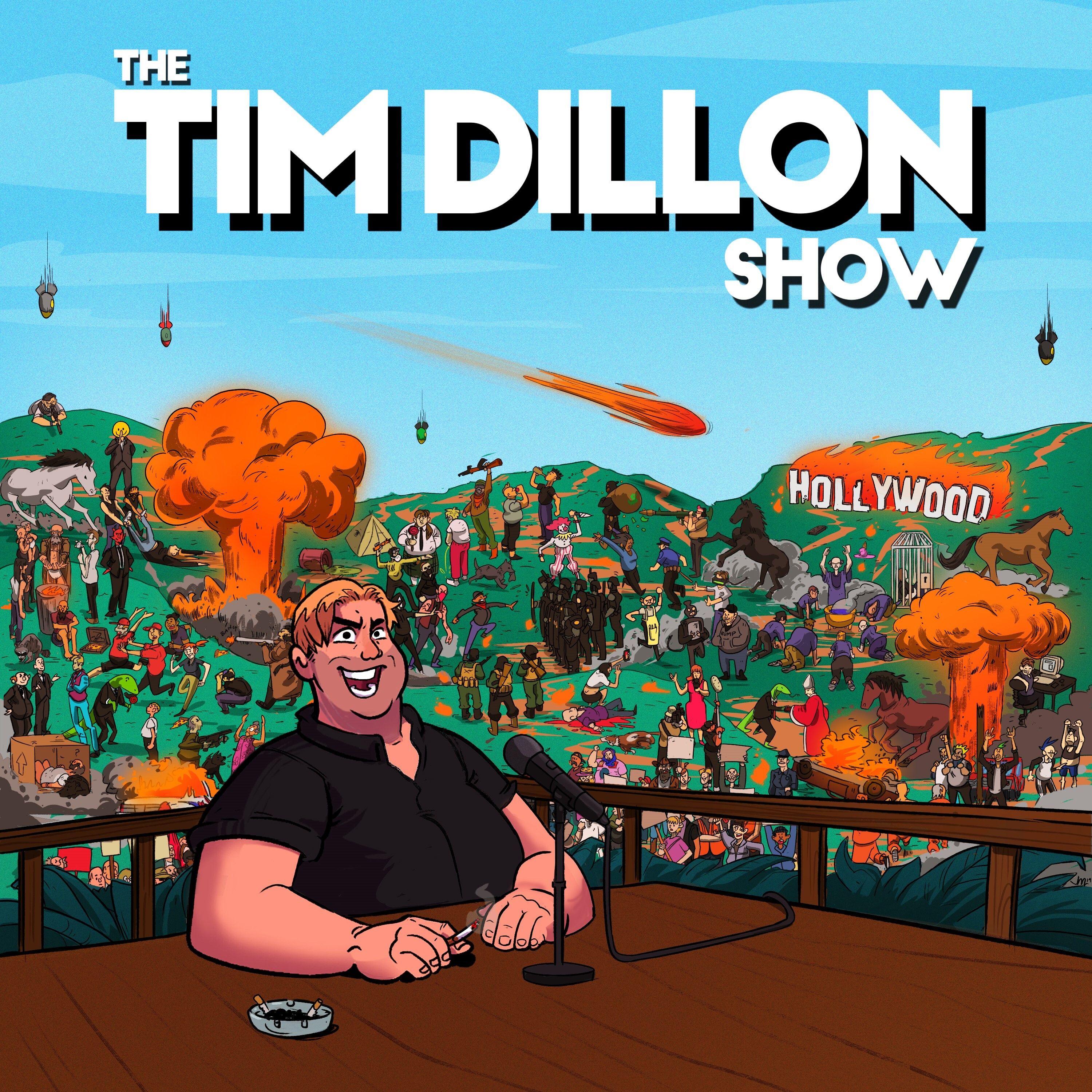
Overview of The Tim Dillon Show — Episode 479 (Trump’s Furries & ICE Wide Shut)
Comedian/host Tim Dillon delivers a blistering, satirical monologue that jumps between current events and culture-war targets. The episode skewers a Mar-a-Lago “Hero Dog Awards” event (mocking the “furry” optics), criticizes federal law-enforcement responses to protests (ICE and other federal agents), rips into Eric Adams’s brief crypto token launch, and lampoons Barry Weiss’s stewardship of CBS News and a newly promoted anchor. The tone is caustic, conspiratorial, and deliberately provocative — equal parts snark, dark humor, and political commentary.
Topics covered
- Mar-a-Lago’s “Hero Dog Awards” gala: optics, furries, and charity skepticism
- Coverage of ICE/federal agents using “non-lethal” rounds at protests; discussion of specific injuries (one protester blinded in one eye; the shooting death of Renée Good referenced)
- Mocking and analysis of the Hero Dog Awards nominees and descriptions
- Ads/sponsor reads (Trade coffee, Hims/Hims-style health, Helix mattress) woven into the episode
- Eric Adams launching an “NYC Token” crypto project and wider critique of fame → crypto “scam coins”
- Barry Weiss at CBS News: hiring choices (Tony Dokoupol), the Ta-Nehisi Coates exchange, and a segment critiqued as an embarrassing, emotional anchor performance
Key moments & notable quotes
- Opening praise/irony: Dillon grudgingly calls Mar-a-Lago’s family/military event “classy” before ridiculing the visuals (dog masks, 18th-century gowns).
- On optics: “It’s 1,000% psychotic” — reaction to holding a dog-masked gala amid recent violent incidents tied to the furry community.
- On ICE and protest policing: describes an anti-ICE protester who was hit in the face by a non‑lethal round and lost vision in one eye; Dillon mixes sarcastic praise for ICE with blunt advice: “if you run toward federal law enforcement… you can expect that something similar is going to happen.”
- Repeated favorite line (used to mock a reactionary attitude): “I’m not blaming anybody.” (Dillon uses this to ridicule the reported stepfather/father‑in‑law reaction to Renée Good’s shooting.)
- On crypto and fame: “Disgraced people with no image concerns left are going to try to use the little bit of fame they have left to launch a scam coin.”
- On CBS News under Barry Weiss: labels recent hires/segments “a complete and total embarrassment,” especially a crying anchor segment about Miami.
Host’s arguments / positions (summarized)
- Charity events and celebrity/elite “good works” are often optics-driven and can be tone-deaf — the Mar-a-Lago dog-gala is an example.
- Protest policing by federal agents is escalating and being normalized; Dillon is cynical about both protesters’ tactics and the state’s violent response.
- Modern fame is decoupled from stable income; crypto “tokens” let fleetingly famous or disgraced figures monetize relevance in predatory ways.
- Mainstream media (example: CBS under Barry Weiss) is making poor editorial and talent choices — prioritizing theatrics and optics over sober journalism.
Notable clips & references to follow up
- Mar-a-Lago / American Humane Society “Hero Dog Awards” (Dillon reads and mocks award descriptions).
- Local news clips/Dillon’s played excerpts: ICE protest footage and reporting on a protester blinded by a projectile; reporting on Renée Good’s killing and family statements.
- Eric Adams’ NYC Token launch and videos/promo material.
- Ta-Nehisi Coates interview exchange with Tony Dokoupol (CBS) and the subsequent promo/anchor clip where the new hire becomes visibly emotional about Miami.
Tone, style & audience cues
- Heavy sarcasm, dark humor, and theatrical ranting.
- Frequent exaggeration, conspiratorial asides, and personal mockery of public figures.
- Designed for listeners who expect comic outrage and partisan-provocative commentary rather than neutral reporting.
Main takeaways
- Dillon frames current elite behavior (celebrity/charity spectacles, tokenized fame) as performative and tone-deaf, especially during crises.
- He expresses cynicism about both state violence and the protest tactics that provoke it, seeing mutual escalation and tragic outcomes.
- The episode warns of a cultural/financial trend: fame monetized via crypto tokens, which Dillon views as predatory and symptomatic of degraded institutions.
- Media institutions are portrayed as declining into spectacle, trading journalism for personality-driven stunts.
Accuracy & context notes
- Much of the episode is opinion and satire; statements are frequently rhetorical or sarcastic rather than strictly factual reporting.
- Host references to specific violent incidents and personal details (e.g., shootings, who was involved) should be verified through independent news sources if factual accuracy is important. Dillon mixes humor and claims that may exaggerate or simplify complex events.
Suggested follow-ups (if you want primary sources)
- Watch local news footage/reports about the ICE protest incident and Renée Good’s case to confirm details.
- Review the American Humane Society’s Hero Dog Awards materials to see the event content and award descriptions.
- Read reporting on Eric Adams’ NYC Token launch and market response.
- Look up CBS News coverage and the Ta‑Nehisi Coates / Tony Dokoupol exchange and subsequent promos for full context.
Summary: Episode 479 is a fast-moving, acerbic critique of elite spectacle, policing and protest dynamics, the commodification of fame through crypto, and recent editorial choices at a major news outlet — all delivered with Tim Dillon’s signature abrasive, comedic style.