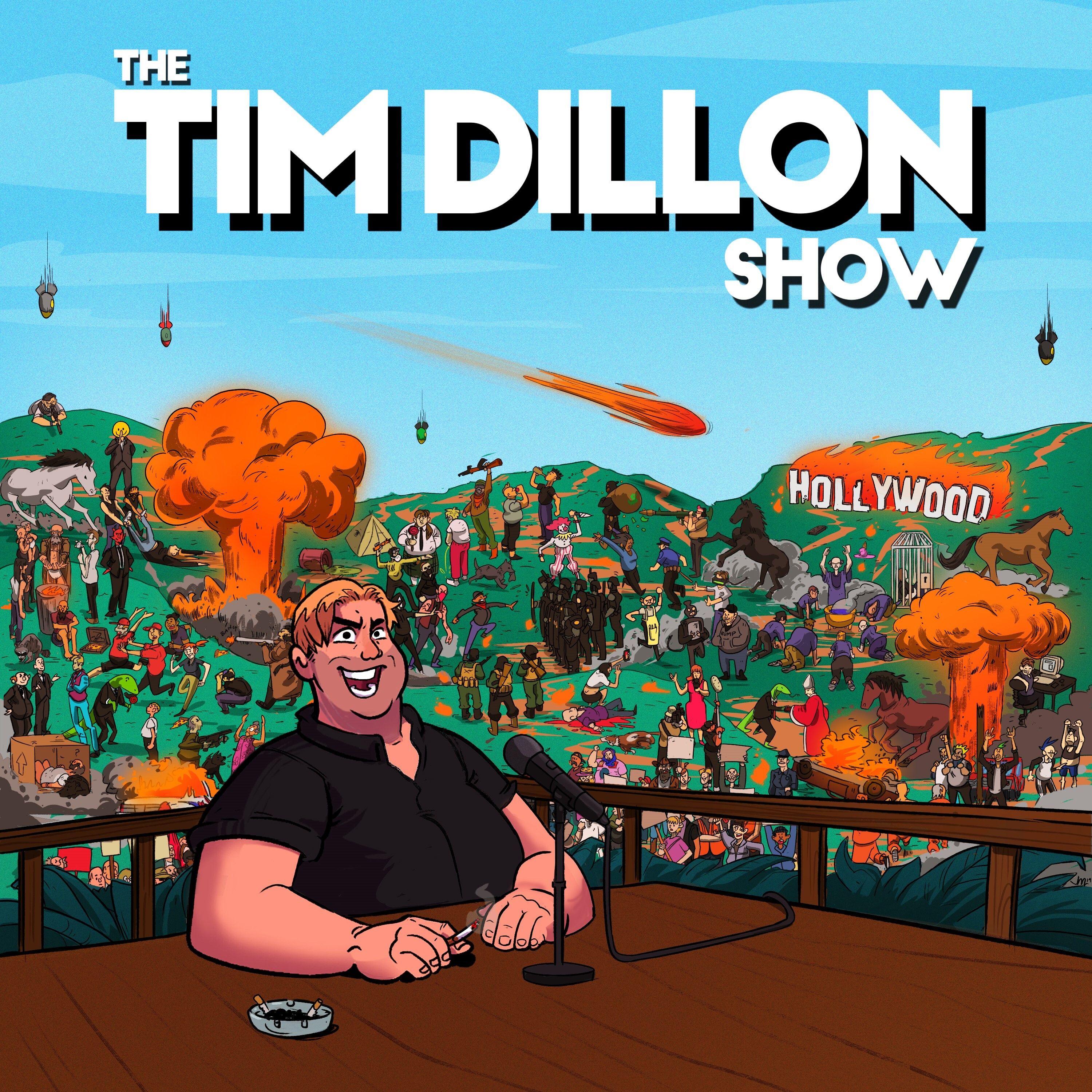
Overview of The Tim Dillon Show #503
This episode is a wide-ranging, satirical monologue that starts with Tim Dillon reacting to teen “flash mob” chaos in Newport Beach and expands into a broader rant about youth disorder, social media virality, surveillance tech, robot policing, Middle East war rhetoric, and the Charlie Kirk case. The tone is deliberately apocalyptic and comedic, with Dillon mixing real news clips with exaggerated conclusions about where American culture is headed.
Teen Flash Mobs, Newport Beach, and Youth Disorder
Tim spends a large portion of the episode fixated on viral teen gatherings that devolve into fighting, looting, fireworks chaos, and property destruction in Newport Beach.
His main argument
- Kids and teens are reportedly coordinating these gatherings through social media to “go viral.”
- He argues the phone is central to the behavior: people are filming disorder instead of actually experiencing it.
- He frames the trend as part of a larger decline in youth responsibility, boredom, and moral seriousness.
His proposed “solution” theme
- Tim repeatedly jokes that young people need jobs, structure, and accountability.
- He even makes an absurd case for earlier child labor and teen work as a way to keep kids out of trouble.
- He contrasts today’s teens with older generations that had working papers, sports, bikes, and more direct responsibility.
Surveillance Tech, Palantir, and Robot Policing
A major through-line is Tim’s speculation that rising disorder will eventually justify high-tech policing and surveillance.
What he argues
- He suggests that local police look ineffective or clumsy in these situations.
- He imagines companies like Palantir stepping in with “robot dogs” or “robot spiders” to restore order.
- The bit escalates into a darkly comic vision of automated enforcement, with teens being confronted by machines instead of human officers.
The bigger point
- Tim is mocking both social breakdown and the inevitable tech-fix response.
- He implies people will accept more surveillance if it promises safety and fewer break-ins, riots, and flash mobs.
Netanyahu, Turkey, Iran, and War Rhetoric
The episode shifts into a critique of Benjamin Netanyahu’s comments on Turkey and Iran.
Key points
- Tim mocks Netanyahu’s framing of Turkey as a threat to Israel and the U.S.
- He is skeptical of the idea that every hostile statement or “chant” amounts to a genuine casus belli.
- He repeatedly questions the logic of treating every ideological opponent as an existential enemy.
Iran and chemical weapons
- The episode also includes a segment about claims that Iran retains chemical or biological weapons.
- Tim treats the rhetoric as recycled “Iraq-style” fearmongering.
- He laughs at the escalation of claims and questions whether this is another propaganda loop rather than a clear-eyed assessment.
Charlie Kirk Case: Tim’s Suspicion and Media Critique
The final major topic is the Charlie Kirk case, which Dillon says feels incomplete and oddly presented.
What he says
- He doesn’t claim certainty about what happened, but says the public is not getting the full story.
- He notes missing context, fragmented information, and a general sense that the case doesn’t “line up.”
- He contrasts this with past high-profile cases like O.J. Simpson, Menendez, and Lacey Peterson, where the media coverage was exhaustive and nonstop.
His broader media critique
- Tim argues that modern media feels more managed, selective, and less willing to air every theory in public.
- He misses the spectacle and open-ended weirdness of older courtroom dramas.
- The takeaway is not a firm conclusion, but a distrust of the tidy narrative being presented.
Other Notable Bits
Viral toy trend injuries
- Tim covers a story about kids microwaving squishy stress toys, causing serious burns.
- He uses this as another example of children following dangerous internet trends for attention.
Running joke about youth nihilism
- Throughout the episode, he paints kids as desensitized, internet-raised, and obsessed with clout.
- The bit is exaggerated for effect, but his recurring theme is that many young people lack structure and purpose.
Cat cameo
- Tim’s cat, Albert, appears throughout the episode and becomes a recurring on-air distraction and comic prop.
Main Takeaways
- Tim sees teen social media behavior as a symptom of deeper cultural collapse.
- He thinks public disorder will accelerate demand for automated surveillance and robot policing.
- He views war rhetoric around Turkey and Iran as recycled fear politics.
- He remains skeptical of the completeness of the Charlie Kirk case coverage.
- The episode is less a linear discussion than a series of connected rants about chaos, control, and media hysteria.
Tone and Style
- Highly satirical and exaggerated
- Dark, cynical, and anti-establishment
- Combines news commentary with absurdist hypothetical scenarios
- Frequently shifts from genuine concern to comic overstatement