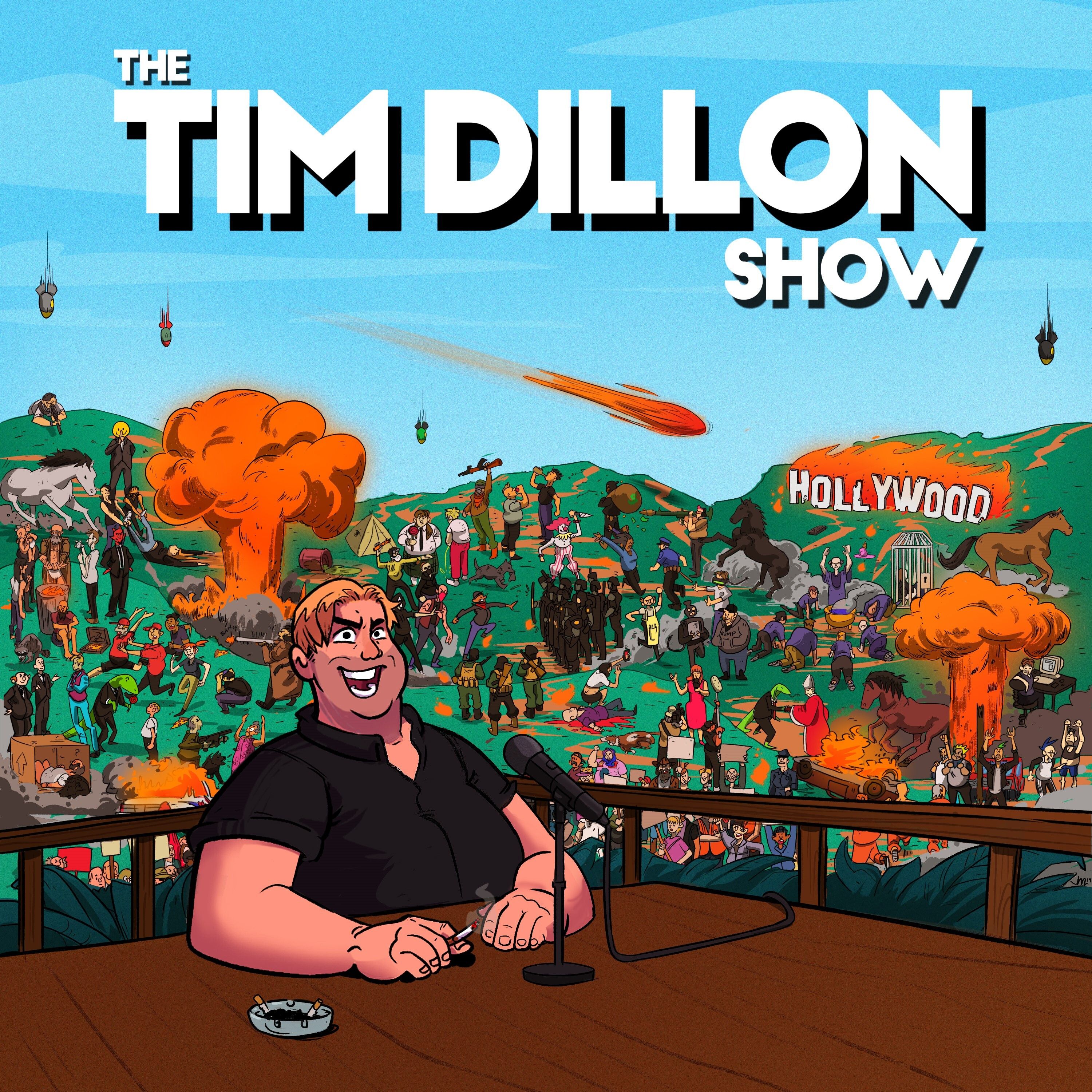
Overview of The Tim Dillon Show
This episode is a typical Tim Dillon mix of Halloween banter, pop-culture asides, and long political rants. The main themes are the Israel-Gaza conflict, French riots, the Ohio governor’s race involving Vivek Ramaswamy and Amy Acton, the Ukraine war, and the power of tech billionaires. Dillon’s style here is satirical, abrasive, and highly opinionated, with recurring jokes about hypocrisy, political cults, and media narratives.
Halloween / Opening Banter
Horror-movie cameo
- Dillon opens with Halloween-season chatter and talks about his cameo in Eli Roth’s Thanksgiving, where he was “beheaded.”
- He jokes about the dummy and 3D head made for the film and says he’s considering bringing the head to New York for creepy decor.
Israel-Gaza Documentary and “Collateral Damage”
Reaction to a documentary on Israeli strikes
- Dillon discusses a film about Israeli special forces and targeting in Gaza, framing it as a morally uncomfortable look at how strikes are chosen.
- He says the documentary tries to show internal conflict about civilian deaths, but in his view it still ends up normalizing or obscuring the scale of destruction in Gaza.
- He fixates on the term he heard in the film for collateral damage and jokes that it has entered his daily vocabulary inappropriately.
Core takeaway
- His criticism is that the documentary presents moral struggle on the Israeli side while, from his perspective, the outcome still looks like indiscriminate destruction.
France Riots and Civil Unrest
What Dillon says is happening
- He talks about riots in France, starting from protests over education funding and school supplies, then spiraling into looting, arson, and chaos.
- He describes the unrest as a mix of:
- frustrated youth,
- anarchists,
- opportunists,
- and people who seem disconnected from French civic life.
His broader point
- Dillon argues that once protests become riots, they stop being political and become destructive theater.
- He questions whether the people involved care about France at all or about maintaining civil society.
- He also ties the unrest to broader social collapse: cost-of-living pressures, AI anxiety, youth alienation, and doomscrolling culture.
Notable observation
- He points to a shop owner pleading with looters to stop and uses it to illustrate how quickly “principled protest” can turn into indiscriminate destruction.
Ohio Governor Race: Vivek Ramaswamy vs. Amy Acton
The controversy
- A major segment is devoted to an attack ad connected to Vivek Ramaswamy’s Ohio governor campaign.
- The ad features Amy Acton’s estranged mother accusing Acton of lying about her childhood and her history of abuse.
- Dillon calls it one of the most shocking political ads he’s ever seen.
Why it’s explosive
- The ad turns a childhood rape allegation and family trauma into campaign ammunition.
- Dillon initially jokes that he might side with the mother just because of how dramatic the situation is, but later notes that court records and reporting appear to corroborate Acton’s account.
How he frames the race
- He calls it an absurd and grim choice: “Medicare con man vs. tent girl.”
- He says the race feels like politics has become family trauma, not policy.
- He also mentions that the betting markets appear to be moving against Vivek after the ad.
J.D. Vance’s role
- Dillon references J.D. Vance defending the campaign attack and treating the controversy as fair game.
- He uses this to reinforce his view that Ohio politics has become grotesque and deeply unserious.
MAGA, Epstein, and the “Cult” Dynamic
Dillon’s criticism of Trump-world
- He argues that Trump’s movement has become a cult, with supporters abandoning prior principles.
- He points to the disconnect between earlier demands for transparency about Epstein and the current tendency to attack anyone who raises the issue.
Rally behavior
- Dillon describes Trump rally attendees as increasingly unhinged and says many appear incapable of basic self-reflection or independent thought.
- He uses the image of people attacking someone wearing a “release the Epstein files” shirt as evidence that the movement has become purely tribal.
His broader warning
- He says many supporters have been sold out by Trump and don’t fully realize it yet.
- He predicts the eventual emotional fallout will be severe for people who have gone all-in.
Ukraine, Starlink, and Tech Power
Elon Musk and the war
- Dillon discusses Elon Musk limiting Ukraine’s access to SpaceX/Starlink and says the episode shows how much influence private tech power now has over warfare.
- He argues that Musk, Bezos, Zuckerberg, and similar figures wield unprecedented political and military influence through satellites, drones, AI, and data systems.
His view of the war
- He says the Ukraine war should end diplomatically.
- He argues the U.S. has used Ukraine as a proxy to weaken Russia, and that strategy has produced enormous casualties without resolving the conflict.
Takeaway
- Dillon frames tech elites as acting like a parallel government, with power that can shape wars and policy more than elected officials can.
Russia and the Epstein Narrative
Skepticism about a new book
- He mocks a new book claiming Russia created the Epstein conspiracy narrative, calling the thesis absurd.
- His point is that Russia gets used as a universal explanation for too many unrelated political problems.
Larger criticism
- Dillon argues that “Russia did it” has become a lazy catch-all framing for everything from disinformation to domestic political resentment.
Tone and Style
- The episode is less about careful policy analysis and more about Dillon using current events as material for outrage, sarcasm, and dark comedy.
- He repeatedly contrasts “official” narratives with what he sees as obvious reality.
- The throughline is distrust: distrust of politicians, media framing, protest movements, elite power, and public performance.
Sponsor / Ad Breaks
The episode also includes multiple ad reads, including:
- Mint Mobile
- Gusto
- Quince
- Underdog
- ButcherBox
- Hims
- Mod
- Quo
- Big O Tires
These are woven throughout the episode, but the main content is the political and cultural commentary above.