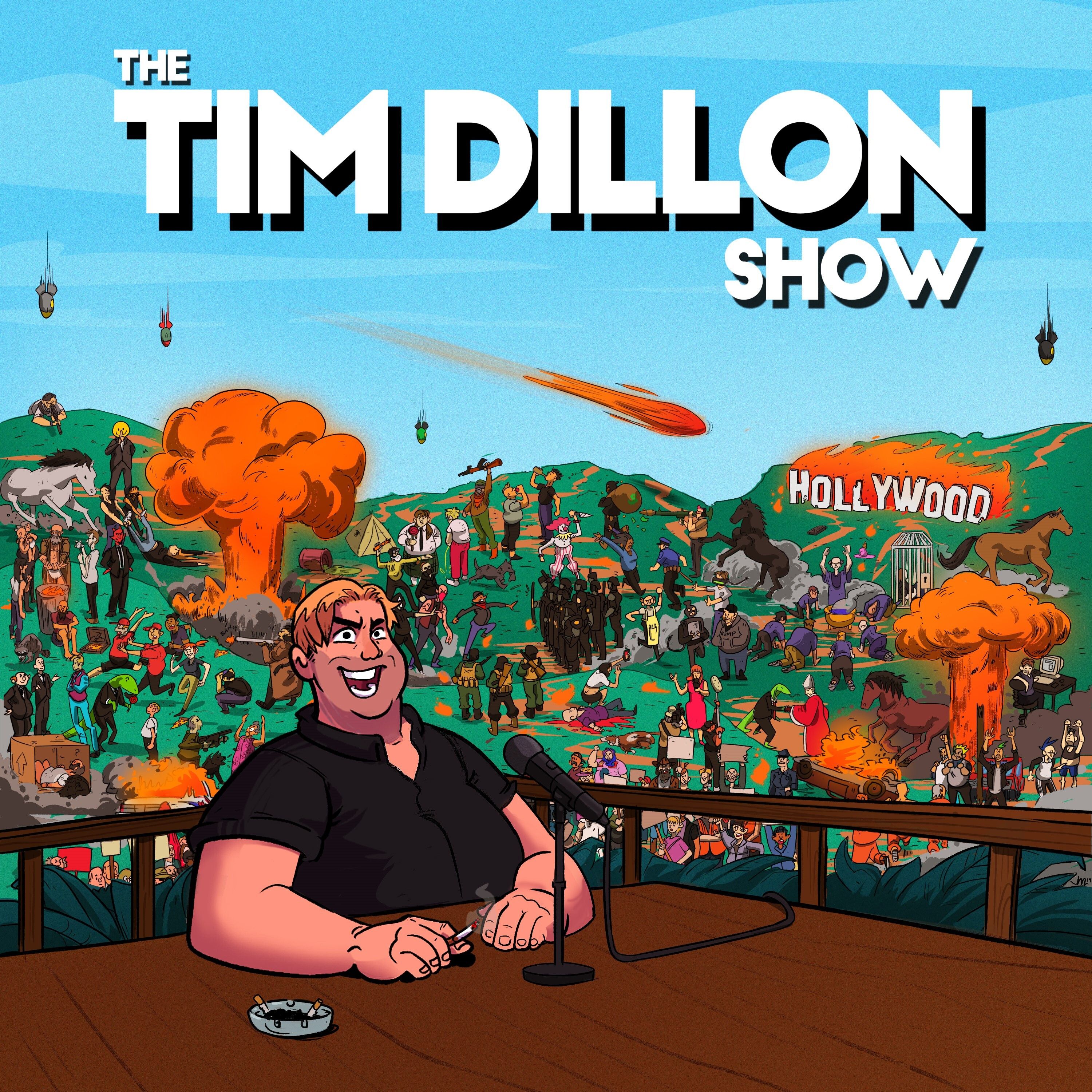
Overview of The Tim Dillon Show — “517 - Trump’s Bimbos, Live-Streamed Executions, & Crumbl Cookies”
In this episode, Tim Dillon delivers a dark, satirical monologue about the Trump administration, treating politics like a failing reality show and arguing that modern power is driven by spectacle, grift, and “content strategy.” He riffs on proposed public executions, White House infighting, Kimberly Guilfoyle rumors, Crumbl Cookies’ marketing missteps, and an AI-generated Israeli rap, using each topic to skewer corruption, cynicism, and America’s appetite for outrage and entertainment.
Main Topics Covered
Trump administration as a collapsing TV production
- Dillon frames the administration as a show losing ratings and internal control.
- He jokes that officials are searching for a new “content strategy” now that their usual stunts no longer energize supporters.
- The White House is portrayed as a place where loyalty is fragile and everyone is preparing to protect themselves.
The “live-streamed execution” bit
- A major running joke is the idea that the administration considered live-streaming an execution to distract the public from inflation and broader discontent.
- Dillon mocks the logic of monetizing violence like a streaming product, joking about ad-supported vs. premium, ad-free execution tiers.
- He presents Pete Hegseth as the figure pushing this extreme “content” mindset.
Internal conflict, loyalty, and political fallout
- Dillon says the administration is full of self-interested operators who will quickly turn on each other once power fades.
- He predicts investigations, impeachment-related fallout, and a scramble for legal protection and deals if Democrats gain control of Congress.
- The central theme is that these people are loyal only while it benefits them.
Kimberly Guilfoyle and the “burn book” narrative
- Dillon spends a long stretch mocking Kimberly Guilfoyle as emblematic of the administration’s image-first, opportunistic culture.
- He jokes about her social climbing, relationships, private jets, and possible leverage over powerful people.
- The bit culminates in the idea that she may be holding damaging secrets and could become a major liability.
Crumbl Cookies and “dirty soda”
- Dillon uses Crumbl Cookies as an example of a viral brand that overreached after pandemic-era hype.
- He mocks the company’s attempt to pivot into “dirty sodas,” framing it as a cynical attempt to addict kids with absurd sugar levels.
- He compares the strategy to a horror-movie plot, especially Halloween 3, where consumer products become a vehicle for mass harm.
Kelly Clarkson and the Brooklyn store dispute
- Dillon briefly comments on a viral story involving Kelly Clarkson being denied the purchase of an item at a Brooklyn store.
- He uses it to mock customer entitlement, boutique-store pretension, and the weirdness of celebrity interactions with ordinary retail spaces.
Israel’s AI-generated rap response
- Dillon reacts to Israel’s AI-generated rap video responding to accusations of colonization.
- He finds the tactic bizarre and mockable, especially the choice to use an artificial Black-presenting rapper to make the point.
- He uses the clip to continue his broader discussion of propaganda, media strategy, and the limits of digital persuasion.
Key Takeaways
- Politics as entertainment: Dillon repeatedly argues that modern politics operates like reality TV, with image, drama, and viral moments often mattering more than governance.
- Everyone is transactional: The episode emphasizes that many people around power are motivated by money, access, and self-preservation rather than principle.
- Branding can backfire: Whether it’s the White House, Crumbl, or Israel’s PR efforts, Dillon suggests that “content strategy” can become absurd when it replaces substance.
- The system eats its own: As power erodes, the insiders Dillon describes are portrayed as turning on one another, leaking secrets, and fighting for survival.
Tone and Style
- Highly satirical and caustic
- Politically cynical
- Pop-culture and media-saturated
- Built around exaggeration, impersonation, and shock humor
Bottom Line
This episode is less a structured political analysis than a long, comedic rant about the collapse of institutional seriousness in America. Dillon uses Trump-world gossip, brand failures, and international propaganda to make the same point over and over: everything is being turned into content, and the people running it are mostly opportunists waiting for the next grift.