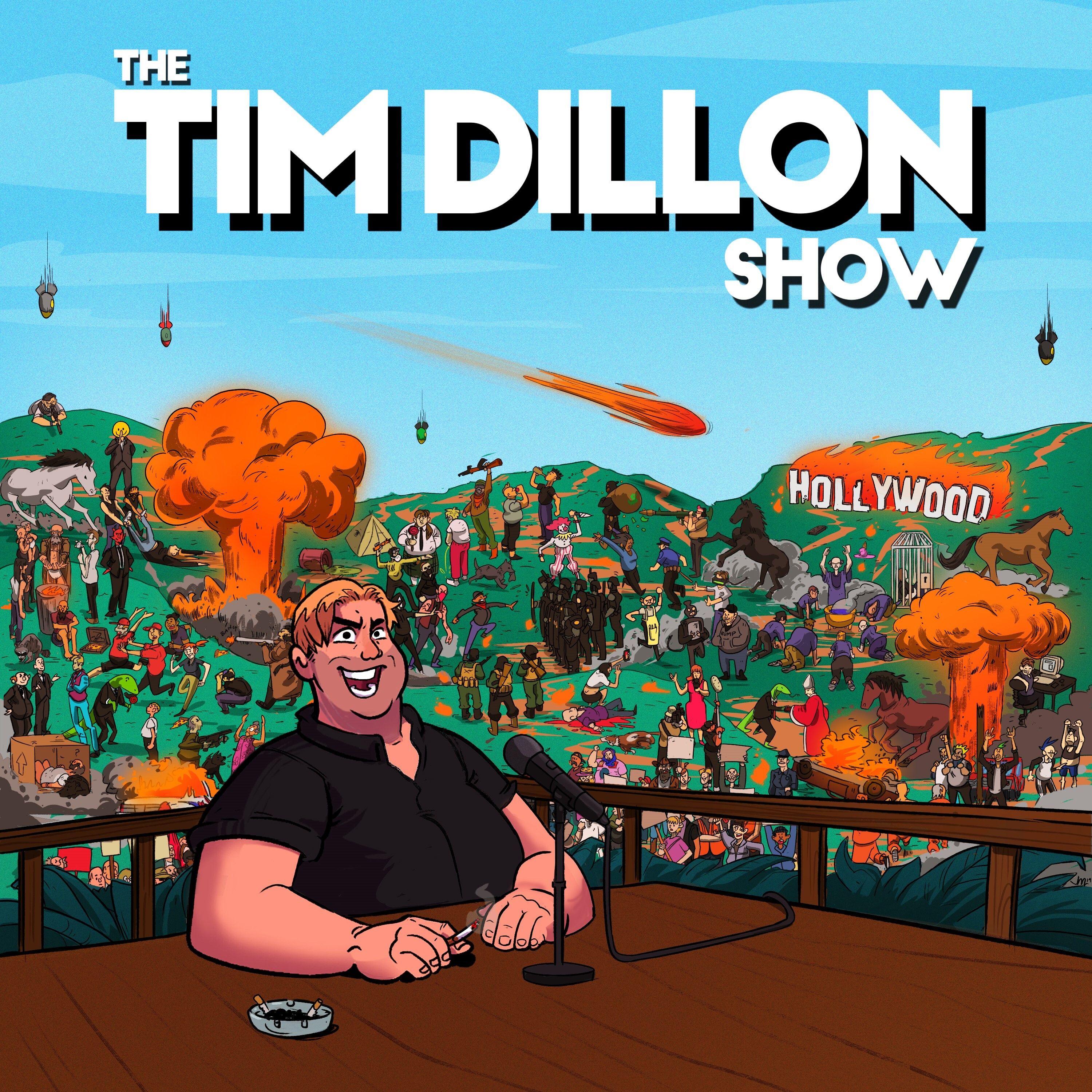
Overview of The Tim Dillon Show — Episode 513
This episode is a fast-moving satirical rant that jumps between celebrity news, U.S. politics, AI panic, and pop-culture controversy. Tim Dillon uses the Ed Sheeran tour fallout, Kash Patel’s FBI policies, Mitch McConnell’s health, Markwayne Mullin’s living situation, Sydney Sweeney’s ad campaigns, and the AI boom as springboards for exaggerated commentary about corruption, image management, power, and hypocrisy.
Main Topics Discussed
Ed Sheeran, Macklemore, and the Gaza controversy
- Tim opens by jokingly “sponsoring” the episode with Ed Sheeran’s tour, then pivots into commentary on:
- Macklemore saying “Free Palestine”
- openers and band members allegedly dropping off Sheeran’s tour
- He frames Sheeran as a performer caught in political backlash and says the situation is a reminder that public figures are forced to navigate activism, optics, and business pressure.
- The segment turns into a broader rant about Gaza, Israel, Lebanon, Iran, and the difficulty of public moral positioning.
Kash Patel and the FBI
- A major recurring target is Kash Patel, whom Tim treats as a bizarre but powerful government figure.
- He jokes about Patel’s influence over FBI culture and says Patel is handling everything from Epstein-related issues to national security crises.
- The key story discussed is Patel’s move to remove bestiality as an automatic disqualifier for FBI applicants.
- Tim presents this in a deliberately outrageous way, joking that the policy is really about leverage, blackmail, and control.
- The segment is built around a Senate exchange where Patel is pressed to explain the policy.
- The bit escalates into absurd hypotheticals about “victims of bestiality” being protected, then becomes a broader satire of how intelligence and law enforcement institutions operate.
Markwayne Mullin’s roommate situation
- Tim discusses reports that Homeland Security Secretary Markwayne Mullin lives with Rep. Jason Smith in Washington, D.C.
- He treats the arrangement as odd and potentially revealing, especially coming from politicians who publicly perform traditional values.
- The core joke is that the setup sounds less like a practical housing arrangement and more like an unusually intimate adult friendship.
- Tim notes the ethics concern around below-market rent and emphasizes how strange it is for a cabinet secretary to have a roommate.
Bernie Sanders, Steve Bannon, and AI regulation
- Tim contrasts Ed Sheeran’s drama with what he calls the “real ticket”: Bernie Sanders and Steve Bannon teaming up for a pro-human, anti-AI event.
- He jokes that the pairing itself shows how serious the AI issue is.
- Sanders’ warning that AI is advancing exponentially is played as a dramatic warning about the future of work, power, and human agency.
- Tim frames the movement as a strange coalition of opposites united by fear of unchecked tech power.
Mitch McConnell’s decline and Senate absurdity
- The episode includes a long riff on Mitch McConnell’s apparent frailty and confusion.
- Tim jokes that McConnell is being kept alive and “used” for votes, describing him as essentially a political corpse.
- The Senate footage is used to mock the performative, mechanized nature of governance.
- Tim’s point is that the institution is so broken that lawmakers are now just managing the appearance of functioning democracy.
Sydney Sweeney, female athletes, and ad controversy
- One of the biggest pop-culture segments focuses on backlash over Sydney Sweeney’s nearly nude sports ad campaign.
- Tim argues the outrage is overblown and says the ad is clearly using Sweeney’s sex appeal as part of the marketing.
- He mocks the idea that female athletes are “being harmed” by a hot actress posing with sports equipment.
- The bit turns into a broader debate about:
- sexualization in advertising
- women’s sports and visibility
- the difference between athletic branding and celebrity branding
- He repeatedly jokes that Sweeney is an obvious attention magnet and that brands will keep using her because controversy drives engagement.
AI panic, Anthropic, and the tech bubble
- Tim returns repeatedly to skepticism about AI companies and the way they market fear.
- He singles out Anthropic’s CEO, Dario Amodei, as part of a broader pattern:
- tech leaders warning that AI could be catastrophic
- while simultaneously asking for huge amounts of money and influence
- He suggests the “AI apocalypse” messaging is partly a PR strategy to justify growth, regulation, and investment.
- Tim also references:
- Sam Altman
- Elon Musk
- an upcoming documentary on Musk
- the public-relations problem tech leaders have because they appear socially alien and politically powerful
- His conclusion: AI leaders want the public to feel frightened, dependent, and ultimately resigned to their control.
Recurring Themes
Power, leverage, and corruption
- Throughout the episode, Tim returns to the idea that institutions are held together by leverage, blackmail, and image management.
- He treats political and tech elites as people who survive through optics, not legitimacy.
Hypocrisy in public morality
- The show repeatedly mocks public figures who preach values while living in ways that contradict them.
- Examples include:
- politicians with strange living arrangements
- law enforcement leaders with bizarre policy changes
- tech CEOs warning about danger while profiting from it
Satire through escalation
- Most of the episode’s humor comes from taking a real news item and pushing it into absurdity.
- Tim often uses intentionally offensive exaggeration to expose what he sees as the ridiculousness of the original story.
Advertisements and Sponsorship Reads
- YouTube Premium
- Nutrafol
- Mint Mobile
- Underdog fantasy sports
- ButcherBox
- Ethos life insurance
- DAZN / BKFC promotion
Bottom Line
This episode is classic Tim Dillon: a chaotic, politically charged comedy monologue that uses current events as fuel for cynicism, absurdity, and social critique. The throughline is distrust of institutions — whether government, tech, sports marketing, or celebrity culture — and the belief that nearly everything public-facing is driven by leverage, money, and performance.