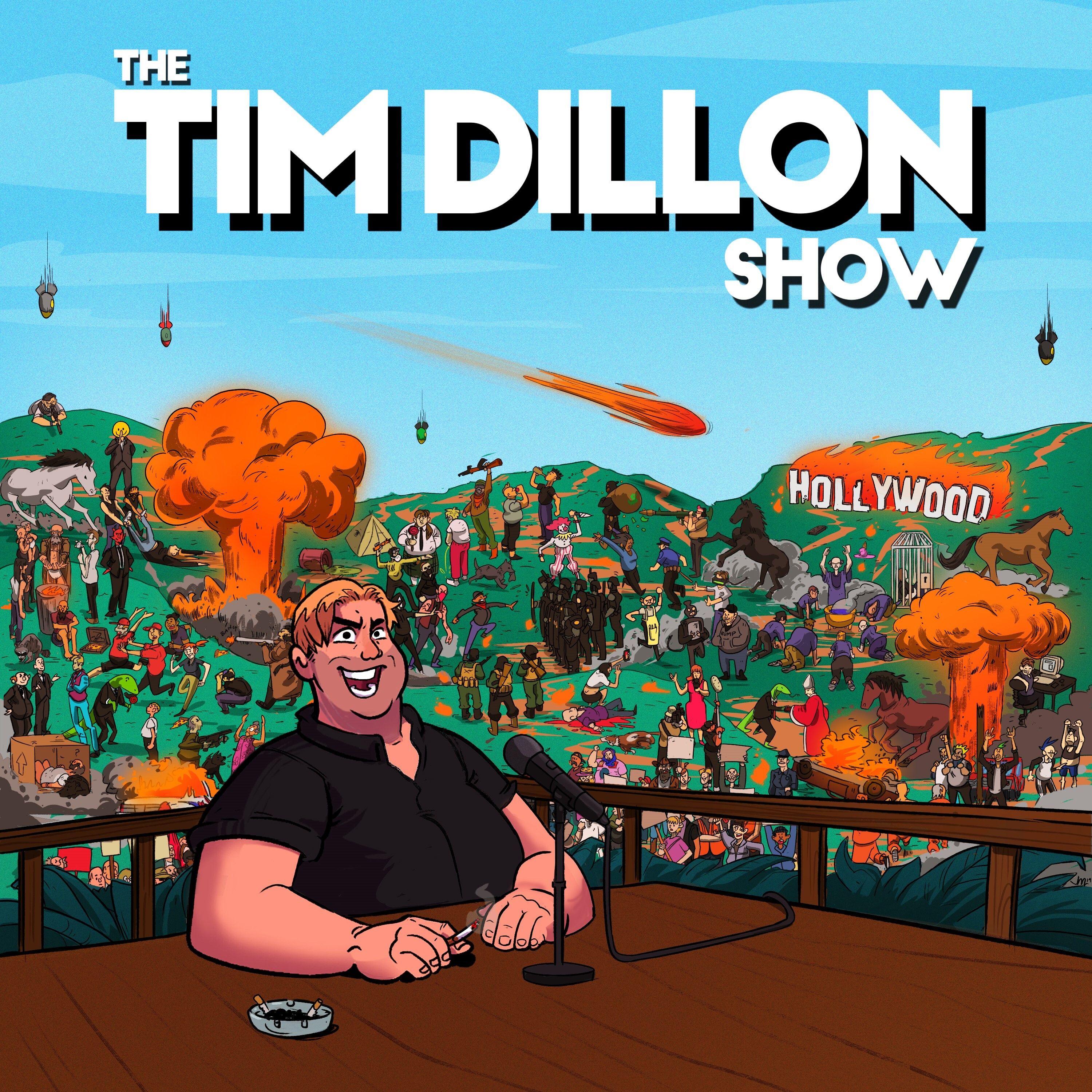
Overview of The Tim Dillon Show Episode 507
This episode is a dark, satirical riff on American decline, online spectacle, and institutional absurdity. Tim Dillon opens with the alleged self-harm livestream involving Perez Hilton, pivots to Trump’s rhetoric around Iran and the idea that the U.S. can no longer “win” wars, and then spends a long segment skewering social media as a machine for attention, humiliation, and even violence. The episode closes with a furious, exaggerated commentary on a Georgia family being pushed out of their home for an AI/data center project, framed as a symbol of corporate power and the death of ordinary life.
Main Topics Covered
Perez Hilton’s Livestream Incident
- Dillon reacts to reports that Perez Hilton appeared to cut himself on a live stream and was later taken to the hospital.
- He repeatedly questions whether the blood was real, suggesting the performance may have been theatrical or manipulative.
- The discussion turns to mental health, public spectacle, and the ethics of self-harm being broadcast online.
- Dillon also frames it as particularly troubling because Hilton has children.
Trump, Iran, and “Campaigns of Lies”
- Dillon reacts to Trump’s public comments on Iran and possible U.S. military action.
- His central point: America no longer convincingly projects military dominance, so it falls back on bluster, threats, and propaganda.
- He argues the government’s real strategy is to spin defeat as victory through repeated lies until the public accepts a version of events.
- He compares this to political theater, calling Trump more of a traveling entertainer/showman than a traditional president.
Social Media as a Death Spiral
- Dillon argues social media has lost any real “fun” or utility and has become a hostile, chaotic environment.
- He breaks social media into “buckets”:
- politics
- influencers
- fitness/body-image content
- food/travel
- angry parents
- attention-seeking moral outrage
- He says the platform ecosystem increasingly drives people toward breakdowns, harassment, and violence rather than connection.
- He references a news story about a woman who posted a TikTok trend about her husband being a pedophile and was later killed by him, using it as an example of social media escalating real-world conflict.
AI Data Centers, Eminent Domain, and Displacement
- The episode ends with a story about a Georgia family losing their home to make room for power infrastructure tied to AI/data centers.
- Dillon mocks the idea of ordinary people resisting “progress,” while also being bluntly cynical about corporate and tech priorities.
- He frames data centers as the new economic reality and says people should not expect to keep land, water, or homes in the face of that transition.
- The segment is heavily satirical, but its underlying point is clear: technology and capital are displacing communities, and the public is expected to accept it.
Key Takeaways
- The episode is highly satirical and deliberately extreme: Dillon uses hyperbole to attack politics, media, tech, and culture.
- Public performance is a recurring theme: whether it’s livestream self-harm, political speeches, or social media posts, he sees modern life as increasingly theatrical.
- America is portrayed as losing its grip: militarily, culturally, and morally, the country is depicted as bluffing its way through decline.
- Social media is framed as toxic by design: Dillon argues it rewards instability, outrage, and self-destruction.
- Tech progress is shown as dehumanizing: the Georgia data-center story becomes a symbol of how infrastructure and AI can override local lives and property rights.
Notable Commentary
- Dillon repeatedly suggests that lying and propaganda have become default tools of politics, especially when reality is inconvenient.
- He argues that America’s old strength was not just power, but being entertaining and culturally magnetic.
- The data-center segment reflects his broader cynicism that modern society increasingly treats people as expendable in service of corporate efficiency and AI expansion.
- The episode mixes genuine anxiety with absurd comedy, using shocking exaggeration to underline how unstable and performative public life feels.