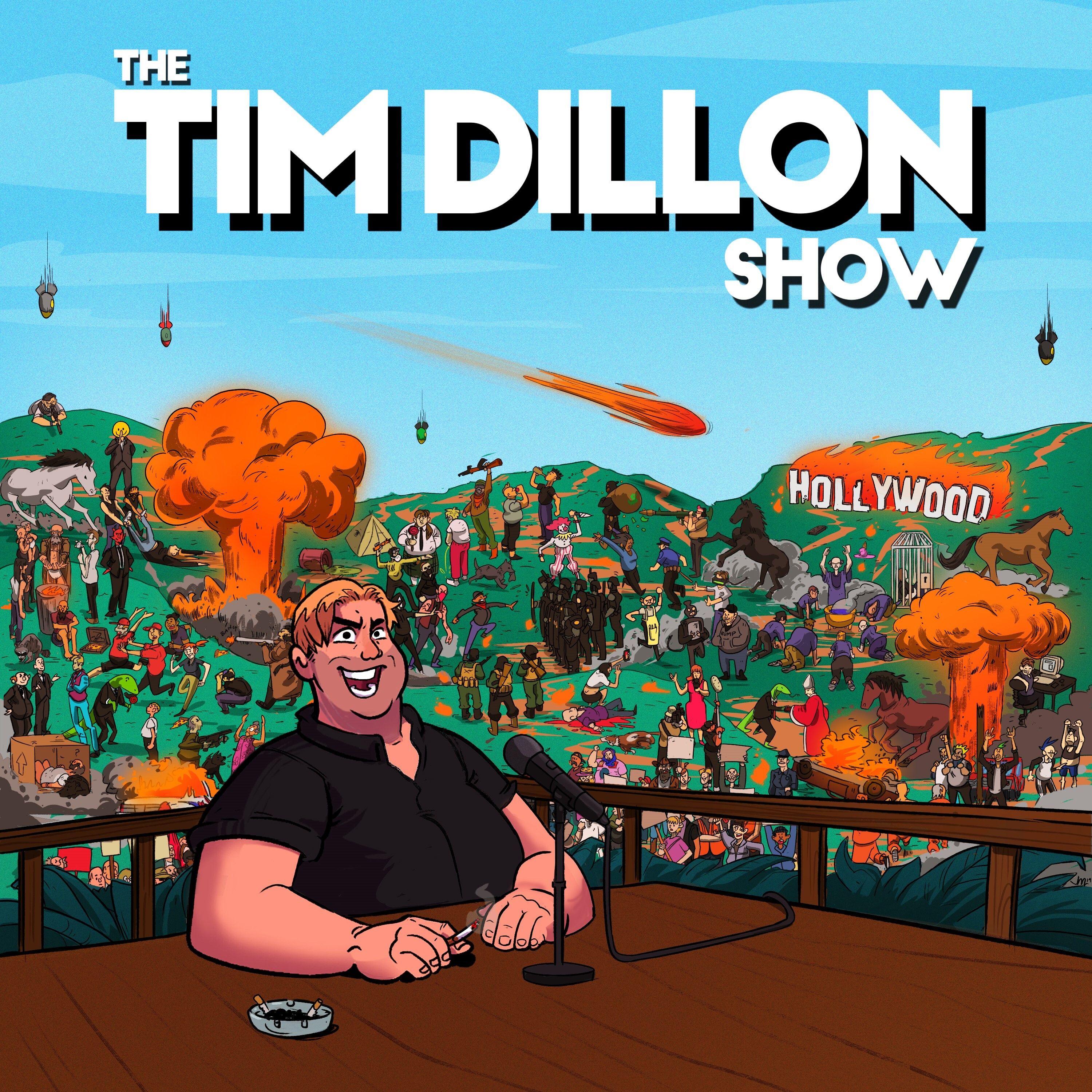
Overview of 506 - Influencer Poison, Trump’s Lifeguard & The Migrant Summer
Tim Dillon opens with a rant on summer as a season of inequality: enjoyable for kids and the wealthy, miserable for everyone else. From there, the episode turns into a long critique of influencer culture, conspicuous consumption, public surveillance, and the erosion of privacy. Dillon argues that people filming everything in public has become a social disease, and he predicts privacy will become a luxury good. He also riffs on a viral beach rescue, Miriam Adelson and Lindsey Graham, and the migration crisis in Spain, using each story to underline his larger themes about spectacle, social decay, and modern life becoming more performative and less livable.
Main Themes
Summer, status, and rage bait
- Dillon jokes that summer only matters when you’re young or rich enough to enjoy it.
- He mocks expensive seasonal status symbols like:
- overpriced grocery items in the Hamptons and Nantucket
- the $19 strawberry and $400 melon style of “rage bait” luxury
- His point: these items are less about actual quality and more about provoking anger and social media attention.
Influencer culture as public nuisance
- A major throughline is his hatred of influencers filming in restaurants, grocery stores, and public spaces.
- He argues that phones give people permission to behave like “monsters” in public.
- Dillon says businesses may benefit from the attention, but the trade-off is that they end up alienating normal customers.
- He predicts a future of:
- no-phone clubs
- no-filming restaurants
- privacy becoming a premium product
Privacy as the new luxury
- Dillon repeatedly claims that privacy will become the most valuable status symbol in America.
- He connects influencer behavior with broader surveillance culture, saying people will increasingly retreat from public life.
- His argument is that the internet rewards attention at any cost, even when it makes daily life worse for everyone else.
Key Stories and Commentary
Viral lifeguard rescue
- Dillon discusses a video of a 16-year-old lifeguard rescuing a young boy at Santa Cruz’s Seabright Beach.
- He praises the rescue in principle but jokes that the lifeguard was just doing his job.
- More importantly, he targets the bystander filming the incident, saying the filmer did the “real” modern work by documenting it rather than helping.
- The segment becomes a satire of how people now value capturing events over participating in them.
Miriam Adelson and Lindsey Graham
- Dillon briefly plays audio of Miriam Adelson speaking fondly about Lindsey Graham and their long relationship.
- He uses the clip to joke about political patronage, influence, and the strange intimacy of donor-politician relationships.
- His tone is mocking but also admiring in a dark, comic way, calling supervillains often more “likable” than boring liberals.
Spain’s migrant crisis
- The episode shifts into a discussion of migration into Spain’s North African enclaves, especially Ceuta.
- Dillon frames it as part of a much larger and unavoidable global migration crisis.
- He argues:
- migration is driven by war, instability, and Western foreign policy
- the crisis is not going away
- European countries cannot indefinitely absorb huge flows of migrants without conflict
- He is skeptical of simplistic narratives and emphasizes the cultural and political strain created by mass migration.
Broader Arguments
Marketing has replaced authenticity
- Dillon says nearly everything now gets framed as a marketing success rather than genuine quality.
- He cites the way Taylor Swift is discussed by fans as a “great marketer” and “businesswoman,” not just an artist.
- His complaint is that culture now rewards manipulation, branding, and hype over actual substance.
The “hermit” becomes more rational
- He says the old stereotype of the recluse now seems increasingly sensible.
- Because public life is so invasive, expensive, and performative, Dillon suggests more people will choose to withdraw from society.
- This is presented as both a joke and a serious social prediction.
Notable Takeaways
- Influencer culture is, in his view, making public life worse.
- Privacy may become a high-end commodity.
- Modern status symbols are increasingly designed to provoke envy and anger rather than provide value.
- Mass migration is portrayed as one of the defining political issues of the era.
- The episode’s humor comes from treating serious social problems as absurd performance art.
Tone and Style
- The episode is heavily satirical, abrasive, and intentionally inflammatory.
- Dillon mixes cultural criticism with over-the-top jokes and exaggerated scenarios.
- Even when discussing serious topics like migration or surveillance, he frames them through comedy, cynicism, and provocation.