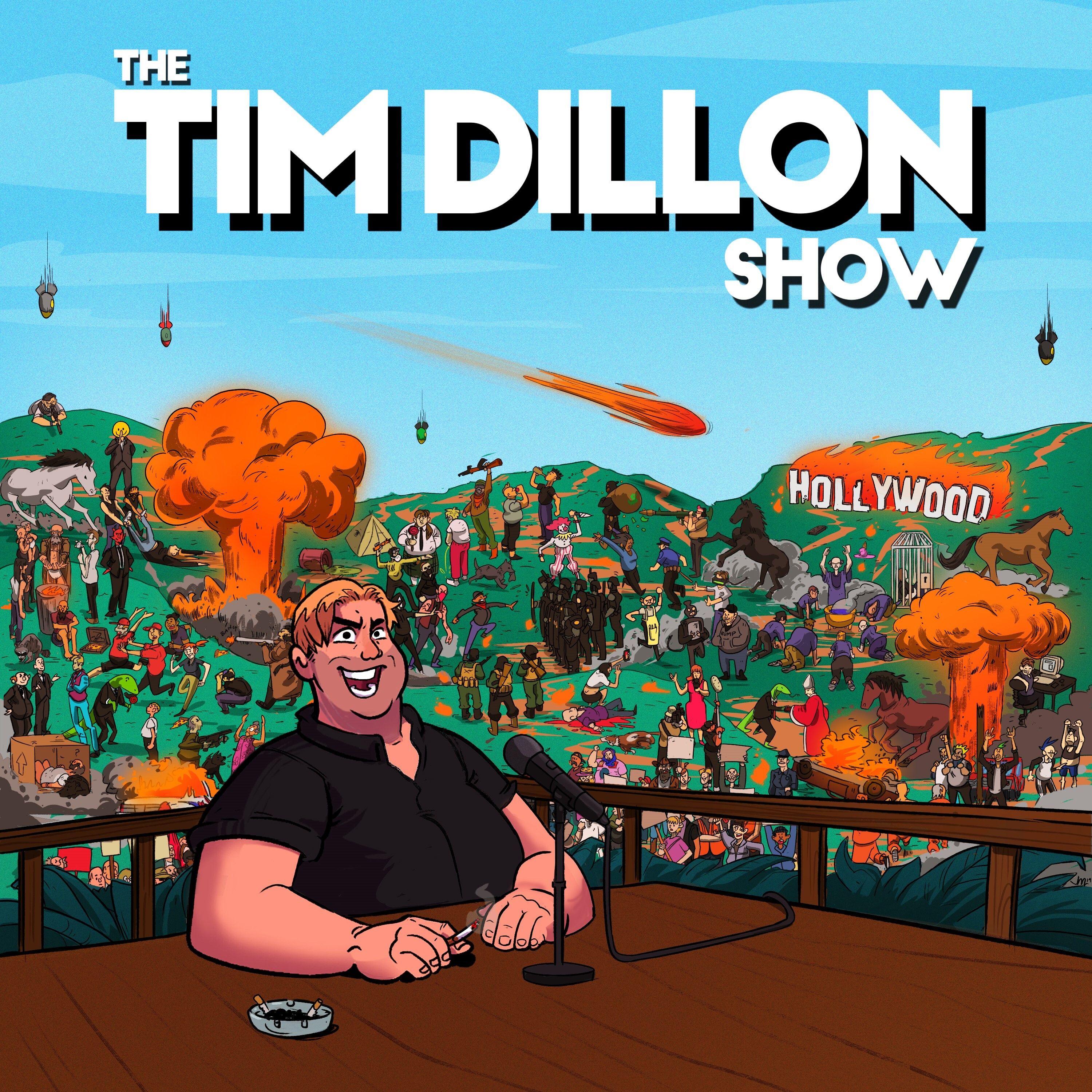
Overview of 502 - Celebrating 250 Years: A Very Special Episode
Tim Dillon uses this Fourth of July episode to deliver a long, darkly comic satire about America, framing the country’s 250-year run as a chaotic but enduring experiment. The monologue celebrates — and mocks — American freedom, hypocrisy, consumerism, violence, excess, and delusion, arguing that the U.S. is defined less by logic or morality than by the freedom to invent reality, ignore responsibility, and keep moving anyway.
Main Themes
America as chaos, freedom, and delusion
- Dillon repeatedly argues that America’s defining feature is not virtue, but the ability to:
- reinvent yourself
- ignore reality
- avoid responsibility
- pursue personal mythology at all costs
- He contrasts this with other countries, where social accountability, tradition, or competence might matter more.
- His recurring punchline: in America, people can be talentless, abusive, delusional, or self-destructive and still “figure it out.”
The comedy of American self-interest
- He frames basic selfishness as a civic virtue:
- not helping people because it’s “not worth it”
- leaving family or friends in crisis
- agreeing with everyone immediately to avoid conflict
- The bit escalates into absurd advice about relationships, work, sobriety, and even family obligations, all through the lens of ruthless American pragmatism.
Consumer culture, food, and overindulgence
- Dillon celebrates American fast food and suburban eating culture as uniquely powerful and destructive.
- He treats obesity, binge eating, chain restaurants, and drive-thrus as national achievements.
- He contrasts American food with weaker foreign versions, portraying U.S. excess as part of the national identity.
Suburbia, loneliness, and dysfunction
- A major section paints suburbia as a bizarre, haunted landscape of:
- strip malls
- vape shops
- clinics
- chain restaurants
- hidden despair
- Dillon describes suburban loneliness, addiction, and mental collapse as central American experiences, not anomalies.
Violence, fear, and national mythology
- The monologue repeatedly links American identity to violence, terrorism, war, and collapse.
- He jokes about:
- terrorism as a social reset button
- the country’s tendency to respond with massive force
- the normalization of death and trauma
- These bits are intentionally outrageous, using shock to underline how normalized violence is in American culture.
Celebrity obsession and arrested development
- He mocks adult fan culture around Taylor Swift, Trump, and other public figures, suggesting many people emotionally freeze at adolescence.
- The Taylor Swift wedding becomes a symbol of mass projection and obsessive fandom.
- Trump is described as someone who understands and sells to the “real” America better than anyone else.
Children as commodities
- Dillon goes hard on the American tendency to push children into performance, athletics, fame, and monetization.
- He satirizes parents who treat kids like investment vehicles:
- dance classes
- sports dreams
- entertainment careers
- social media exposure
- The joke is that America turns childhood into a business opportunity.
Notable Bits and Targets
Momdani and air conditioning
- He riffs on a political argument about thermostat settings in New York, using it as a metaphor for performative outrage, class conflict, and people lying about their behavior while virtue-signaling publicly.
Terrorism and false unity
- He jokes that only a massive, high-profile attack could unify Americans again, especially if it targeted a culturally loaded event like a Taylor Swift wedding.
- The joke is less about the event itself and more about how fragmented and desensitized public reaction has become.
Robots, AI, and a collapsing future
- Dillon notes how absurd it is that people now treat existential warnings about robots, AI, and social collapse as ordinary news.
- The absurdity of modern life is presented as a constant background hum of disaster.
Sponsor / Ad Read Highlights
The episode includes several ad reads woven into the monologue, including:
- Shopify
- Ultra Pouches
- Carvana
- Ridge
- HIMSS
These are delivered in the show’s usual ironic, over-the-top style and punctuate the episode without changing its overall tone.
Overall Takeaway
This episode is essentially a patriotic roast: Dillon presents America as broken, violent, vain, selfish, overfed, overmedicated, and absurd — but also uniquely free, energetic, and strangely admirable because of all that. The core joke is that the country’s worst qualities are inseparable from what makes it compelling, and that after 250 years, America is still “doing it,” for better and far worse.