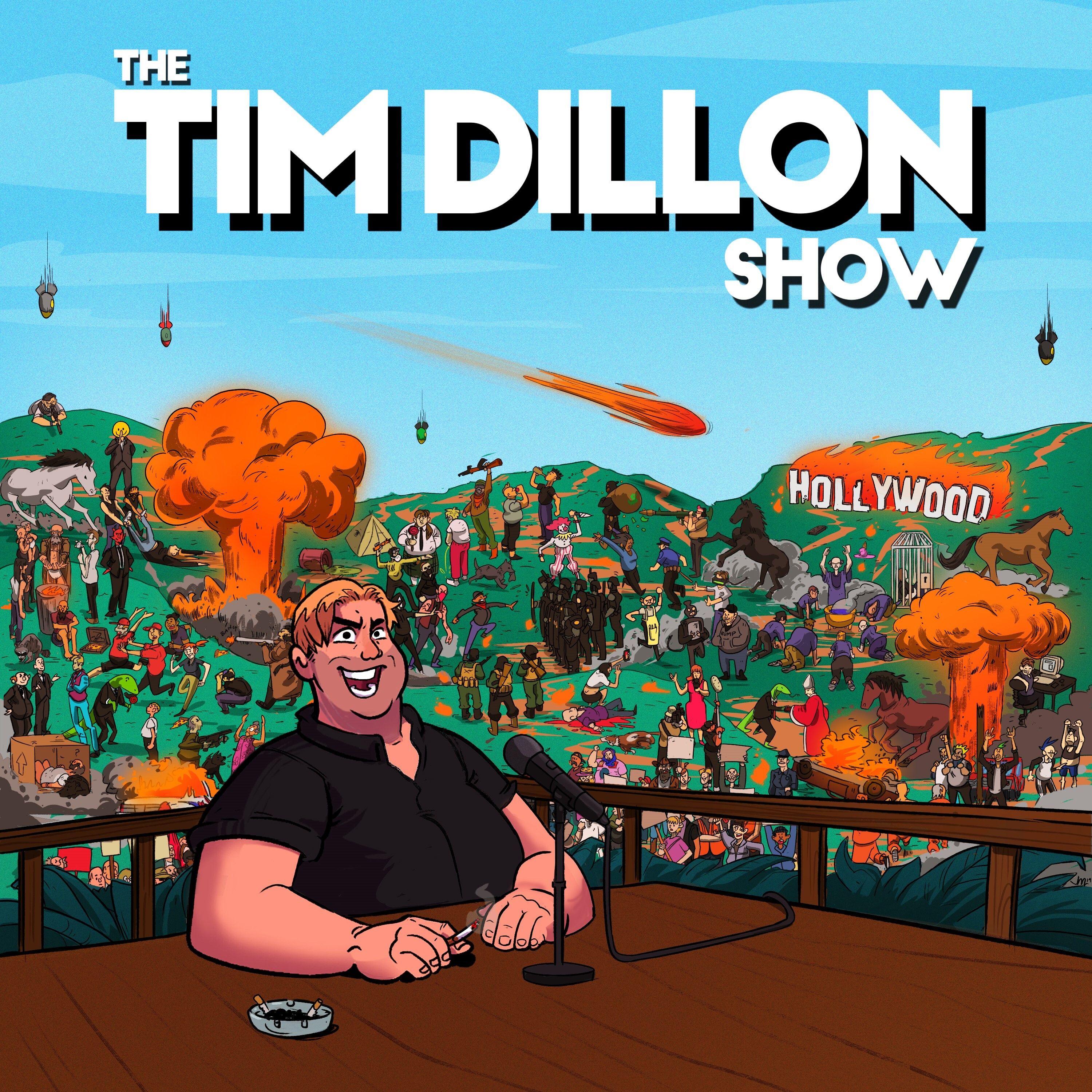
Overview of The Tim Dillon Show (Episode 498)
This episode is a long, darkly comic monologue about how people misread isolated events as signs of major change. Tim argues that most “breakthroughs” are flukes, not trends, and uses a mix of current events, celebrity gossip, and political satire to make the case that power structures mostly stay the same. He riffs on Spencer Pratt’s Los Angeles mayoral run, a UK policing controversy, the D’Amelio family money dispute, and Jared Kushner/Ivanka Trump’s private-island project as examples of people either chasing relevance or escaping collapse.
Main Takeaways
-
“Nothing is changing” is the episode’s central thesis.
- Tim repeatedly says people are overreacting to one-off stories and treating them like historical turning points.
- His point: rare successes, political shakeups, or media attention do not mean the world is fundamentally shifting.
-
Tim sees most public systems as either broken or self-serving.
- He argues cities, governments, and elite institutions improve only when money or power demands it.
- Any “reform” is usually cosmetic, temporary, or driven by self-interest.
-
He treats celebrity and wealth as family warfare.
- The D’Amelio money dispute becomes a larger rant about parents living vicariously through successful children and feeling entitled to take from them.
-
The rich are preparing for escape, not reform.
- Jared Kushner and Ivanka Trump’s island project is framed as a sign that elites are building private exits from a destabilizing world.
Topics Discussed
Indie horror success stories are not a new era
Tim opens by joking about Backrooms and Obsession as if he directed them, then pivots into a broader point:
- Low-budget movies occasionally becoming huge hits is real, but rare.
- He mocks the idea that these success stories mean “anyone” can now do it.
- His message: do not mistake a fluke for a trend.
Spencer Pratt’s LA mayoral run
A major segment centers on Spencer Pratt, who Tim says has become relevant again through his Los Angeles campaign:
- Tim acknowledges Pratt’s social media skills and media savvy.
- He says Pratt is drawing attention to real problems in LA, especially unlivable conditions in some parts of the city.
- But he insists that one mayoral campaign will not “save” Los Angeles.
- The recurring refrain: people are reading too much into this.
Cities don’t get fixed the way people imagine
Tim broadens the LA discussion into a critique of urban change:
- Los Angeles: Some areas improve marginally, but the city’s deep problems remain.
- San Francisco: He says it’s “getting better” largely because AI money is flooding in, not because life is becoming more affordable or equitable.
- London: He compares city “improvements” to elite-driven gentrification or capital flight, not real social repair.
London, immigration, and policing
A large section focuses on the UK and a stabbing case involving a young white man and a Sikh suspect:
- Tim uses the case to critique what he sees as overcomplicated, politically framed policing in Britain.
- He mocks British police as underprepared to handle “equity” language and historical-context frameworks.
- His broader point is that institutions trying to police speech and social tension eventually lose public trust.
- He says Britain is experiencing its own version of a cultural “2020 moment,” with migration, protest politics, and social pressure building.
Charlie D’Amelio, family money, and the “American dream”
Tim then turns to reports that Charlie D’Amelio’s parents may have taken money from her:
- He argues that parents of highly successful children often become resentful or entitled.
- In his view, the family’s real conflict is not just money but power, envy, and vicarious ambition.
- He frames the whole situation as a grotesque but very American story:
- a child becomes famous for essentially nothing,
- the parents manage the money,
- the family falls apart,
- everyone claims moral innocence.
Ivanka Trump and Jared Kushner’s private island
Toward the end, Tim discusses their reported luxury development project on an island in the Mediterranean:
- He treats it as another example of the wealthy building escape routes.
- The project is framed less as a resort and more as a survival outpost for elites.
- He suggests rich families are preparing for social, economic, or geopolitical collapse.
Notable Themes and Commentary
1. Flukes vs. trends
Tim’s main recurring idea is that people constantly turn exceptions into narratives. His stance is that:
- most “breakthrough” stories are unusual, not replicable,
- media attention creates false hope,
- and ordinary people should not assume one success story will transform their own lives.
2. Institutions are often performative
Whether he’s talking about:
- British policing,
- LA politics,
- London tax policy,
- or elite wealth management,
Tim suggests institutions mostly serve the powerful, not the public.
3. Everyone is trying to escape something
A hidden thread throughout the episode is that:
- Spencer Pratt wants relevance after losing his house,
- the D’Amelios are stuck in a family-money drama,
- and the Trumps/Kushners are literally building an escape island.
Overall Tone
- Sarcastic and apocalyptic
- Hyperbolic and intentionally outrageous
- Part social critique, part celebrity gossip, part anti-optimist rant
Tim’s style here is less about concrete reporting and more about using current events to make a larger argument: people crave meaning and upheaval, but the world mostly keeps grinding forward in the same ugly, self-interested ways.