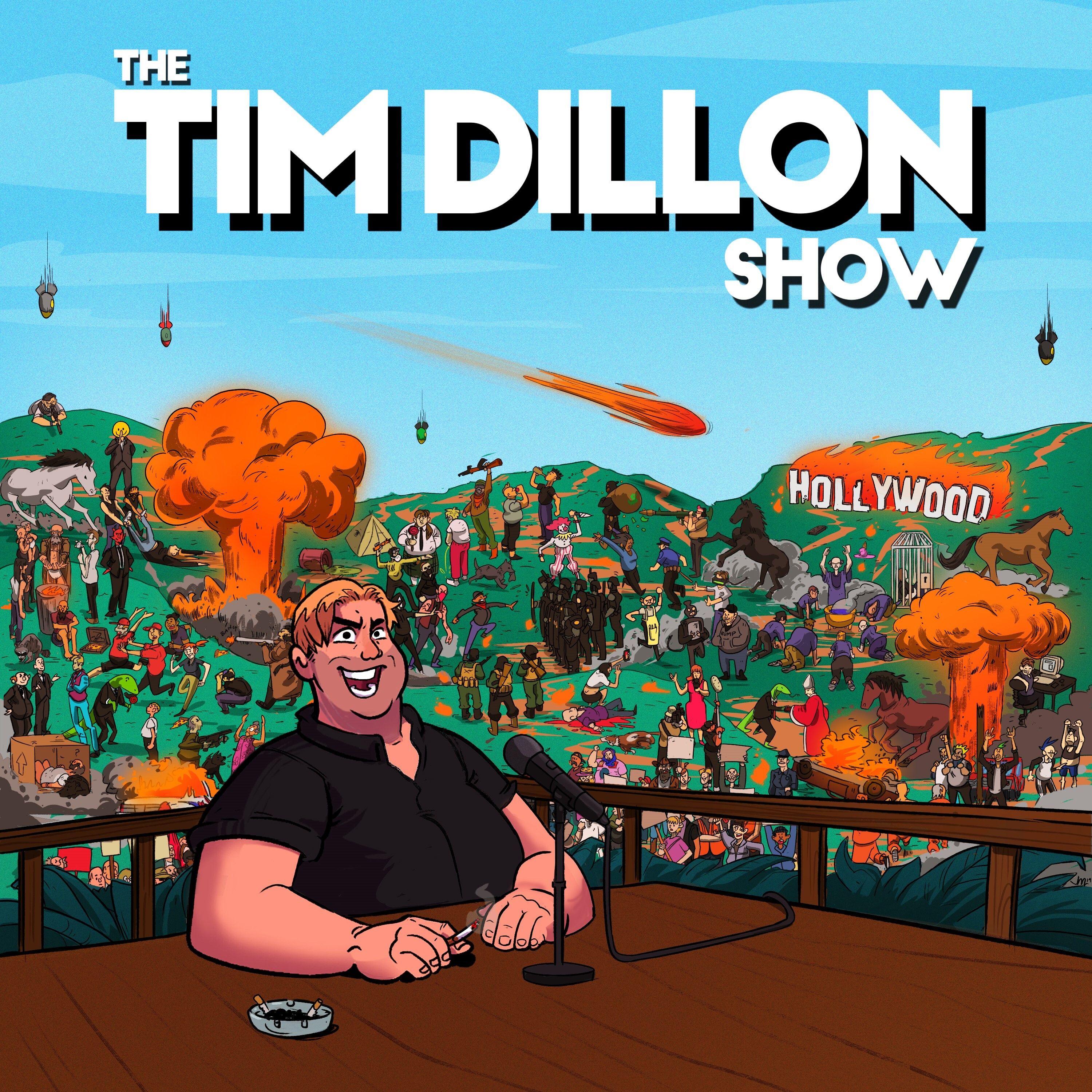
Overview of The Tim Dillon Show
In this episode, Tim Dillon uses his final recording from the UK to launch a broad, satirical rant about American politics, campaign spending, media manipulation, AI, and the decline of everyday life in the U.S. The core thread is that money, marketing, and psychological operations now shape politics and culture more than ideas do. He ties together Thomas Massie’s loss, the rise of pro-war messaging, Kevin O’Leary’s anti-lunch productivity talk, and AI hype as symptoms of the same dehumanizing system.
Political Spending, Thomas Massie, and “Psych Ops”
Massie’s defeat as a symbol
- Dillon laments Thomas Massie’s loss, framing him as one of the few politicians aligned with:
- releasing the Epstein files
- opposing the Iran war
- reducing funding for Israel
- He argues Massie was outspent by massive donor money, especially from wealthy, pro-Israel figures.
- The central claim: in U.S. politics, enough money can manufacture reality and override unpopular ideas.
Ed Gallrein as “central casting”
- He mocks the Republican challenger, Ed Gallrein, as a polished, military-backed candidate sold as a patriotic archetype.
- Dillon says the campaign relied less on policy than on imagery:
- war hero
- Navy SEAL
- strong handshake
- “patriot” branding
- He repeatedly calls this a “psyop,” meaning a campaign aimed at primitive emotional triggers rather than informed voting.
Media, Manipulation, and the Decline of Trust
America’s “machine” of persuasion
- Dillon argues that U.S. entertainment and politics are both dominated by powerful promotional machines.
- He says the public is forced into binary reactions:
- either fully love the promoted figure
- or aggressively reject them
- He portrays modern media as flooding people with enough repetition that they can no longer separate reality from branding.
The “lizard brain” electorate
- He claims campaign messaging is designed for gut-level instincts:
- war hero
- patriot
- strong handshake
- family
- In his view, these cues substitute for actual policy discussion and allow donors to control outcomes.
AI, Technology, and the Fear of Replacement
AI as a threat to human work and culture
- Dillon reacts strongly to college commencement speeches celebrating AI.
- He criticizes tech leaders for treating AI as an inevitable good while ignoring:
- job loss
- privacy loss
- surveillance
- military misuse
- the erosion of human creativity
- He especially objects to the idea of an AI comedian or AI-generated creative work replacing people who spent years developing their craft.
Skepticism toward “efficiency”
- His bigger argument is philosophical: maximizing efficiency alone destroys meaning.
- He says human life is built on:
- struggle
- failure
- effort
- growth
- community
- He mocks the idea that all work is “fake” or unnecessary, warning that a society optimized only for productivity becomes cold and inhuman.
Student protests against AI
- Dillon praises students who boo AI hype at graduation events.
- He frames them as more realistic than older tech executives who will not bear the consequences of automation.
Kevin O’Leary, Lunch, and Anti-Human Productivity Culture
Mocking the “don’t buy lunch” mindset
- He plays a Kevin O’Leary clip criticizing young workers who spend too much on lunch.
- Dillon ridicules the idea that a $28 lunch is financial irresponsibility on the level of addiction.
- His larger point: modern capitalism increasingly treats ordinary pleasures as moral failures.
Life reduced to optimization
- He contrasts earlier eras of leisure, drinking, and socializing with today’s loneliness and work obsession.
- He argues the modern message is:
- stop spending
- stop relaxing
- stop enjoying yourself
- reinvest everything into future returns
- To him, that is not a life; it is a trap.
War, Food Prices, and Economic Fallout
Strait of Hormuz and food costs
- Dillon brings up warnings that disruptions in the Strait of Hormuz could trigger a food crisis.
- He links global conflict to rising fertilizer and shipping costs, which could hit agriculture and grocery prices.
- He jokes that this could make modern health trends like GLP-1 drugs irrelevant if food becomes too expensive.
Broader fear of economic decay
- He speculates, in his usual exaggerated style, that the U.S. may be heading toward a harsher, poorer, more controlled society.
- The recurring theme is that elites are detached from the consequences of war and inflation.
Style, Tone, and Running Jokes
UK observations
- Dillon opens with jokes about being in Britain and about British class differences:
- London as polished and elite
- the north as rowdier and more chaotic
- These observations function mostly as comic framing before he returns to U.S. politics.
Repeated comedic devices
- He uses exaggerated imagery and absurd analogies throughout:
- campaign ads as propaganda
- AI songs as sinister propaganda
- lunch as a battleground in the war on normal life
- He ends with a surreal, mock-propaganda chant combining:
- war hero branding
- Epstein file references
- AI hype
- anti-lunch satire
Main Takeaways
- Dillon sees modern politics as a high-budget psychological operation rather than a contest of ideas.
- He believes money and media can manufacture consent around candidates, wars, and technologies.
- He is deeply skeptical of AI, viewing it as another force that will replace people, centralize power, and strip meaning from work.
- He treats the culture of relentless efficiency as anti-human and spiritually corrosive.
- The episode is ultimately a comic but angry critique of elite control, technological acceleration, and the hollowing out of public life.