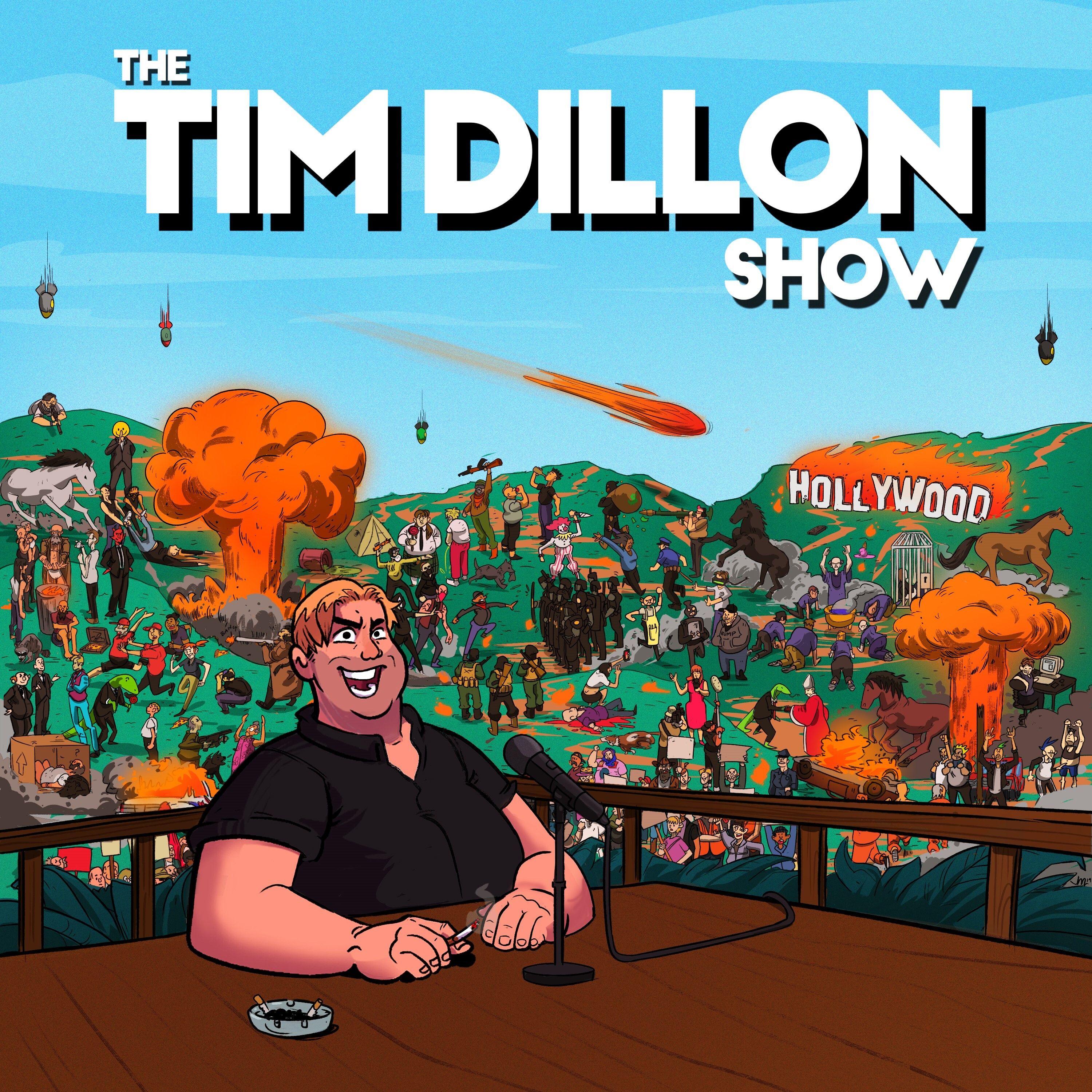
Overview of The Tim Dillon Show
Tim Dillon records from London and uses the episode to blend personal grievance, political commentary, and comic exaggeration. He opens with a furious rant about a custom costume he says was quoted at roughly $25,000 but ultimately billed at $115,000, framing it as an outrageous shakedown. From there, he pivots into broader observations about London, immigration, free speech, the Iran conflict, U.S.-China tensions, and the absurdity of Spencer Pratt running for mayor of Los Angeles.
Key Topics Discussed
The costume billing controversy
- Dillon says he paid a large deposit for a custom outfit for a comedy appearance, but the final bill ballooned to $115,000.
- He claims the designer never warned him about the overages and describes the situation as unethical and possibly legally actionable.
- He repeatedly contrasts the final cost with what he considered reasonable for a stage costume, calling the situation a trust breach.
London, immigration, and class politics
- Dillon praises London as beautiful, wealthy, and more interesting than many American portrayals suggest.
- He argues that major global cities like London and New York are becoming dominated by capital, elites, and service industries tailored to the wealthy.
- He links immigration and displacement to political resentment, saying it helps fuel support for parties like Nigel Farage’s Reform UK.
- He also jokes about UK free-speech laws, suggesting Americans hear alarming stories but don’t fully know how strict things really are.
U.S.-China relations and Taiwan
- A major theme is that the U.S. cannot afford to treat China as an enemy.
- Dillon argues that China is too economically intertwined with the U.S. for open confrontation.
- He says Taiwan is the real strategic flashpoint because of semiconductors and high-end manufacturing.
- His view is that China will likely absorb Taiwan through money, influence, and political pressure rather than direct military action.
- He mocks the idea of a future U.S.-China war, calling it suicidal and driven by reckless elites who want a reset or global destabilization.
The Iran conflict and American decline
- Dillon frames the Iran crisis as evidence of the limits of American power.
- He says the public is underestimating the economic fallout from Middle East escalation, especially around energy and trade.
- He argues that the U.S. is no longer in a position to dictate global outcomes the way it once did.
- His broader point: America needs to stop acting like the unquestioned world “quarterback” and accept a more constrained role.
Spencer Pratt’s run for Los Angeles mayor
- Dillon reacts to Spencer Pratt’s mayoral campaign with amused skepticism.
- He says LA’s leadership is already so bad that Pratt might not be much worse, but he’s clearly not a serious candidate.
- The biggest red flag, in Dillon’s view, is that Pratt has a reality-TV production deal tied to the campaign, suggesting the run is partly performance.
- He treats Los Angeles as a place he’s emotionally detached from, saying he feels little when he arrives there and is basically resigned to whatever happens.
Main Takeaways
- Dillon’s core argument is that the U.S. must recognize its limits, especially in relation to China and the Middle East.
- He sees China as the real long-term geopolitical challenge because of trade, debt, technology, and Taiwan.
- London and Los Angeles are used as symbols of elite, overmanaged, politically strained global cities.
- The episode is highly satirical and intentionally hyperbolic, with Dillon mixing real political commentary with insults, metaphors, and absurd comparisons.
Tone and Style
- Provocative, rant-heavy, and deliberately offensive at times.
- Mixes personal beefs, geopolitical analysis, and celebrity mockery.
- Constantly alternates between serious strategic claims and exaggerated comedic imagery.