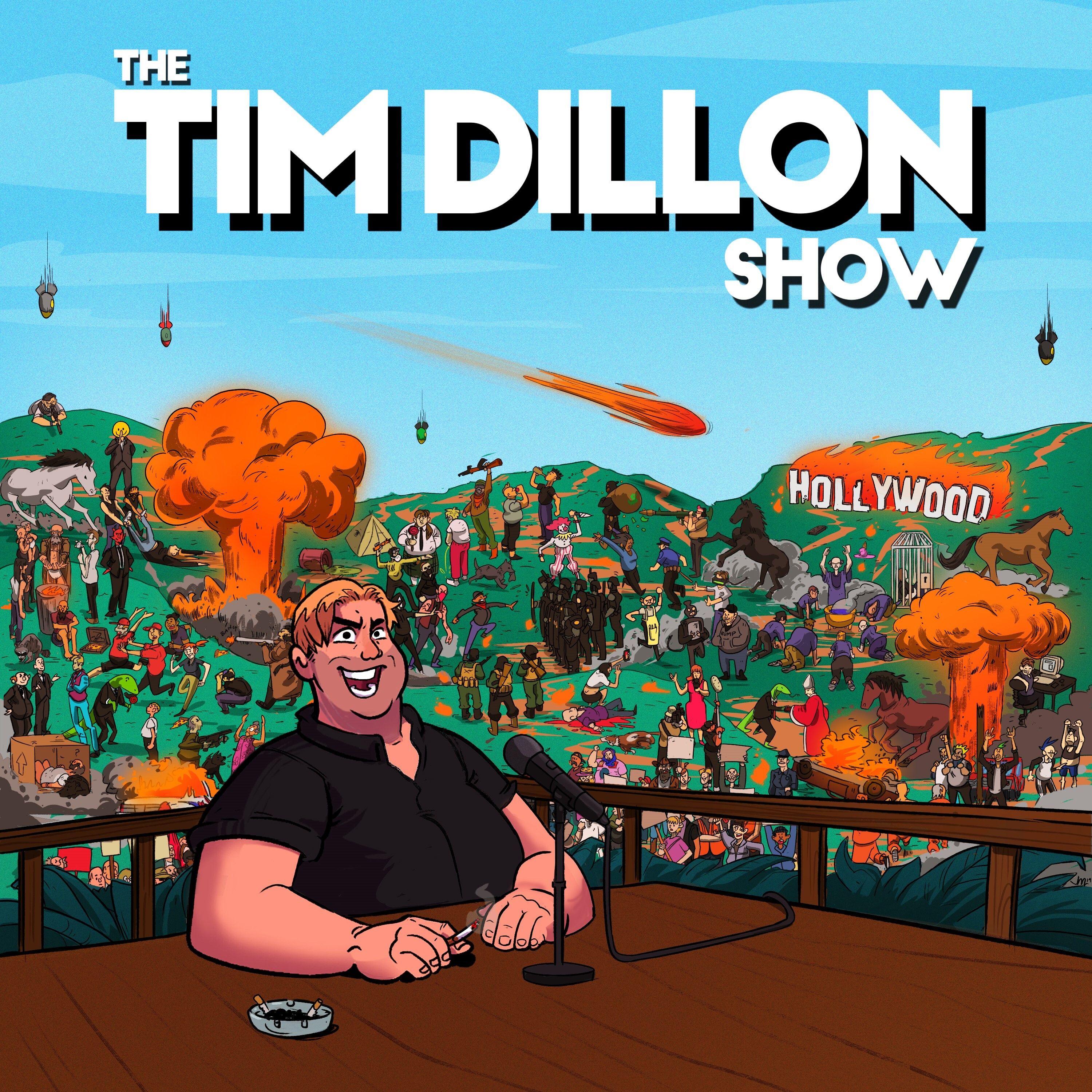
Overview of The Tim Dillon Show — “493 - The Palantir Manifesto & My Manifesto”
This episode is a mix of dark satire, political ranting, and cultural commentary. Tim Dillon opens with a mock-serious interview about ibogaine as a “miracle” treatment for veterans, then pivots into a line-by-line reaction to Palantir’s manifesto, using it as a launchpad to argue that tech elites are building a more militarized, surveilled, and less democratic future. He closes with a broader critique of modern life: status obsession, app-driven isolation, endless outrage, and a culture that he считает less humane than the one that came before it.
Ibogaine Segment: Satire About Trauma, Drugs, and Moral “Liberation”
The setup
Dillon stages a fake interview with a veteran who says ibogaine cured his PTSD and opioid addiction.
The joke
The conversation quickly turns absurd and intentionally grotesque, with the veteran describing violent acts in war as things he no longer feels guilt about after taking the drug.
What the bit is doing
- Satirizes how miracle-cure narratives can be used to excuse or reframe moral injury.
- Mocks the idea that psychedelic or “breakthrough” treatments automatically produce enlightenment.
- Plays with the idea of “liberation” becoming detached from accountability.
Palantir Manifesto: The Core Critique
Dillon spends most of the episode reacting to Palantir’s 22-point manifesto and treating it as a blueprint for a future run by tech-defense oligarchs.
Main themes he identifies
- Militarization of society: He argues Palantir is openly preparing for large-scale war and normalizing a draft-like culture.
- AI and autonomous weapons: He says the manifesto makes clear that software and drone systems will become the backbone of future conflict.
- Surveillance and predictive policing: He reads the document as a push toward pre-crime models, cradle-to-grave monitoring, and state/corporate control.
- Decline of democracy: Dillon repeatedly suggests that actual power has shifted away from elected officials and toward tech companies.
- Cultural nationalism: He notes that the manifesto mixes nationalism, Christianity, and technological power into a single ideological package.
- Public servants and institutions: He mocks the idea that government institutions still hold real authority, arguing that elite tech firms now see themselves as the real governing class.
His interpretation of the manifesto
Dillon frames it as Palantir saying:
- the old world order is ending,
- the United States must become harder, more militarized, and more nationalistic,
- and the future belongs to companies capable of building the systems that manage war, crime, and national security.
Political Commentary: Media, Trump, and Internal Criticism
Dillon briefly turns away from Palantir to complain about how people react when figures like Tucker Carlson or Joe Rogan criticize Trump.
His argument
- Criticism from within a movement is normal and necessary in a democracy.
- People on the left and right alike act like criticism is betrayal when it is simply disagreement.
- He ridicules the idea that only approved voices can be taken seriously.
Broader point
He sees both political tribes as addicted to outrage, victimhood, and purity tests, which he thinks makes real coalition-building impossible.
“My Manifesto”: Dillon’s View of Modern Culture
A major part of the episode becomes Dillon’s own manifesto against contemporary life.
What he dislikes about the present
- Status obsession
- Luxury travel as identity
- Private clubs and elite social scenes
- People whose lives are mostly curated online
- The collapse of community and local belonging
- Tech making people more isolated, anxious, and performative
His preferred model of life
He argues that a better society looks more like:
- a stable middle-class community,
- family and neighborhood connections,
- real social rituals,
- less performative ambition,
- and fewer people treating wealth or travel as a substitute for a meaningful life.
His larger claim
Dillon says no one honestly believes modern life is better than it was 10–20 years ago, even if technology is more advanced. In his view:
- technology has not made people happier,
- social media has made everyone angrier and more self-conscious,
- and progress has become a casino-like economy where only the rich and ambitious are told they’re winning.
Main Takeaways
- The episode is both a political satire and a cultural rant.
- Dillon treats Palantir’s manifesto as evidence that tech companies increasingly see themselves as the real rulers of society.
- He is deeply skeptical of:
- AI militarization,
- predictive policing,
- elite nationalism,
- and the merging of corporate power with state power.
- His “manifesto” is essentially a defense of:
- community,
- realism,
- skepticism of tech utopianism,
- and a more grounded, less status-obsessed way of life.
Notable Tone and Style
- Extremely sarcastic
- Deliberately provocative
- Heavy use of hyperbole
- Mixes political commentary with dark comedy
- Frequently blurs the line between sincere critique and parody