Overview of What Doordash, Dell and Palantir all have in common
This episode of The Indicator from Planet Money examines how President Trump has publicly promoted companies whose stocks he and his money managers have traded, raising questions about conflicts of interest. The show focuses on three examples—Dell, Palantir, and DoorDash—all of which have ties to the federal government and were praised or highlighted by Trump around the same time he was trading their shares. The central takeaway: while the president may have legal latitude to trade, the ethical concerns around using the bully pulpit to boost personal investments are substantial.
The core issue: presidential stock trading and influence
- Trump has made an unusually large number of stock trades through his financial managers during his second term.
- Unlike most executive branch employees, the president and vice president are exempt from conflict-of-interest trading restrictions.
- The White House says Trump’s portfolio is independently managed and that he does not direct the trades.
- Still, because the president can shape public perception and government decisions, even casual praise can affect company fortunes.
Three companies Trump boosted while trading their stock
Dell
- Trump bought up to $5 million in Dell stock in early 2025.
- Around the same time, he praised Michael and Susan Dell and encouraged people to “go out and buy a Dell computer.”
- His comments came as Dell pledged $6.25 billion to a government child investment program.
- Later, the Department of Defense awarded a Dell subsidiary a contract worth nearly $10 billion.
Palantir
- Trump traded in and out of Palantir stock earlier in the year.
- Palantir later won a Homeland Security contract worth up to $1 billion.
- Trump posted on Truth Social praising Palantir’s “warfighting capabilities” and included the ticker symbol, which briefly pushed the stock up about 3%.
- Senator Mark Warner publicly questioned whether the president was manipulating the market.
DoorDash
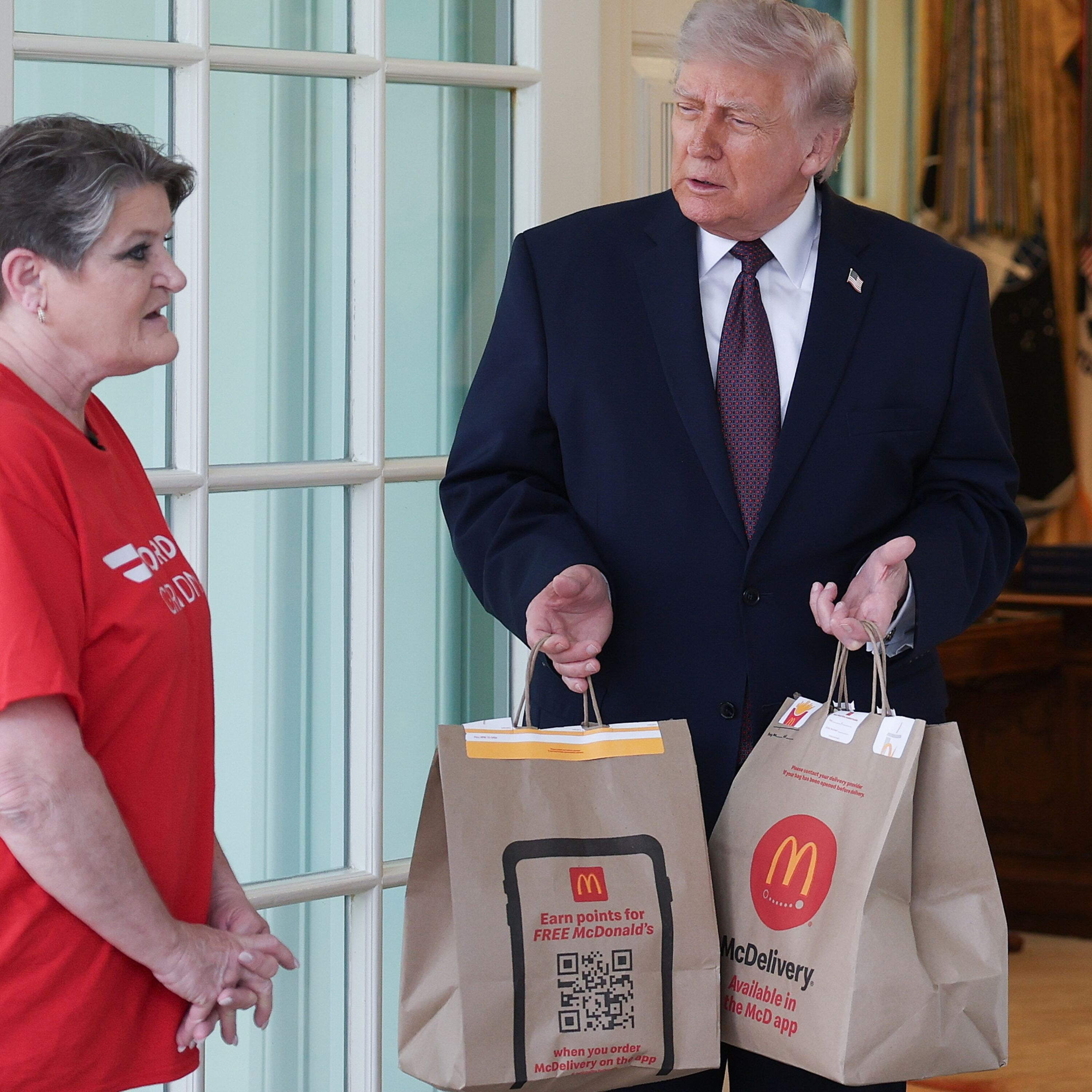
- The White House featured DoorDash in a promotional video tied to Trump’s “no tax on tips” policy.
- A DoorDash driver delivered McDonald’s to the Oval Office as part of the event.
- Trump had traded DoorDash stock in the months before the promotion.
Bigger picture: Trump, AI, and market influence
- The episode notes that AI has been a major driver of stock market gains this year.
- Trump and his family reportedly have significant investments in the AI sector.
- He continues to act as a vocal advocate for AI, even rejecting international efforts to regulate it at the U.N.
- The show suggests that the same pattern seen with Dell, Palantir, and DoorDash extends to Trump’s broader stance toward industries tied to his financial interests.
Main takeaway
The episode argues that Trump may be operating within the law, but his behavior sits in an ethical gray zone:
- He has legal permission to trade stocks as president.
- He also has enormous power to influence the companies he invests in.
- That combination creates the appearance, and possibly the reality, of conflicts of interest.
Public and political response
- NPR notes that many Americans support banning lawmakers from trading individual stocks while in office.
- A stock-trading restriction bill passed the House, but it excluded the president.
- Some Democrats objected to that carve-out.
- The segment closes by implying that future legislative changes could reshape these rules, but for now, the president remains exempt.