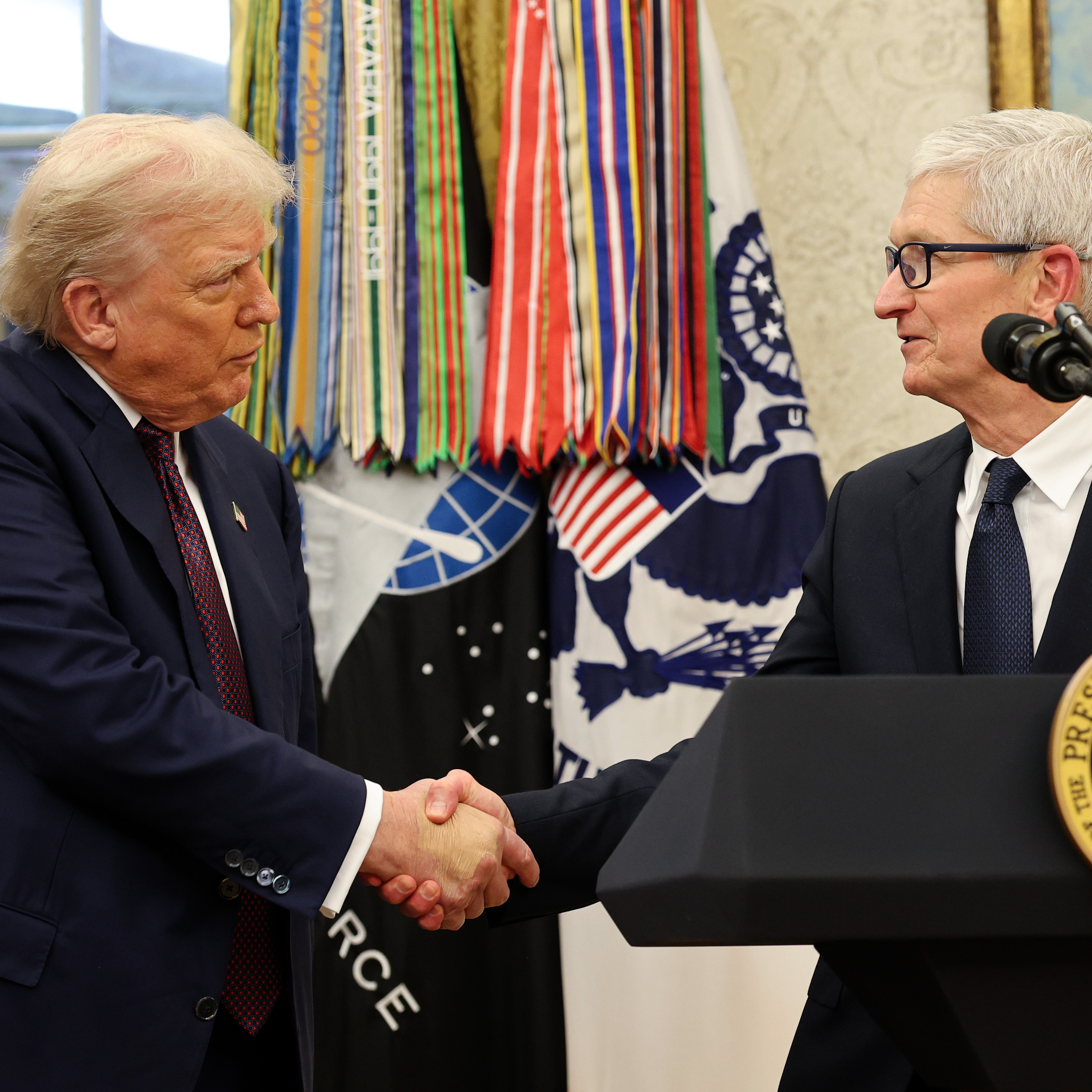
Overview of Why isn’t corporate America standing up to Trump?
This episode of The Indicator from Planet Money (NPR) — hosted by Waylon Wong with co-host Maria Aspin — examines why many U.S. corporate leaders are publicly reluctant to push back against President Trump despite his aggressive interventions in business policy. The show reviews recent episodes of presidential pressure on companies, examples of potential retaliation, CEO attitudes (private worry vs. public silence), and the longer-term risks of corporate passivity.
Main takeaways
- Trump has increasingly blurred the line between government and business, pressuring firms on trade, investment, pricing, and executive pay.
- Some CEOs publicly court the president when his policies favor their sector; others stay silent out of fear of retaliation or to protect short‑term business gains.
- There are short-term incentives for many firms to keep quiet: strong profits, a rising stock market, and tax/spending policies that benefit business.
- Many executives are privately anxious about the unstable political/legal environment — a Leadership Now Project/Harris Poll found 84% worried — but hesitate to speak up publicly.
- Silence carries long-term risks: erosion of market institutions, cronyism, and weakened democratic norms that ultimately harm business and the broader economy.
Key examples and incidents discussed
- Trump’s pressure on companies and industries:
- Publicly pressing U.S. oil companies about investing in Venezuela and criticizing ExxonMobil after its CEO called Venezuela uninvestable.
- Demanding government cuts of some NVIDIA sales in China and proposing a government stake in Intel.
- Proposals to cap credit card interest rates and limit pay for defense-company CEOs.
- The Jamie Dimon / JPMorgan Chase confrontation:
- Jamie Dimon criticized Trump’s tariff and Fed-control proposals, calling a pricing cap proposal “an economic disaster.”
- Days later, Trump sued JPMorgan Chase and Dimon personally for $5 billion, alleging banks closed his accounts after Jan. 6 — a move many saw as retaliatory.
- Davos episode theater:
- Trump hosted a White House reception for CEOs at the World Economic Forum, left some big names off the invite list, arrived very late, and held a standing‑only reception — signaling social and political power plays among elites.
- Local pressure forcing statements:
- Companies tried to avoid commenting on federal immigration enforcement, but after a fatal shooting by federal officers in Minneapolis (episode references the individual as Alex Preddy), Minnesota CEOs issued a cautiously worded call for de‑escalation.
Notable quotes and perspectives
- Jamie Dimon: “It would be an economic disaster. I think it’s wrong for the government to get involved extensively in pricing this stuff…”
- Daniela Ballou Ayers (Leadership Now Project): “You don’t want to say anything unless it’s... in your core interest. In private, executives are pretty worried. In public, they don’t want to talk about it.”
- Anonymous White House official (to NPR): Framed Trump’s actions as “traditional free market policymaking,” dismissing claims of cronyism.
Risks and implications
- Short-term business gains (profits, market performance, favorable tax/spending) reduce incentives to resist policies that may harm markets in the long run.
- When firms placate political leaders to avoid scrutiny or curry favor, it risks cronyism: market rewards based on political access rather than business fundamentals.
- Collective inaction weakens public institutions (e.g., Federal Reserve independence) and may normalize politicized interventions in private firms.
- Individual CEOs who speak out may face personal and corporate consequences, deterring broader pushback.
Practical considerations (for business leaders and observers)
- Assess trade‑offs: weigh short-term gains against long-term institutional and reputational costs.
- Consider collective action: coordinated, cross‑industry responses reduce the personal risk of speaking out compared with lone dissents.
- Prioritize core interests: public statements are most likely when a policy clearly threatens a company’s bottom line; broader civic protections require sustained advocacy.
- Monitor signals: sectors targeted by the administration will likely see increased pressure and strategic shifts (e.g., courting vs. distancing).
Production notes
- Hosts: Waylon Wong and Maria Aspin
- Produced by Angel Correras; engineering by Robert Rodriguez; fact‑checked by Sierra Juarez; edited by Julia Ritchie; show editor Kicking Cannon.
- The episode includes sponsor messages from Capella University and ServiceNow.