Overview of "Who's afraid of private credit?" (The Indicator from Planet Money — NPR)
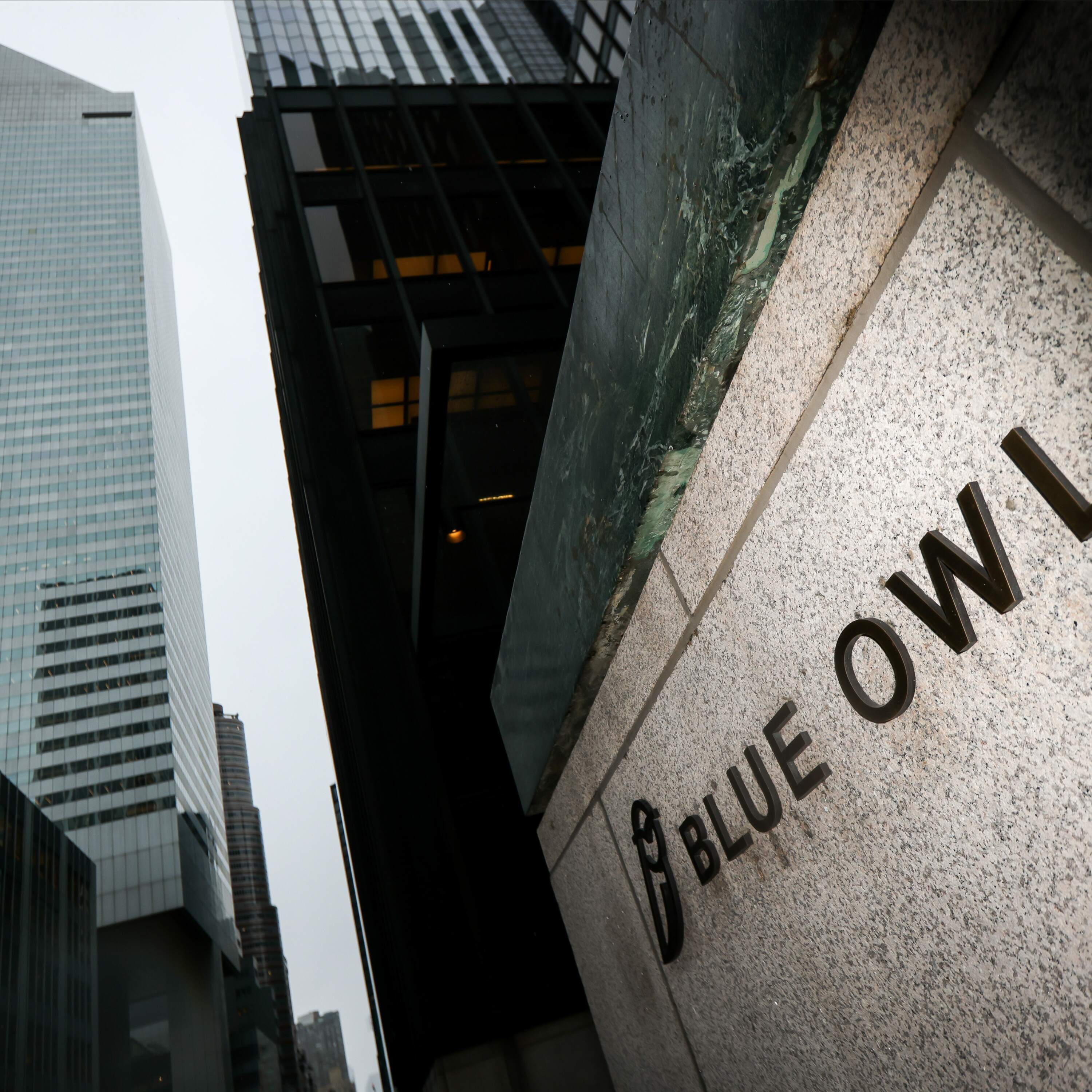
This episode explains what private credit is, why it's rapidly grown into a roughly $3 trillion “black box” of shadow banking, and why recent waves of investor redemption requests have spooked markets and regulators. Through the story of retiree Richard Cox (who invested $30,000 in a Blue Owl private‑credit fund and later tried to redeem it), interviews with economist Natasha Sarin, and reporting on industry moves, the episode surveys liquidity, transparency, concentration, and systemic‑risk concerns — and whether private credit could spark a financial crisis.
Key points / main takeaways
- What private credit is
- Nonbank firms (Blackstone, Apollo, Blue Owl, Ares, BlackRock, etc.) pool investor capital and make loans to businesses — functioning like banks but with far fewer bank regulations.
- Size and reach
- Estimates put private credit around $3 trillion and accounting for over 50% of loans that used to be originated by traditional banks.
- Investors include institutional players (pensions, insurers), high‑net‑worth individuals, and increasingly retail/retiree money.
- Liquidity and structure
- Private‑credit funds typically make long‑term loans and limit investor redemptions (commonly ~5% of fund per quarter). Investors accept this illiquidity in exchange for higher returns.
- Recent stress and redemptions
- A recent surge in redemption requests has outpaced what funds can honor in the near term (e.g., investors requested 9% from a BlackRock fund but were offered the contractual 5%).
- Some funds have had to deny additional redemptions; aggregated requests at Ares and Apollo exceeded available redemptions by over $1 billion in a quarter.
- Why investors are spooked
- Classic bank‑run dynamics (requests beget more requests).
- Concentration in certain sectors (notably AI-related projects) that may be overhyped or face cutbacks.
- Interconnectedness with the broader financial system (investment banks, insurers, pension funds), raising contagion risk.
- Poor transparency: private credit disclosures are limited and often routed through complex LLC/holding‑company structures.
- Expert perspective
- Natasha Sarin (Yale Budget Lab) notes parallels to post‑2008 shadow banking growth and flags the lack of transparency; she sees reasons for concern but hasn’t seen large, systemic blowups yet.
- The stress could be a routine correction in a credit cycle, or it could reveal deeper problems over time — it's uncertain.
Notable examples and data points
- $3 trillion: estimated size of the private credit market.
- 5%: typical quarterly redemption limit many funds use.
- $30,000: the amount retiree Richard Cox invested in a Blue Owl private‑credit vehicle.
- BlackRock example: investors sought 9% redemptions but only contractual 5% was available.
- Ares & Apollo: investors requested collectively over $1 billion more than the funds will return in the current quarter.
- Prominent industry voices (Lloyd Blankfein, Jamie Dimon) have publicly warned about private‑credit risks.
Risks, implications, and comparisons to 2008
- Similarities to pre‑2008: migration of risky lending out of regulated banks into shadow banking, complexity/opacity of instruments, leverage and repackaging of loans.
- Key systemic dangers:
- Liquidity crunch: large and correlated redemptions could force fire sales or distressed asset realizations.
- Contagion: insurers, pension funds, banks, and retail investors could suffer losses that spread through financial markets.
- Hidden losses: limited disclosure makes it hard to detect concentrated, low‑quality loans until they fail.
- Offsetting point: some stress may reflect a routine tightening/correction after loose underwriting; it may not escalate absent a triggering event.
What to watch next (recommendations / red flags)
- Regulatory moves: the Trump administration proposal to make it easier for employers to offer private credit in 401(k) plans — watch details and rulemaking fallout.
- Redemption flows: pace and size of quarterly redemptions vs. funds’ liquidity buffers.
- Concentration risk: how much exposure private credit funds have to single sectors (AI, tech, energy, etc.).
- Counterparty exposure: how much pensions, insurers, and big banks are tied to specific private‑credit funds.
- Transparency improvements: any new reporting requirements or voluntary disclosures from major managers.
- Signs of credit deterioration: large write‑downs, covenant breaches, or widescale defaults in private loans.
Quick takeaway for listeners/readers
Private credit is a booming but opaque corner of finance that offers higher returns by accepting illiquidity and looser oversight. Recent spikes in redemptions have highlighted liquidity fragility and concentration risks, raising legitimate concerns about broader financial stability — but whether this becomes a systemic crisis is still unknown and depends on how credit quality, disclosures, and redemption pressures evolve.
Produced by NPR’s The Indicator (hosts Waylon Wong and Vito Emanuel). Contributors cited include economist Natasha Sarin; reporting focused on firms such as Blue Owl, Apollo, Ares, and BlackRock.