Overview of Do school lunches really need an overhaul? (The Indicator, NPR / Planet Money)
This episode investigates whether U.S. school lunches need another federal menu overhaul. Hosts visit a South Carolina district to see what kids actually eat, explain how federal dietary rules and reimbursements shape school meals, and walk through the trade-offs districts face between nutrition goals, costs, infrastructure, and student tastes. The piece contrasts recent Biden-era updates (limits on added sugars) with proposed changes from the current USDA leadership (more protein, fewer ultra‑processed items, more scratch cooking) and highlights reactions from school nutrition professionals.
Key points and main takeaways
- Federal dietary guidelines (and updates) directly affect school lunch menus because districts must follow them to receive reimbursements.
- Policy changes take time to reach cafeterias; some Biden-era rules (added-sugar limits) are already rolling out, with further limits phased in through 2027.
- Proposed USDA changes emphasize larger protein portions, fewer ultra‑processed foods, and more scratch cooking — but districts warn those changes could be costly and require kitchen upgrades and staffing.
- Districts operate as high-volume food-service operations where margins are tight; food and labor each typically consume ~40–45% of the budget.
- Offering choices (students must pick 3 of 5 meal components, one of which must be a fruit/vegetable) helps increase buy-in and reduce waste.
- Nutrition professionals argue many school meals already meet calorie, sodium, sugar and fat standards and that school meals can be among the healthiest meals children eat.
Case study: Johns Island Elementary / Charleston County
- Charleston County runs ~80 schools, serving ~16,000 breakfasts and ~30,000 lunches daily.
- Their program is self-operating (funded by federal reimbursements and food sales, not the district’s general budget).
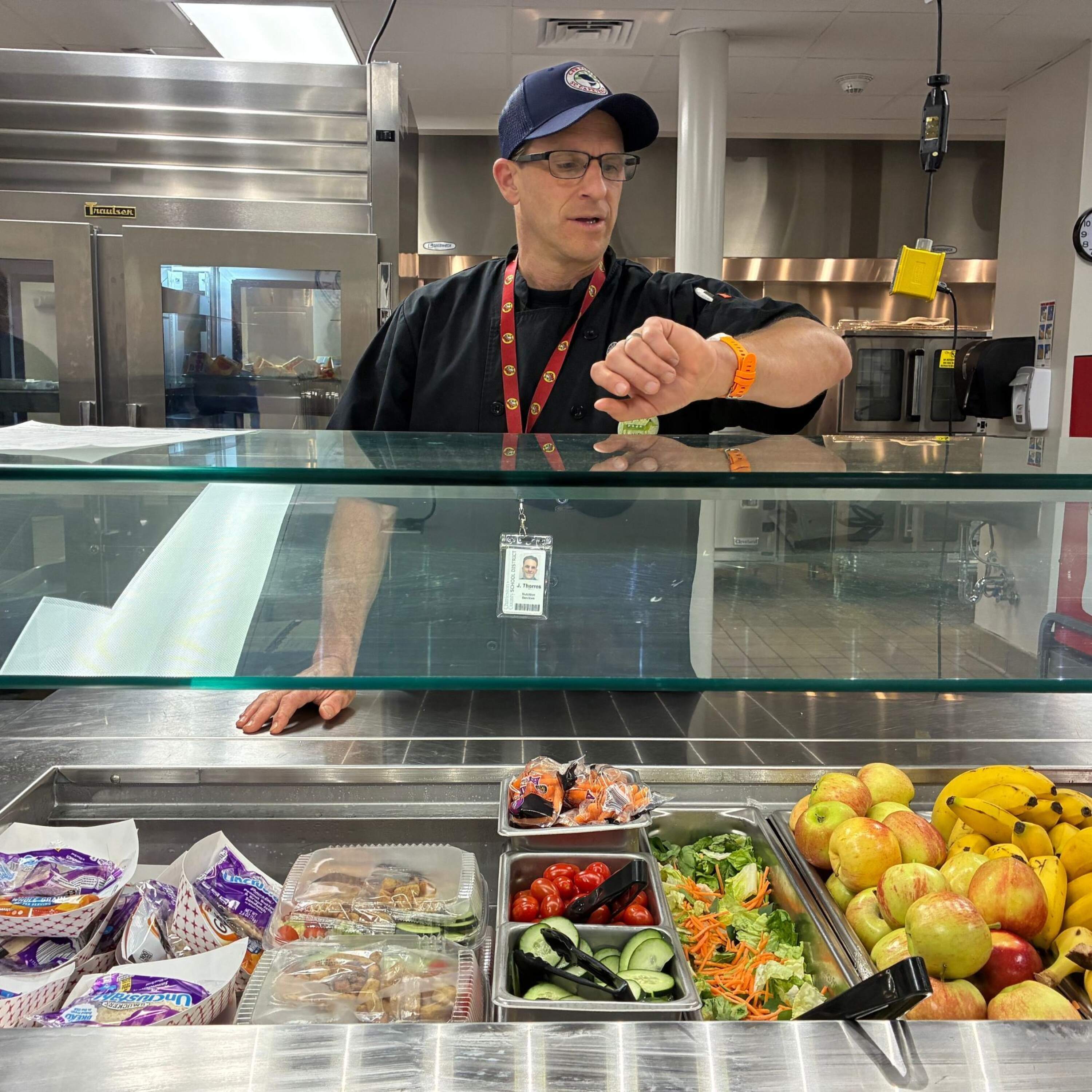
- Menu options: hot entrees (e.g., teriyaki/orange chicken with rice and broccoli), cold options (prepackaged Uncrustable + crackers), and a salad bar.
- Students must select three of five components; one must be a fruit or vegetable — this choice model both enforces guidelines and reduces waste.
- Cost management example: the district aims to keep food cost per meal around $2.15; some special items (e.g., bone-in wings) push costs higher and are balanced with cheaper items in the same meal cycle.
How school meal funding & operations work
- Schools receive federal reimbursements for each meal, and rates vary by eligibility (free, reduced-price, paid). Reimbursements cover part of the cost but often leave tight margins.
- District cost structure: roughly 40–45% food & supplies, 40–45% labor/staffing, remainder indirect costs (equipment, utilities, admin).
- Infrastructure constraints matter: many districts lack modern kitchens or sufficient staff to prepare large amounts of scratch-cooked food.
Policy timeline and proposed changes
- 2010: Major overhaul under Michelle Obama (lower calories, reduced fat/sodium).
- 2024 (Biden administration): Updated rules including limits on added sugar in certain items; further added-sugar calorie limits phased in through 2027 for breakfasts/lunches.
- Current USDA proposals (reported outreach from Brooke Rollins / Trump administration messaging): increase protein portions, reduce ultra‑processed foods, emphasize cooking from scratch. These proposals have prompted concern from many districts about feasibility and cost.
Reactions from practitioners and stakeholders
- School Nutrition Association (represents ~50,000 K–12 nutrition workers) cautions that budget, staffing, equipment and infrastructure limit how much scratch cooking districts can do. They and nearly 900 districts/nutrition professionals sent an open letter expressing concerns about the proposed rules.
- Some district leaders say schools already meet many nutrition standards and that school meals can be among the healthiest meals students get.
- Nutrition directors emphasize practical strategies (e.g., "speed‑scratch" — using pre-made and fresh ingredients) to improve quality without massive infrastructure changes.
Practical challenges and solutions highlighted
- Challenge: Student acceptance — kids often prefer familiar, processed items, making behavior change slow.
- Challenge: Cost and infrastructure — scratch cooking requires ovens, prep space, more staff.
- Solutions used by districts:
- Preserve choice to improve buy-in and reduce waste.
- Use salad bars and small nudges to encourage vegetables.
- Implement "speed‑scratch" approaches that mix pre-made components with fresh ingredients.
- Balance occasional higher-cost entrees with lower-cost items across the cycle.
Notable quotes
- "We're running 80 restaurants every single day, and we're serving a great breakfast and a really wonderful lunch every single day." — Charleston County nutrition director
- "I think it's keeping them engaged and making sure that we are treating them as the very intelligent consumers they are." — on keeping kids interested in healthy options
- "School meals are actually the healthiest meals that Americans are eating today because they're already meeting these standards." — Diane Pratt-Hevner, School Nutrition Association
Implications and recommendations
- For policymakers: If new nutrition standards are adopted, pair them with increased/restructured funding for kitchen upgrades, equipment, staffing, and technical assistance to make scratch cooking feasible at scale.
- For districts: Continue practical, low-cost strategies (choice architecture, speed‑scratch, taste-testing, marketing) to raise acceptance and nutritional quality while controlling costs.
- For parents/community: Engage with districts (taste tests, feedback), and recognize school cafeterias as complex food-service operations balancing nutrition and budgets.
This episode shows that improving school lunches is not just about setting stricter nutrition rules — it requires matching policy ambition with realistic funding, infrastructure, and student engagement strategies so healthier meals can be produced, served, and actually eaten.