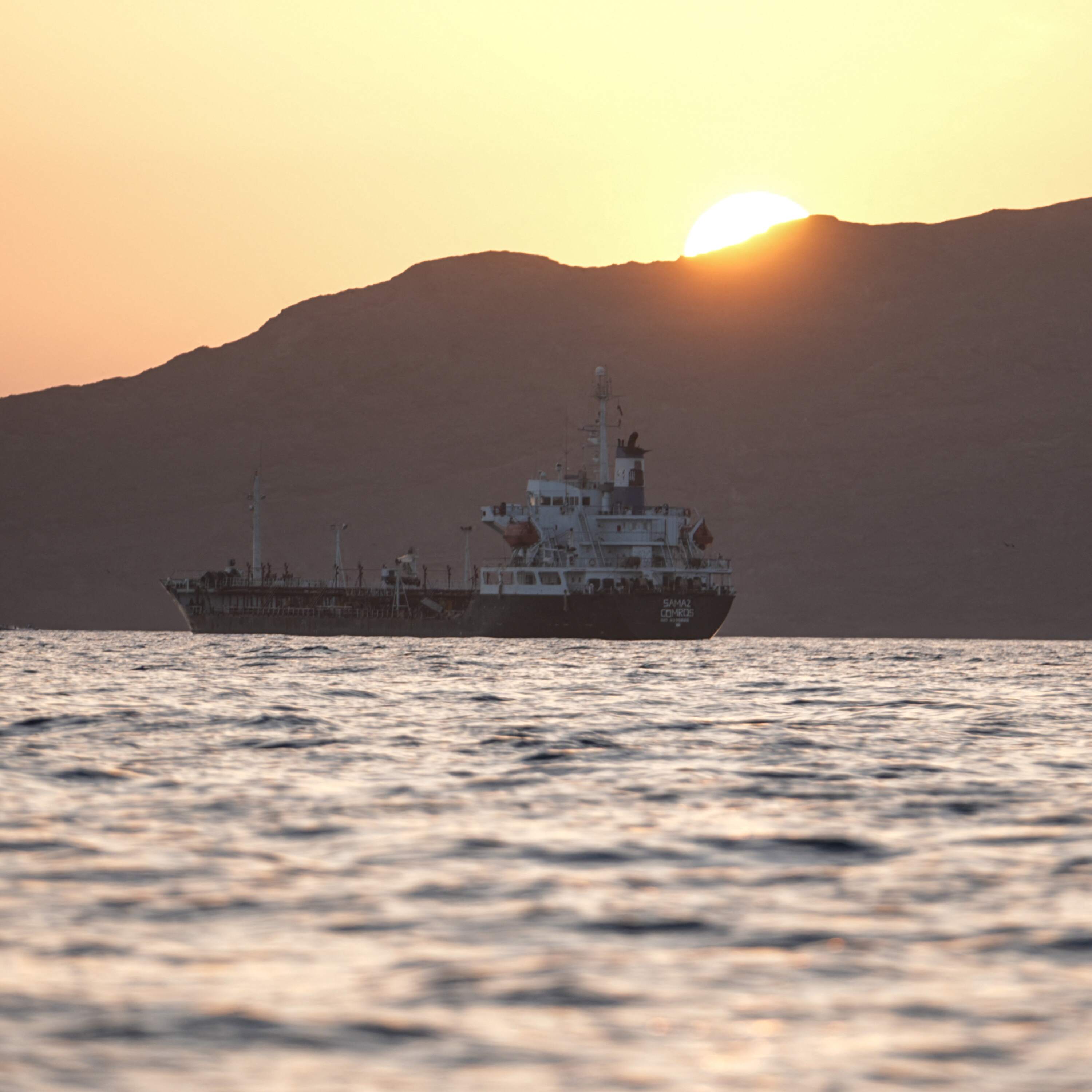
Overview of Strait talk: Why the oil crisis is getting worse
This NPR Indicator segment explains why the Red Sea crisis is escalating the global oil and trade disruption. The focus is the Bab el-Mandeb Strait, a critical chokepoint at the southern entrance to the Red Sea, where Houthi advances in Yemen have increased the risk to shipping. The episode argues that even the threat of closure is enough to raise costs, disrupt oil flows, and add pressure to an already fragile global supply system.
What the Bab el-Mandeb Strait is
- The Bab el-Mandeb Strait sits between Yemen on the Arabian Peninsula and the Horn of Africa.
- It is one of the world’s most important maritime chokepoints because it controls access to the Red Sea, which connects:
- the Suez Canal and Mediterranean Sea to the north
- the Indian Ocean and Asian trade routes to the south
- In normal times, the Red Sea carries a huge share of global trade, including:
- nearly 15% of global seaborne trade
- about 30% of container traffic
- around 12% of oil shipped by sea
- about 8% of liquefied natural gas (LNG)
Why the strait is in the news
Houthi activity in Yemen
- The Houthis, an Iran-aligned rebel group that has been fighting for control of Yemen for years, began attacking Red Sea shipping in November 2023.
- Their attacks included drone and missile strikes and some ship seizures, framed as pressure against Israel over the Gaza war.
- The U.S. responded with military strikes against the Houthis.
Recent escalation
- The episode says the Houthis recently seized territory along Yemen’s Red Sea coast, including Perim Island in the middle of the Bab el-Mandeb.
- Because the strait is only about 18 miles wide at its narrowest point, control of nearby terrain gives a group major leverage over whether ships can safely pass.
Why this is worsening the oil crisis
Saudi Arabia’s workaround is under pressure
- Saudi Arabia had been using the Red Sea route and an east-west pipeline as an alternative to shipping through the Strait of Hormuz, which had already been disrupted.
- That workaround is now increasingly vulnerable:
- the Saudi pipeline was reportedly attacked by drones
- Saudi oil shipments from a Red Sea port were suspended
- This makes the Red Sea route look less like a stable backup and more like another fragile chokepoint.
The “Schrödinger Strait” problem
- Rachel Ziemba describes the Bab el-Mandeb as a kind of “Schrödinger Strait”:
- it may not be fully closed
- but the uncertainty alone raises costs
- Even without a formal shutdown, the danger causes:
- higher insurance premiums
- higher shipping/anchor costs
- slower trade and more logistical friction
Broader economic effects
Oil and fuel prices
- When news of the Houthi advances broke, oil prices spiked above $100 a barrel.
- The episode notes that the market was already under strain from:
- a supply deficit
- use of strategic petroleum reserves
- refinery outages
- This means not just crude oil, but also gasoline and diesel prices are under upward pressure.
Other commodities at risk
The strait is also important for shipping:
- natural gas
- fertilizer
- sulfur
- helium
These shortages can ripple into other industries:
- sulfur is used in metal processing, including copper
- helium is used in semiconductors and medical devices
Why Americans should care
- Even if some U.S. producers benefit from higher prices, the American consumer tends to pay more in global supply disruptions.
- Since these are global commodity markets, disruptions in one chokepoint can quickly affect prices in the U.S. and elsewhere.
Geopolitical implications
- The crisis is not only about shipping costs; it is also straining:
- relations among Middle Eastern countries
- relations between the U.S. and its allies in the region
- The episode suggests that continued instability could make other U.S. goals harder, including:
- maintaining regional alliances
- supporting onshoring and investment tied to Gulf partners
Main takeaway
The episode’s central argument is that the oil crisis is getting worse because global trade is being squeezed at multiple chokepoints at once. The Bab el-Mandeb has become the latest vulnerable point, and the mere possibility of its closure is enough to disrupt shipping, raise energy prices, and expose how fragile the world’s backup routes really are.