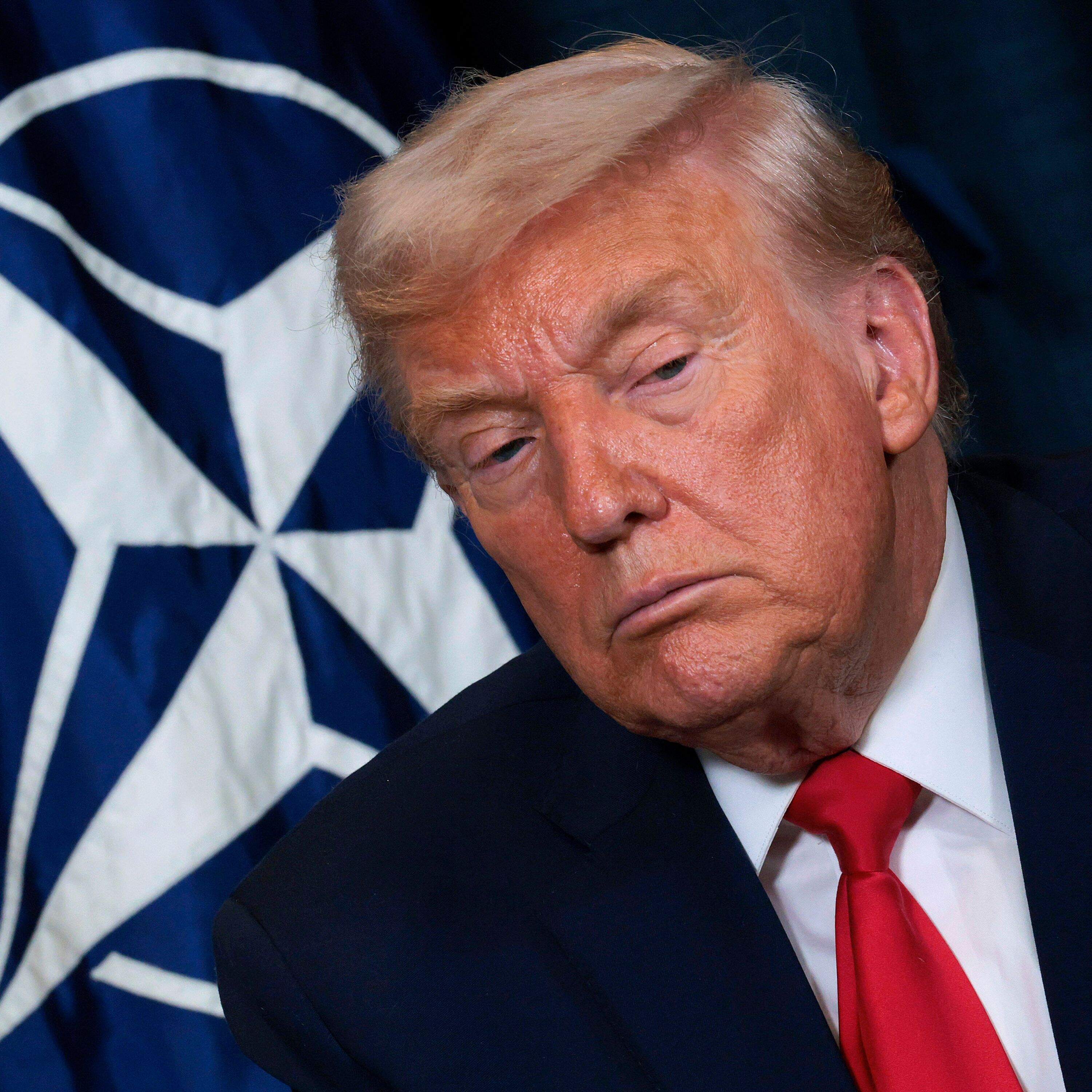
Overview of Should NATO be pay-to-protect?
This NPR Indicator episode examines President Trump’s “pay or else” view of NATO and contrasts it with the alliance’s original purpose: collective security after World War II. Through historian Heather Cox Richardson and NATO expert Nikki Ikani, the episode argues that NATO is not a simple pay-for-protection arrangement, but a strategic alliance that has historically served U.S. political, military, and economic interests.
Main Argument
Trump has repeatedly framed NATO like a transactional service: if allies don’t “pay,” the U.S. may not protect them. The episode pushes back on that framing by showing that:
- NATO was created to prevent another world war.
- The alliance has provided major security benefits to the U.S. and Europe.
- The U.S. has long gained from maintaining stability in Europe, not just given away protection.
Heather Cox Richardson describes NATO as “really cheap” compared with the cost of war and global instability.
How NATO Actually Works
The episode explains that NATO funding is often misunderstood. There are two different parts:
1. NATO’s common budget
- Roughly $5–$6 billion per year.
- Paid into by all members based on size and capacity.
- Covers NATO’s operations, headquarters, communications, and administration.
2. National defense spending
- Each member commits to spend a share of GDP on its own military.
- This is not money paid directly to NATO.
- The idea is that stronger national militaries support the alliance as a whole.
The episode notes that spending levels alone do not tell the whole story — it also matters what countries spend on. Money tied up in pensions or other non-deployable costs does little in a crisis.
Why Trump’s Criticism Resonates
There is some truth to the complaint that the U.S. carries a larger share of NATO’s high-end military capabilities. The episode highlights U.S. contributions such as:
- Surveillance and intelligence infrastructure
- Mid-air refueling aircraft
- Nuclear deterrence
- Other advanced military capabilities that many allies rely on
Even as European countries have increased defense spending, the U.S. still provides a disproportionate share of the alliance’s most critical assets.
The Historical Context
Heather Cox Richardson explains that NATO emerged from the postwar belief that the world had to be structured to prevent another global conflict. That vision was built on three pillars:
- Free trade and open sea lanes
- International cooperation and shared values
- Collective security
NATO’s central idea is Article 5: an attack on one member is an attack on all. It has only been invoked once, after 9/11, when allies supported the United States.
Risks of a Transactional NATO
The episode suggests Trump’s approach could have serious consequences:
- It weakens trust among allies
- It encourages Europe to consider security arrangements without the U.S.
- It may reduce America’s long-term influence
- It could carry economic costs, not just military ones
Richardson argues that the system built after World War II has helped keep the U.S. secure and economically strong, and that treating NATO as a fee-for-service arrangement ignores that record.
European Response and Future Outlook
European leaders are not simply waiting for U.S. policy to change. The episode notes that some, including a former NATO secretary general, are discussing the possibility of a new security alliance that would not depend on the United States.
That possibility underscores how strained transatlantic relations have become, especially as the U.S. questions whether its allies are “pulling their weight.”
Key Takeaways
- NATO was created as a collective defense system, not a protection racket.
- U.S. support for NATO has historically been a strategic investment in global stability.
- Trump’s “pay-to-protect” framing treats alliance security like a business transaction.
- The U.S. still provides critical military capabilities that many NATO allies do not.
- Fraying trust could push Europe toward security arrangements that exclude the United States.
Notable Insight
“If you think about this not as a tit for tat and you think of it more as a concept of how the world should operate, NATO is really cheap.”
This captures the episode’s core point: NATO’s value is not just measured in dollars, but in the stability, deterrence, and political order it has helped preserve.