Overview of How Hemp-THC Businesses are Bracing for a Near Total Ban
NPR’s The Indicator from Planet Money examines how hemp-derived THC products — including Delta-8, THC drinks, vapes, and edibles — are facing a major federal crackdown after years of thriving in a legal loophole created by the 2018 Farm Bill. The episode focuses on Tennessee, where a state ban already forced hemp businesses, farmers, and retailers to pivot or shut down, and it explores what a nationwide ban could mean for jobs, tax revenue, consumer access, and the broader hemp economy.
Key Takeaways
-
The hemp-THC market is under threat from new regulations.
- Congress is moving to close the loophole that allowed hemp-derived THC products to be sold legally in many places.
- The episode describes this as potentially ending a $28 billion industry.
-
Tennessee is an early example of what a ban can do.
- A state-level ban on most hemp THC products took effect in July.
- Businesses already operating in Tennessee are seeing layoffs, closures, and major pivots.
-
Farmers are being pushed out of hemp and into other crops.
- Some hemp growers have shifted back to traditional crops like blackberries and corn.
- Others are trying to move into fiber hemp, which has industrial uses rather than intoxicating ones.
-
Consumers and patients may lose affordable alternatives.
- Hemp-derived THC products are often cheaper than marijuana products because hemp can be grown and shipped more broadly.
- Some users also rely on full-spectrum CBD or hemp products for pain management and may not find equivalent replacements.
What Happened in Tennessee
Business and Farm Impacts
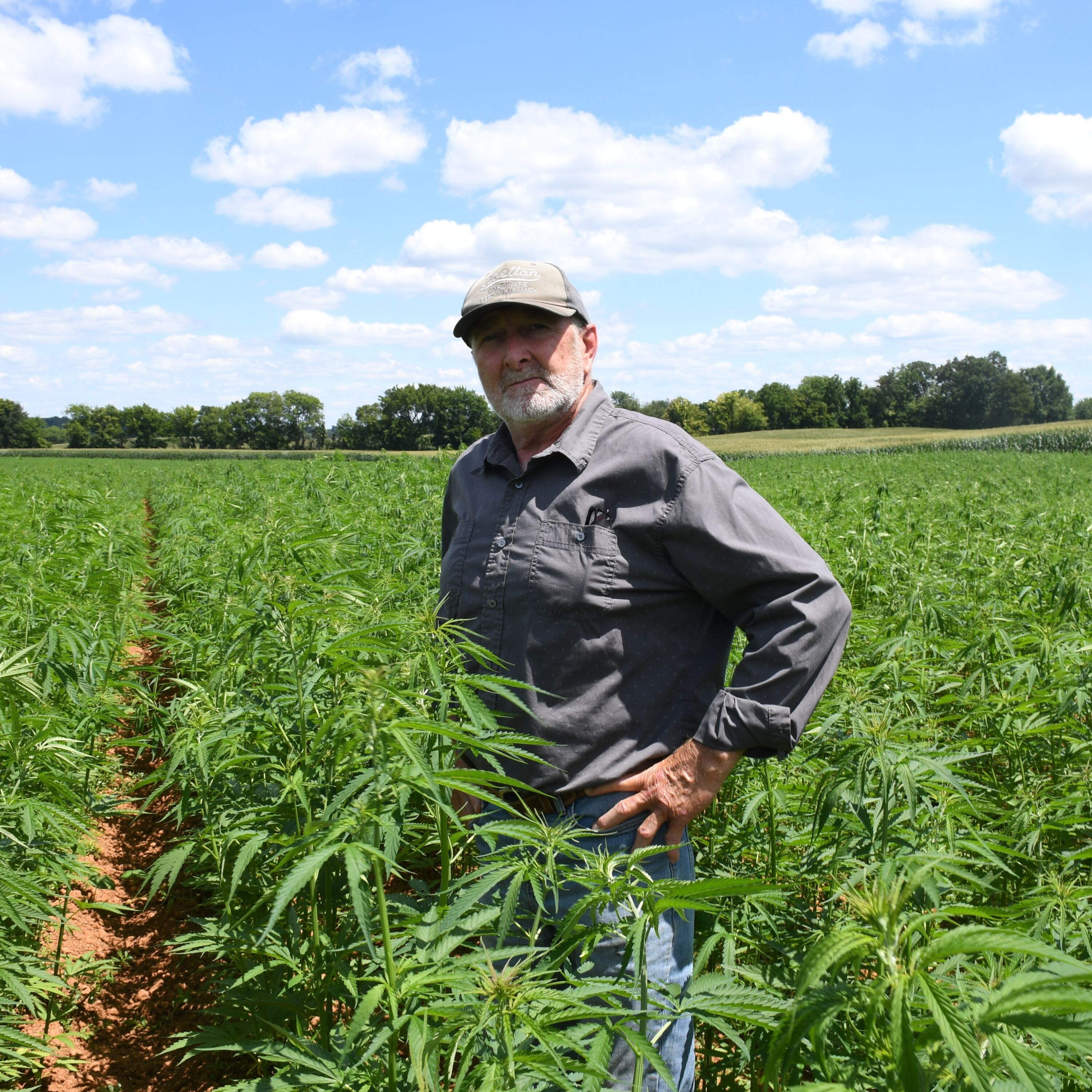
The episode follows Lee Crabtree, a Tennessee farmer who once dedicated much of his land to CBD hemp. After the ban, he had to replant with berries and corn and now faces lower earnings and uncertainty. His wife, Stacey, has also had to repurpose their industrial kitchen, shifting into food sales like chicken salad and pimento cheese sandwiches.
Industry Pivoting and Relocation
Some companies are trying to survive by moving operations out of Tennessee. Burning Acre, for example, relocated its growing operation to North Carolina to keep producing hemp. But moving an entire supply chain is expensive and disruptive, and many smaller businesses are not able to make that leap.
Why the Ban Matters
Economies of Scale Give Hemp an Edge
Economist Beau Whitney explains that hemp has been able to scale nationally in ways marijuana businesses generally cannot:
- Hemp can be grown and shipped across state lines.
- Marijuana businesses often need state-by-state supply chains.
- That gives hemp-derived products a cost advantage, especially for edibles and other consumer goods.
Tax Revenue and Jobs Are at Risk
The episode notes that hemp bans can also hit state budgets hard. In Tennessee alone, the industry has represented a $54 million budget hole. Nationally, the impacts could reach far beyond farmers and retailers, with hundreds of thousands of jobs potentially affected.
Lawmakers’ Rationale
Supporters of the crackdown argue that consumers deserve to know exactly what they are buying. Tennessee Republican William Lamberth compares the issue to mislabeled drinks: buyers should not get an intoxicating product when they expect something non-alcoholic and vice versa.
The main concern from regulators is that hemp-derived THC products can be deceptively strong or intoxicating, especially when altered in labs to mimic marijuana-like effects.
What’s Next
- The White House has urged Congress to delay or revise the ban.
- The Senate and House have both moved to postpone it, but only by about a month.
- If the ban goes through, many hemp businesses expect a major contraction — potentially a near-total collapse of the THC hemp market in non-legal marijuana states.
Bottom Line
The episode frames the hemp-THC crackdown as a major turning point for a once-booming industry built on legal ambiguity. For some, the ban is a needed consumer protection measure. For others, it is an economic shock that threatens farms, small businesses, jobs, tax revenue, and access to affordable THC and CBD products.