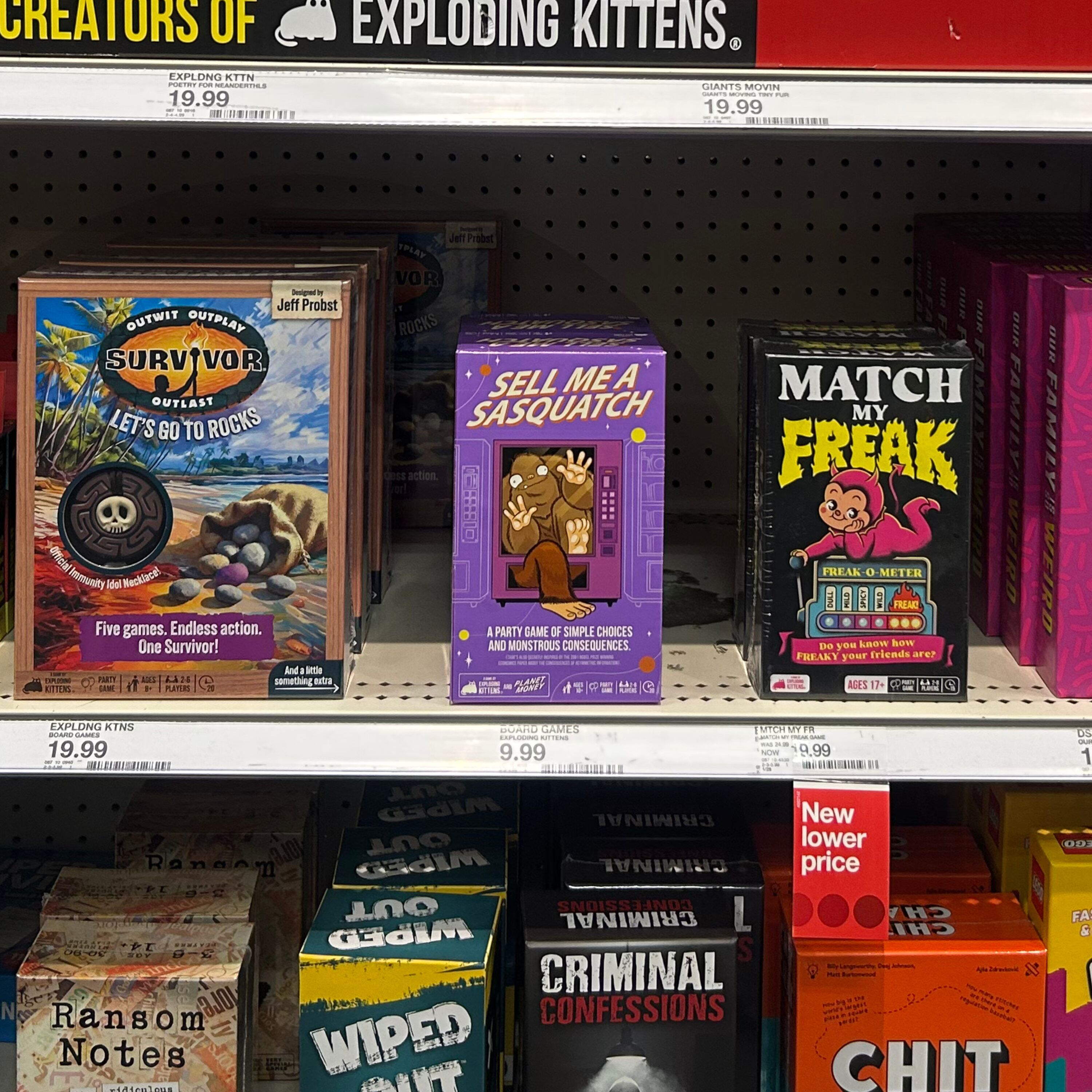
Overview of NPR’s “Does Planet Money’s game pass the shelf test? We go undercover to find out”
This episode follows NPR’s Planet Money / The Indicator team as they go undercover in a big-box store to test a new board game, Sell Me a Sasquatch, created with Exploding Kittens. The piece is a behind-the-scenes look at retail shelf testing—how game companies use real stores to see whether a product stands out, survives messy shelf placement, and can persuade shoppers to buy it in just a few seconds.
What the episode is about
The team sneaks the prototype onto a game shelf in a Los Angeles big-box store and evaluates it using a few practical retail tests:
- Does it look good on the shelf?
- Does it still stand out if it’s knocked over or shoved out of place?
- What do actual shoppers think when they see it?
The episode also shows how much thought goes into packaging, box size, color, and wording—especially for products competing for attention in crowded retail aisles.
The shelf test process
1. Shelf presence and visual appeal
Once the game is placed among familiar titles like Uno, Scrabble, and Catan, the team immediately notices design issues and advantages:
- The title spacing/kerning looks off from a distance, making it read awkwardly.
- The purple box color stands out well because it’s uncommon in the category.
- The small box size is intentional, since smaller boxes are more likely to get eye-level placement than oversized ones, which often end up on top or bottom shelves.
2. “Petite shopper” / disrupted shelf test
The team then knocks the game over and pushes it back into the shadows to simulate how products actually end up on shelves in real stores.
- The game still remains visible despite being partially hidden.
- Light colors and strong packaging can help a product “pop” even in imperfect placement.
- A retail consultant explains the “three feet, three seconds” rule: a product has only a few seconds to grab attention once a shopper is close enough.
3. Shopper reaction test
The team stops a real shopper browsing the aisle and asks what stands out.
- The shopper first notices Exploding Kittens itself, which confirms how strong the brand is.
- When he turns over Sell Me a Sasquatch, the back-of-box copy is found to be confusing.
- The team realizes that box text needs to be simpler and clearer if it’s going to help close the sale.
Main takeaways
- Shelf testing is more of an art than a science, but it’s useful for spotting obvious problems before launch.
- Packaging matters a lot in big-box retail, where products compete with many similar-looking items.
- Size, color, and wording can all determine whether a game gets noticed.
- The back of the box must quickly explain the game without making shoppers work too hard.
- Even a great game can fail if the packaging doesn’t communicate value fast enough.
Final outcome
The episode suggests that the prototype passed some parts of the shelf test but revealed enough weaknesses to require adjustments—especially in the box copy. Still, the team frames shelf testing as a way to improve the product, not to guarantee success.
The episode ends by noting that Sell Me a Sasquatch is now available through shop.npr.org and at big-box retailers, and the hosts encourage listeners to buy it, play it, and share photos of game nights online.
Notable insight
- “The retail shelves are still a surprisingly big part of our lives.”
- The core lesson: products are judged quickly, visually, and often imperfectly—so packaging has to do a lot of heavy lifting.