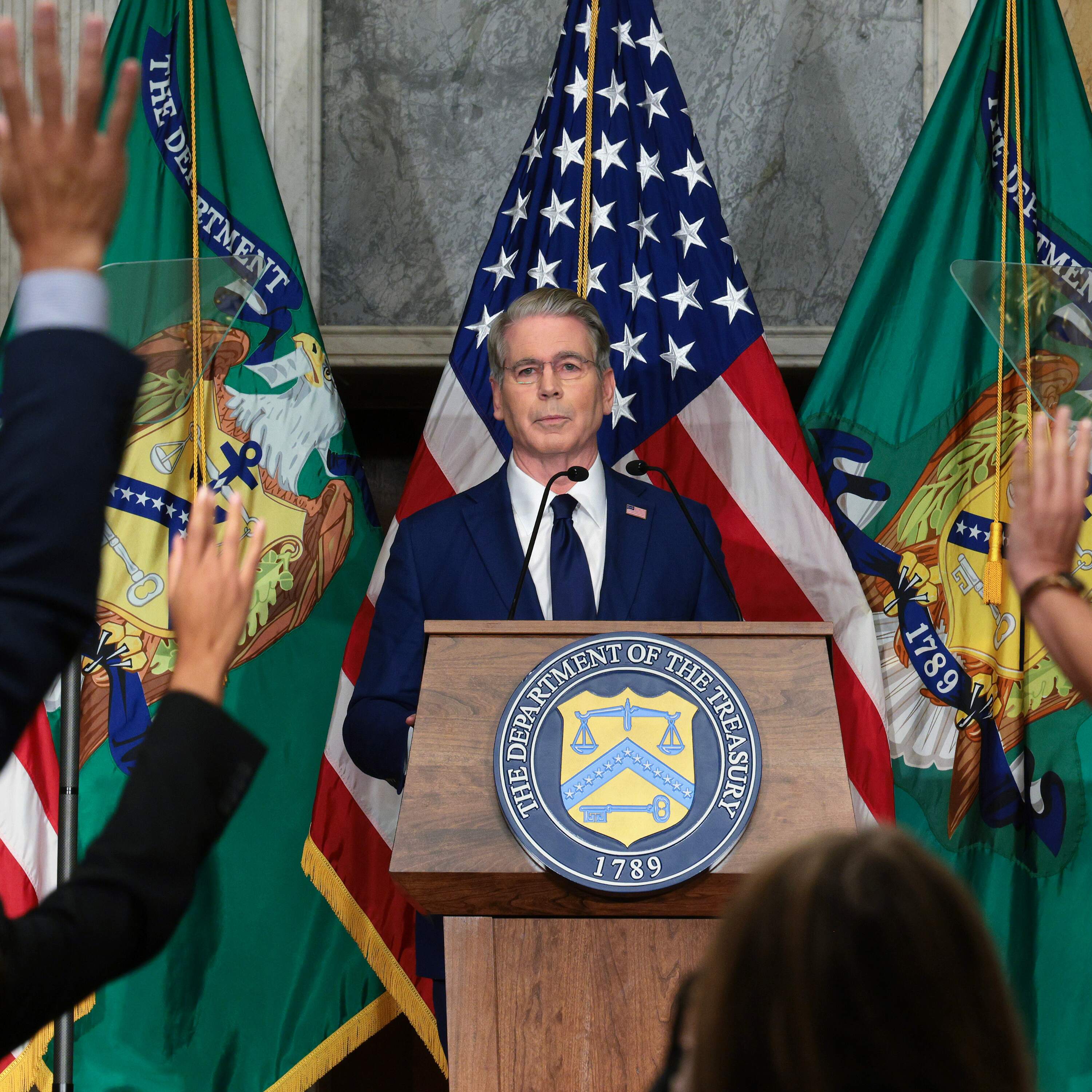
Overview of A Treasury showdown with the bond market
This NPR episode explains why Treasury Secretary Scott Bessent is under fire from bond investors after the Treasury Department announced a much larger buyback program for longer-dated U.S. government bonds. The stated goal is to improve market liquidity, but many investors suspect the real aim is to push Treasury yields lower—something that could help the White House politically, but risk a standoff with both the bond market and the Federal Reserve.
What the Treasury is trying to do
- Starting next week, the Treasury plans to at least double its bond buyback program, focusing on longer-dated Treasuries like the 20- and 30-year bonds.
- Treasury says the purpose is to improve liquidity—making sure there are enough buyers and sellers in the market.
- In practice, buybacks create extra demand for those bonds, which can raise prices and lower yields.
Why bond yields are elevated
The episode breaks down why long-term Treasury yields have risen to levels not seen since the early 2000s:
- Inflation expectations remain sticky.
- There is a large supply of bonds in the market, including corporate debt from companies raising money for AI spending.
- Investors want higher compensation for long-term risk, especially with uncertainty over the economy and inflation.
- The U.S. is carrying about $40 trillion in debt, making higher yields especially painful for the government’s borrowing costs.
Why investors are skeptical
Market participants are not convinced by Treasury’s explanation.
Main concerns
- The buybacks do not address the underlying fiscal problem: the size of the debt itself.
- Investors think the administration should focus on fiscal discipline rather than trying to influence rates indirectly.
- Many view the move as Treasury “mucking around” in markets, a role traditionally reserved for the Federal Reserve.
Market reaction
- Yields briefly fell after the announcement, then moved back up.
- Analysts saw that as a sign that investors do not believe the Treasury’s stated rationale.
The Federal Reserve angle
- Interest-rate management has historically been the Fed’s job, not the Treasury’s.
- The episode compares this to earlier bond-buying efforts, like Operation Twist in 1961 and post-2008 interventions, which were driven by the Fed during periods of economic weakness.
- That is not the current environment:
- Unemployment is low.
- Inflation is still above the Fed’s target.
- The implication is that if the Treasury is trying to force rates lower, it could be working against the Fed’s policy goals.
What this means for everyday borrowers
Treasury yields act as a benchmark for many other interest rates in the economy:
- Higher Treasury yields can mean higher borrowing costs for the government.
- They also affect consumer loans and mortgages.
- In particular, the 30-year mortgage rate is influenced by the 10-year Treasury yield, so bond market moves can hit household borrowing directly.
Main takeaway
The episode frames this as a high-stakes clash between:
- the Treasury, which says it is improving market liquidity,
- bond investors, who suspect it is a backdoor attempt to lower rates,
- and the Fed, which still controls monetary policy.
The core message: if Treasury is seen as trying to suppress yields without fixing the debt problem, it risks losing credibility with markets—and that could make borrowing more expensive, not less.