Overview of Why the U.S. Just Indicted Cuba’s Former President
This episode of The Daily explains why the Trump administration announced an indictment against Cuba’s former leader Raúl Castro, tying him to the 1996 shootdown of two planes from the Cuban exile group Brothers to the Rescue that killed four people, including three U.S. citizens. The episode frames the move as both a legal action and a political signal: part of a broader pressure campaign aimed at forcing change in Cuba.
What Happened
- The Justice Department announced charges against Raúl Castro and others for:
- Conspiracy to kill U.S. nationals
- Destruction of aircraft
- Four counts of murder
- The announcement was made in Miami’s Freedom Tower, a symbolically loaded venue tied to Cuban exile history.
- The event took place on Cuban Independence Day, underscoring the political symbolism.
- The room was packed with Cuban-American leaders, prosecutors, and officials, and the announcement drew repeated standing ovations.
The Backstory: Why the Charges Stem from 1996
- In the early 1990s, mass migration from Cuba led to the Cuban Rafter Crisis.
- Brothers to the Rescue, a Cuban-American volunteer group, used small planes to spot migrants in distress and alert the Coast Guard.
- Over time, the group became more confrontational toward Fidel Castro’s government, including:
- Flying leaflets over Cuba
- Dropping religious medallions
- On February 24, 1996, Cuban forces shot down two Brothers to the Rescue planes.
- Four people died
- Three were U.S. citizens
- The episode suggests Raúl Castro, then Cuba’s defense minister, gave the order, though the U.S. did not charge him at the time.
Why the U.S. Didn’t Charge Him Years Ago
- Former federal prosecutors said an indictment then could have been destabilizing to diplomatic relations and the region.
- The episode argues the political climate has changed: now the Trump administration is willing to use the case as part of a larger pressure strategy.
The Bigger U.S. Strategy Toward Cuba
- According to reporter Julian Barnes, the indictment is not just about the old shootdown — it is a pressure tactic.
- The administration’s broader moves include:
- Cutting off oil supplies to Cuba
- Increasing economic pressure
- Signaling that the U.S. wants leverage over Cuba’s political future
What Washington May Want
- The episode says the U.S. has not clearly stated its full endgame, but goals appear to include:
- Reducing the power of Cuba’s military-linked economic conglomerate
- Pushing more pragmatic political figures
- Encouraging incremental democratic reforms, possibly even local elections
- Removing or limiting Chinese and Russian intelligence/military presence on the island
Is the Goal Regime Change?
- The hosts raise the question directly: is this a Venezuela-style playbook?
- Barnes says a military extraction of Raúl Castro is unlikely and would not have the same effect as the capture of Nicolás Maduro would have had in Venezuela.
- More likely, the indictment is intended as:
- A threat
- A bargaining chip
- A sign that the U.S. is willing to escalate pressure
- The episode notes that a full regime-change effort in Cuba would be extremely difficult, while smaller, incremental demands may be more realistic.
Cuban Reaction and Internal Politics
- The Cuban government portrays U.S. pressure as illegal and even uses the language of genocide.
- Inside Cuba, reactions appear generational:
- Older Cubans are more likely to blame the U.S.
- Younger Cubans are more likely to blame their own government for economic collapse
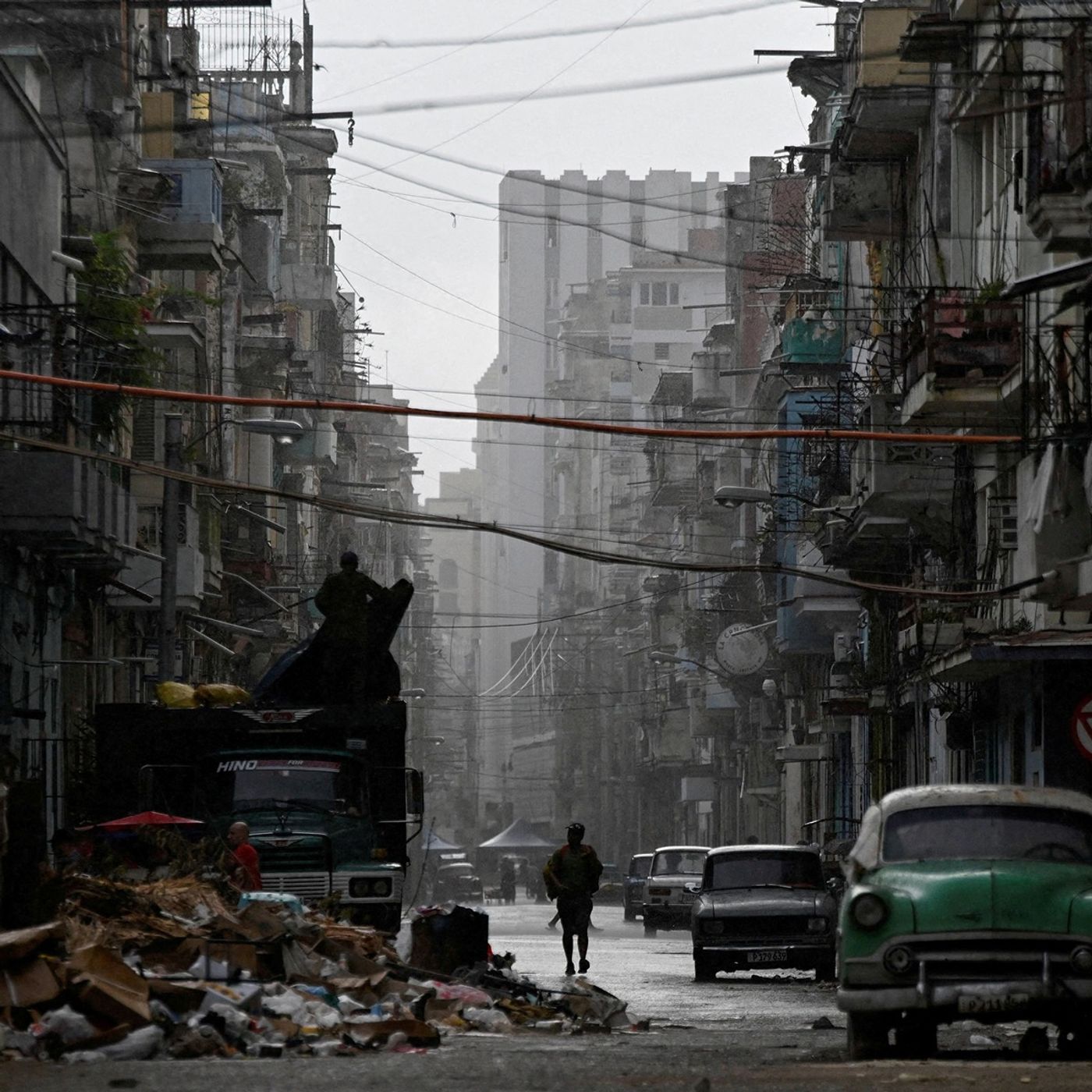
- Many Cubans are enduring severe hardship, including:
- Long daily blackouts
- Food and work disruptions
- Widespread economic stress
Why This Moment Matters
- The episode argues Trump sees Cuba as a possible foreign-policy win at a time when other efforts, especially in the Middle East, look messier.
- The move may appeal to:
- Cuban-American constituencies in the U.S.
- Hardliners who want an end to communist rule in Cuba
- But the episode cautions that anything short of full regime change may feel insufficient to some supporters, even if it is more achievable.
Other News Mentioned at the End
- Two police officers who defended the Capitol on January 6 challenged the constitutionality of a $1.8 billion fund that could compensate people tied to the attack.
- The episode also noted the death of Barney Frank, the longtime Massachusetts congressman and major architect of post-2008 financial reform, at age 86.
Key Takeaway
The indictment of Raúl Castro is portrayed less as a simple pursuit of justice for a decades-old shooting and more as a strategic escalation in the Trump administration’s effort to pressure Cuba into political and economic change. It is a high-symbolism move aimed at signaling power, testing leverage, and possibly opening the door to a broader negotiation over Cuba’s future.