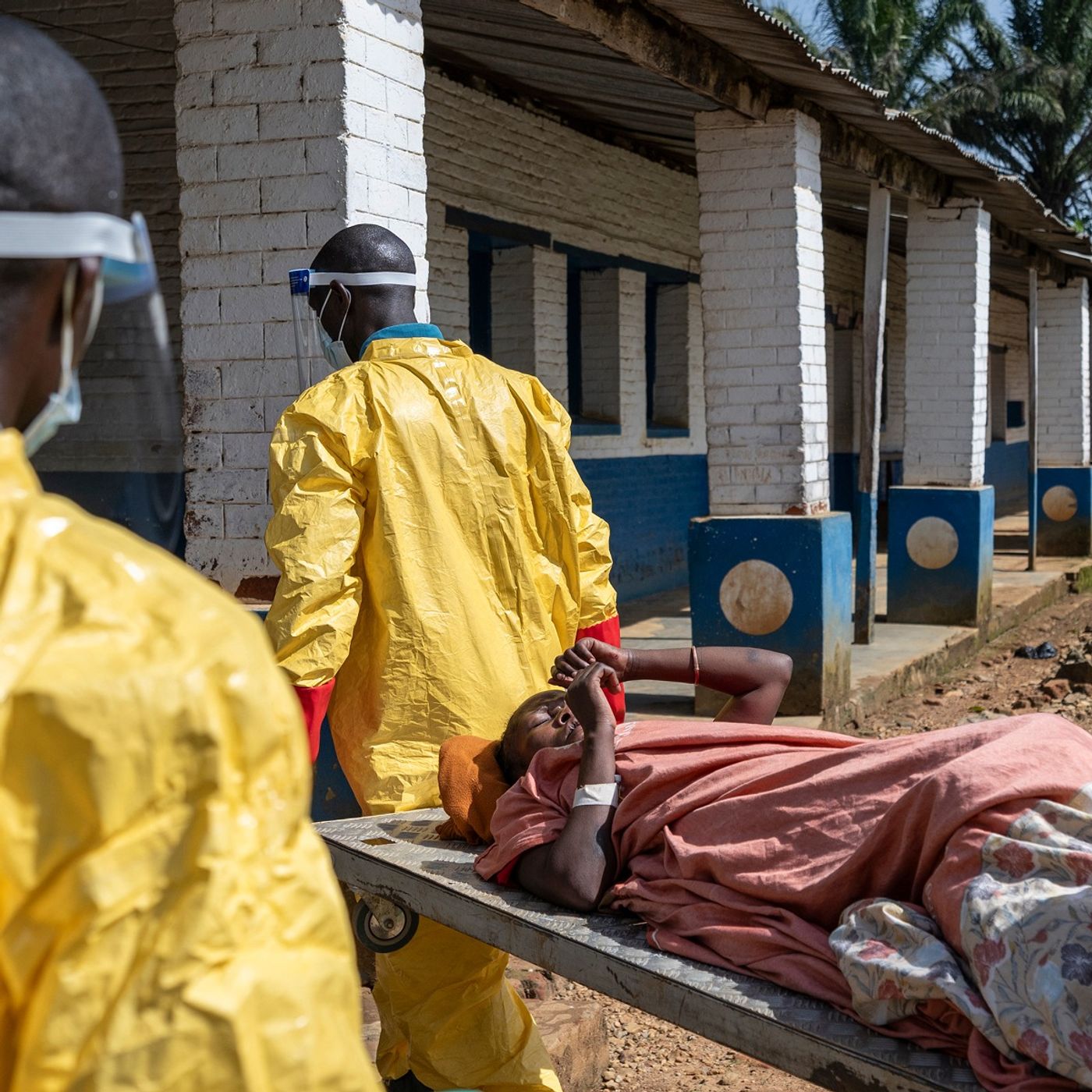
Overview of The Daily: Why the Ebola Outbreak Has Been Nearly Impossible to Stop
This episode of The Daily examines a severe Ebola outbreak in northeastern Democratic Republic of Congo, focusing on why public health teams have struggled to contain it. Reporter Declan Walsh describes a response that is dangerously under-resourced, delayed by a late detection, complicated by conflict and remote geography, and further undermined by community mistrust, denial, and resistance to safe burial practices.
Key Takeaways
- The outbreak was detected only after it had likely been spreading for two to three months, giving it a major head start.
- The strain involved is Bundibugyo Ebola, a rare variant with no vaccine or cure currently available.
- Health workers are operating with too little protective gear, limited training, and slow testing turnaround.
- The outbreak began in Mongbwalu, a gold-mining town in Ituri province, where mobility, poverty, and militia activity make containment difficult.
- Many residents distrust hospitals and aid groups, fueling conspiracy theories and resistance to treatment and safe burials.
- Although the outbreak is serious and still growing, it is not yet clear whether it will be contained or escalate dramatically.
Why the Outbreak Has Been So Hard to Contain
Late Detection Gave Ebola Time to Spread
Walsh explains that the virus was probably circulating for months before it was officially identified. By the time authorities recognized the outbreak, there were already hundreds of suspected cases, meaning responders were trying to catch up from the start.
The Virus Itself Is Difficult to Track
This is a rare strain of Ebola, which creates several problems:
- It is less familiar to local health systems.
- Early symptoms often resemble malaria or typhoid, both common in the region.
- Patients frequently seek help only when they are already very sick.
- The region lacked immediate access to testing for this specific strain, causing dangerous delays.
Weak Health Infrastructure on the Ground
At the hospital in Mongbwalu, Walsh found conditions far below what is normally expected in an Ebola response:
- Relatives were providing food and care inside wards.
- Protective equipment was scarce.
- Staff said they had not been properly trained for this kind of outbreak.
- Test results could take four to six days, often arriving after the patient had already died.
What the Reporting Revealed in Mongbwalu
A Town Well Positioned for Disease Spread
Mongbwalu is not just remote; it is also a gold-mining hub with a highly mobile population:
- migrant laborers
- traders
- gold smugglers
- sex workers
That movement makes it easier for Ebola to spread beyond the town.
The Hospital Scene Was Especially Disturbing
Walsh describes seeing:
- a five-year-old boy, Emmanuel, being treated on a bare mattress
- the body of a young woman who had just died lying nearby
- very limited infection control, despite the extreme contagiousness of Ebola after death
The situation showed how the lack of equipment and space can force hospital staff into unsafe improvisation.
Mistrust, Denial, and Resistance to Safe Burials
Public Suspicion of Aid Groups
In affected communities, many people believe:
- Ebola is not real
- it is a curse
- it is part of a conspiracy by doctors or foreign aid workers
Some even believed that Doctors Without Borders vehicles were somehow spreading the disease.
Why the Suspicion Exists
Walsh suggests the mistrust is partly rooted in experience:
- people were seeing many deaths before they understood what was happening
- by the time Ebola was identified, the hospital had become associated with death, not healing
- families often arrived too late for treatment, then saw loved ones die anyway
Burial Practices Became a Flashpoint
Traditional burial customs in the Congo involve close contact with the body, which can make funerals super-spreader events. When hospital staff refused to release the body of a prominent pastor, his supporters reacted violently:
- they stormed the hospital compound
- threw rocks at the director
- later returned in a crowd of more than 100 people
- police and soldiers fired into the air to disperse them
This incident illustrated how fear, grief, and distrust can turn infection control into a community conflict.
Aid Gaps and the Role of U.S. Funding Cuts
Walsh reports that aid workers believe the response would have been stronger if prior U.S. humanitarian support had still been in place. In their view, reduced American aid meant:
- weaker local networks that could have helped detect the outbreak sooner
- less funding for community organizations that could be activated during emergencies
- fewer existing systems to support a rapid response
Once the outbreak was declared, international help did begin to arrive — but by then the virus had already gained ground.
What Still Needs to Happen
Health officials and aid workers say the response needs several things immediately:
- more protective equipment
- more medicine
- more funding
- much faster testing
- aggressive contact tracing
- sustained public education to counter fear and misinformation
Walsh emphasizes that contact tracing is especially critical: without it, responders cannot break chains of transmission.
Outlook: Best Case and Worst Case
Worst Case
The outbreak could continue for years and potentially reach the scale of the devastating 2014–2016 West Africa Ebola epidemic.
Best Case
A much larger international response, combined with better local trust and communication, could still contain it.
A Rare Moment of Hope
The episode ends on a hopeful note: Emmanuel, the 5-year-old boy introduced early in the report, appears to be recovering. His father tells Walsh that Emmanuel has been sitting up, drawing numbers, asking for his toys, and has now been discharged home.
That small recovery stands out against the larger crisis, offering a glimpse of what effective treatment can still achieve.