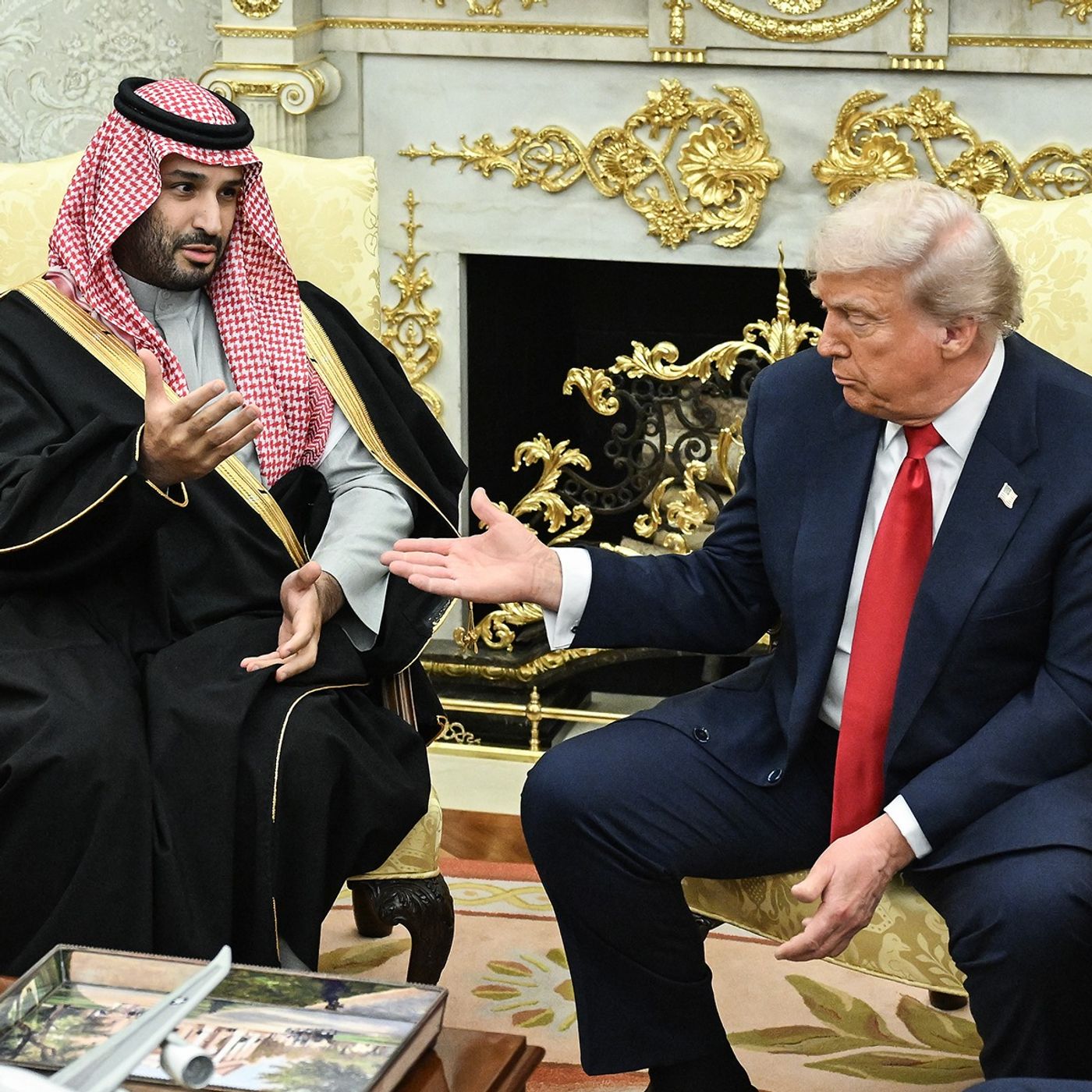
Overview of Why Is the U.S. Building the Saudi Nuclear Program While Destroying Iran’s?
This episode of The Daily examines the new U.S.-Saudi nuclear agreement, which would allow Saudi Arabia to develop a civilian nuclear power program while the U.S. is simultaneously fighting Iran over its nuclear ambitions. Host Rachel Abrams speaks with David Sanger about what each side gets from the deal, why it has taken so long to finalize, and why it raises major concerns about nuclear proliferation, regional instability, and U.S. credibility in negotiations with Iran.
What the Deal Includes
Saudi Arabia gets:
- The right to build at least two nuclear reactors, likely more
- A long-term arrangement lasting about 30 years
- Access to U.S.-supplied nuclear technology and equipment
- A major role for American companies, especially Westinghouse
The United States gets:
- A lucrative business deal and export opportunities for American firms
- Stronger economic ties between Saudi Arabia and U.S. energy/nuclear systems
- A way to keep Saudi Arabia within the U.S. sphere instead of pushing it toward China or Russia
Why Nuclear Fuel Is the Key Issue
The most important unresolved question is whether Saudi Arabia will be allowed to enrich its own uranium.
Why that matters:
- Enrichment to around 3% is suitable for civilian nuclear power
- Enrichment to around 90% can be used for nuclear weapons
- The danger is that a civilian program can be converted into a weapons program if a country controls the full fuel cycle
The current problem:
- The deal is vague on whether Saudi Arabia will produce its own fuel
- That question is effectively postponed to a future committee study
- Critics worry this “kicks the can down the road” on a major nonproliferation issue
How the Deal Came Together
Long-running negotiations
- Talks over a Saudi nuclear program have been underway for more than a decade
- The Biden administration tried to fold the nuclear deal into a broader bargain that included:
- Saudi recognition of Israel
- Movement toward a Palestinian state
Why that broader deal failed
- The October 7, 2023 Hamas attack on Israel derailed the normalization effort
- After Israel’s response in Gaza, Saudi-Israeli diplomatic normalization became politically impossible
- The nuclear issue was then separated from the Israel diplomacy track under Trump
Why the Timing Matters
The agreement comes during a U.S. war with Iran, which adds another layer of tension.
Regional context:
- Saudi Arabia has been frustrated with how the U.S. has handled the conflict
- The war has highlighted concerns about U.S. protection of Saudi airspace and infrastructure
- The deal may also serve as a way to smooth over recent strains in the U.S.-Saudi relationship
Main Proliferation Concerns
David Sanger highlights several risks that worry experts:
1. Saudi Arabia could eventually pursue a bomb
If Saudi Arabia gains access to the full nuclear fuel cycle, engineers working on civilian fuel could potentially divert expertise or material toward weapons development.
2. Other countries may demand the same terms
The UAE’s earlier nuclear deal included a clause allowing it to revisit terms if a neighboring country got a better deal. That could trigger a broader wave of demands across the region.
3. It weakens the U.S. position on Iran
Iran can point to this deal as evidence that nuclear rules are applied unevenly:
- Friends of the U.S. get flexibility
- Adversaries face strict monitoring and pressure
4. Trust is uncertain over decades
Nuclear agreements last a long time, and political alliances can change dramatically. The episode notes the historical example of the U.S. helping build Iran’s nuclear infrastructure under the Shah, only for the regime to later become hostile to Washington.
Why the U.S. Thinks It’s Worth It
The Trump administration’s argument is that:
- Keeping Saudi Arabia in the U.S. nuclear ecosystem provides oversight
- If the U.S. does not make the deal, Saudi Arabia may turn to China or Russia
- A U.S.-backed deal is seen as safer than losing influence entirely
This reflects a broader geopolitical logic: better to bind allies into American supply chains and systems than let rivals do it.
Congressional and Political Outlook
Can the deal be blocked?
- The agreement must be reviewed by Congress
- Congress has 90 days to pass a resolution of disapproval
- Even if disapproval passes, the president can veto it
- Overriding a veto would require a two-thirds majority
Likely outcome
Sanger says his best guess is that the Trump administration will ultimately get the deal through.
Key Takeaways
- The Saudi nuclear deal is framed as civilian energy development, not weapons proliferation.
- The biggest unresolved issue is whether Saudi Arabia will be allowed to enrich uranium itself.
- The U.S. is prioritizing economic and strategic leverage over the stricter nonproliferation model used in the UAE deal.
- The agreement could complicate U.S. negotiations with Iran and encourage other regional states to seek looser nuclear terms.
- The episode underscores a core tension in U.S. foreign policy: balancing strategic alliances, commercial interests, and nonproliferation concerns.
Notable Insight
“The question is, what were the terms?”
That framing captures the episode’s central point: the danger is not the existence of a civilian nuclear deal itself, but how much control Saudi Arabia will have over the fuel cycle and how far the U.S. is willing to relax the rules for a close ally.