Overview of What Safeguarding Nukes Can Teach Us About Safeguarding A.I.
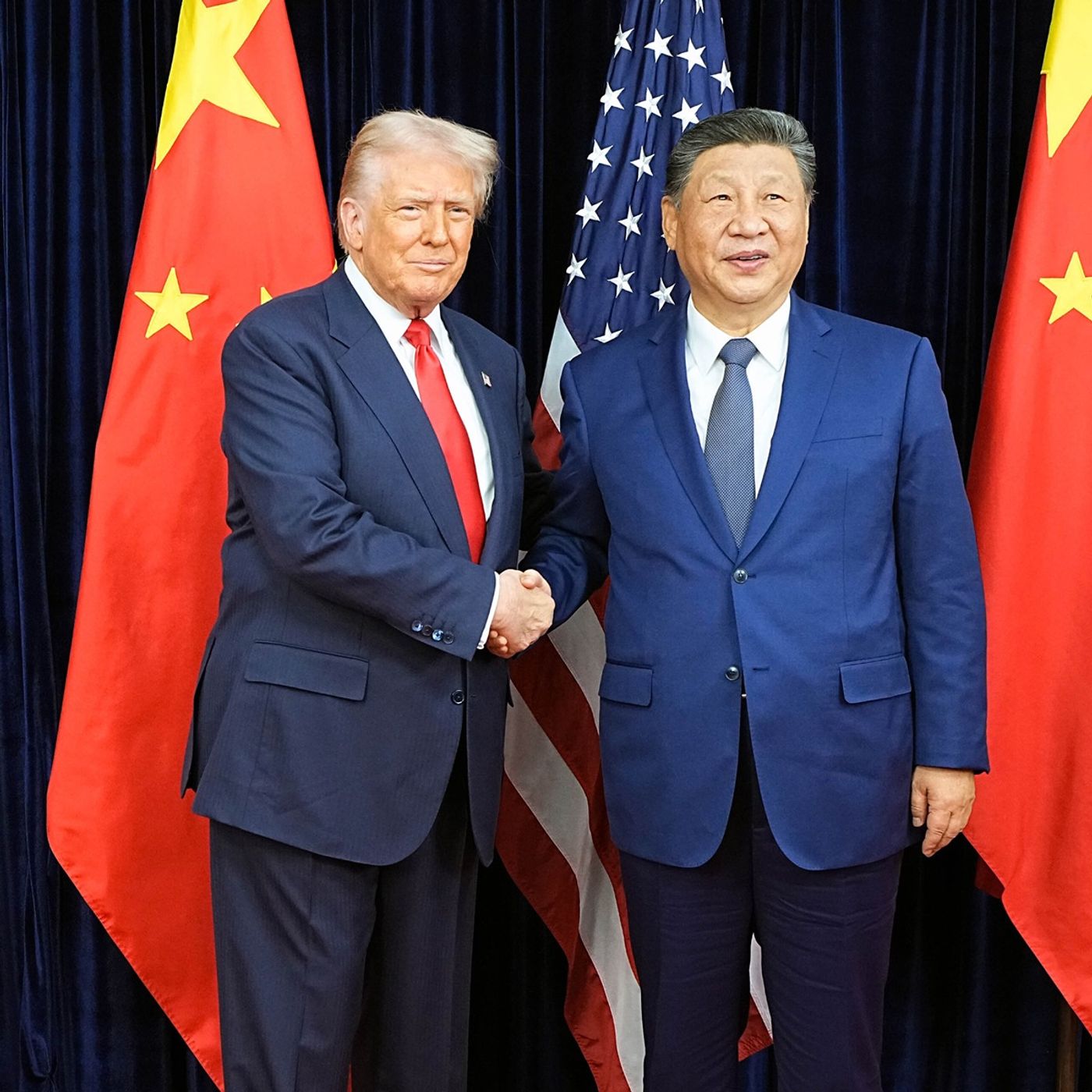
This episode of The Daily examines how U.S.-China discussions about artificial intelligence safety are increasingly being compared to the history of nuclear nonproliferation. Host Michael Barbaro and David Sanger argue that the only real historical precedent for restraining a dangerous, rapidly advancing technology is the postwar effort to control nuclear weapons—though they stress that AI is both faster-moving and harder to contain.
The Central Argument
- AI is creating a global safety panic similar to the early nuclear age.
- Because the U.S. and China lead the frontier AI race, their cooperation is seen as essential to any meaningful global guardrails.
- The episode’s core question: Can the nuclear nonproliferation model be adapted to AI?
The Nuclear History Lesson
David Sanger walks through the evolution of nuclear restraint as the historical template:
From the Manhattan Project to the arms race
- The U.S. developed the first atomic bomb during World War II, amid fear that Germany might get there first.
- The Trinity test and the bombings of Hiroshima and Nagasaki revealed the terrifying scale of the new technology.
- The Soviet Union soon built its own bomb, triggering a long superpower arms race.
The Cuban Missile Crisis as a turning point
- The 1962 crisis showed how close the world could come to nuclear war.
- That near-disaster helped push leaders toward formal limits on nuclear weapons.
The Nonproliferation Treaty
- In 1968, the Nuclear Non-Proliferation Treaty created a framework where:
- nuclear powers would work toward eventual disarmament,
- non-nuclear states would commit not to build bombs,
- and peaceful nuclear energy would still be allowed,
- with inspections overseen by the International Atomic Energy Agency (IAEA).
- The treaty helped prevent the number of nuclear-armed states from growing to the 15–20 countries Kennedy once feared.
How That Model Maps to AI
The episode suggests the nuclear framework is relevant to AI in at least three ways:
- Shared danger: both technologies can cause catastrophic harm.
- Need for coordination: both require cooperation among major powers.
- Value of inspections and guardrails: AI companies and governments are already talking about independent monitoring, early warning systems, and limits on high-risk uses.
Examples mentioned:
- keeping AI away from nuclear launch decisions,
- preventing AI from aiding biological weapons development,
- restricting AI’s role in cyberattacks and infrastructure hacking.
Why AI Is Harder to Regulate Than Nukes
The episode stresses that the analogy only goes so far.
Key differences
- Nuclear tech was physically scarce: you needed uranium or plutonium.
- AI is easier to spread: it mainly requires compute power, which is more accessible.
- State control is weaker: AI can be developed by companies, small groups, or even bad actors outside government control.
- The threat is less universally agreed upon:
- U.S. leaders are divided, with Trump dismissing AI alarm as overblown.
- China sees AI partly through the lens of national competitiveness and party control.
- Speed is the biggest problem:
- nuclear arms control took decades,
- AI could reach transformative capabilities in months or a few years.
Current State of U.S.-China Dialogue
The episode notes that the two countries have already made at least one limited agreement:
- neither side will allow AI systems to control nuclear weapons stockpiles.
But Sanger says this is only a small first step, not a true treaty.
What could come next
- a joint expert committee,
- informal norms or understandings,
- model-sharing before public release,
- independent inspectors embedded in AI development,
- an “IAEA model” for frontier AI labs.
Main Takeaways
- Nuclear nonproliferation is the best existing model for AI safety, but it is imperfect.
- A true AI treaty is unlikely soon, especially given geopolitical rivalry.
- Some form of international AI guardrails may still emerge over time, likely through norms, monitoring, and limited agreements rather than a sweeping treaty.
- The biggest unresolved issue is whether AI can remain under human control as it becomes more capable and autonomous.
Brief News Wrap at the End
The episode closes with a short news roundup:
- A federal judge ruled that Trump’s ban on access for some news organizations at the White House was likely unconstitutional.
- Iran’s president delivered a defiant speech at the U.N., saying the country would not abandon its nuclear program.
Bottom Line
The episode’s message is that if the world is going to slow down AI before it becomes dangerously uncontrollable, the nuclear age offers the clearest precedent: shared fear, shared restraint, inspections, and a long, imperfect process of international coordination.