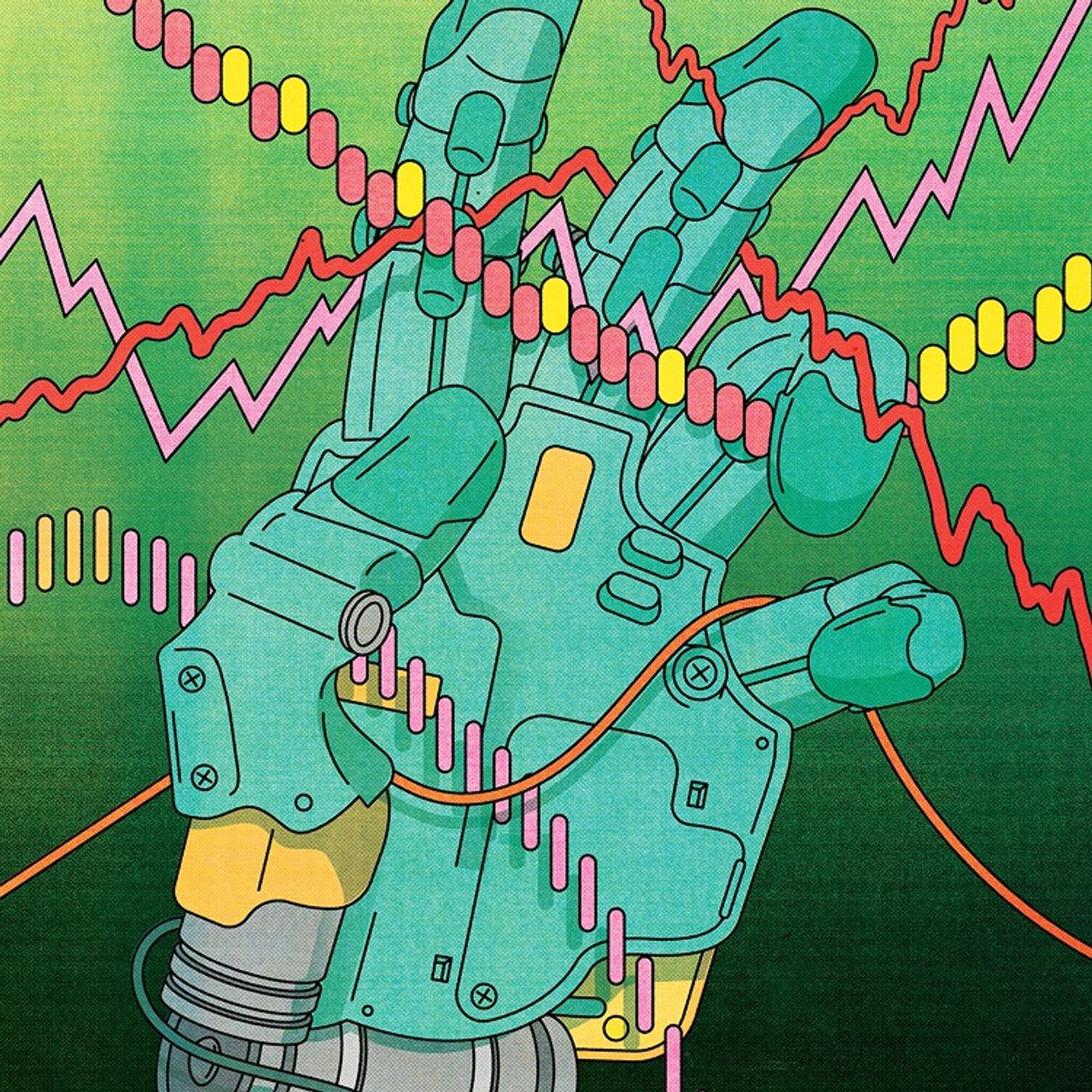
Overview of The Daily episode: What A.I. Is Actually Doing to the Economy
In this episode of The Daily, The New York Times explores why artificial intelligence feels like an immediate threat to workers even though its real economic effects are still hard to measure. Chief economics correspondent Ben Casselman explains that the best way to understand AI may be by looking at past technology shocks: the gradual, economy-wide changes of the internet era versus the rapid, concentrated destruction caused by the China trade shock. The core message is that AI is clearly moving fast, but whether it becomes a broad productivity boost or a source of major job displacement will depend largely on how quickly businesses and workers adapt.
Main Takeaways
-
Public anxiety is high
- Polling suggests roughly 70% of Americans believe AI will reduce jobs.
- Many workers already fear replacement, especially in white-collar and entry-level roles.
-
The economic impact is still unclear
- Casselman argues it’s too early to know AI’s true effect because the technology is still being adopted and economic data is not built to track changes this quickly.
- Government labor statistics are too slow and too broad to isolate AI’s effects in real time.
-
Company announcements are not always the full story
- Big layoffs tied to AI may partly reflect overhiring, slowing business, or investor pressure.
- AI can become a convenient explanation for restructuring, even when it is only one factor.
-
The short-term effect may be subtle
- If AI were already eliminating jobs on a massive scale, more of that would be visible in the data.
- So far, the changes appear real but limited and uneven.
Why AI Is Hard to Measure Right Now
Outdated official data
- Monthly jobs reports don’t cleanly separate tech from other industries.
- The labor market data infrastructure was not designed to detect fast-moving changes like AI adoption.
Conflicting private-sector signals
- Companies like ADP, LinkedIn, and Indeed are producing real-time labor data.
- But those reports often point in opposite directions:
- Some show losses in AI-exposed entry-level jobs.
- Others show AI-adopting firms adding jobs faster.
Companies may be incentivized to overstate AI’s role
- Firms gain credibility with investors when they talk up AI.
- That makes it difficult to know whether layoffs are driven by AI, or whether AI is being used as a narrative to justify cuts.
Historical Comparisons That Help Explain the Moment
1. The internet revolution: gradual disruption, broad adaptation
- The internet destroyed some jobs, including:
- typists
- travel agents
- some banking and administrative work
- But the losses were spread out over time and across many sectors.
- Workers had time to adapt, retrain, retire, or pivot into new careers.
- Because the transition was gradual, it is remembered more as an era of growth than mass unemployment.
2. The China shock: fast, concentrated job destruction
- Trade with China wiped out entire industries in certain regions, especially manufacturing-heavy towns and regions like the Southeast and Midwest.
- Communities saw:
- factory closures
- ripple effects in retail, schools, restaurants, and housing
- rising unemployment and long-term social damage
- This example shows what happens when disruption is fast enough that workers and communities cannot adjust in time.
What AI Might Resemble
-
Best-case scenario: AI follows the internet model.
- Workers and companies learn how to use it.
- New industries and roles emerge.
- Productivity rises over time.
-
Worst-case scenario: AI resembles the China shock.
- Whole categories of work disappear quickly.
- Workers have little time to retrain or relocate.
- The result is not just economic pain, but wider social and political fallout.
-
Current view from economists:
- The dramatic “robots do everything” future sounds too sci-fi to be the most likely near-term outcome.
- The more pressing risk is a disruptive transition period.
What Policymakers Should Consider
-
Improve measurement
- Better tools are needed to track AI’s labor-market effects in real time.
-
Strengthen existing safety nets
- Unemployment insurance remains too fragile.
- Trade adjustment assistance from past eras did not adequately reach many displaced workers.
-
Prepare for new policy ideas
- Economists and policymakers are discussing ideas like:
- AI-specific support programs
- government stakes in AI-related value creation
- sovereign wealth fund models
- universal basic income
- None of these are close to ready, but the conversation is starting.
- Economists and policymakers are discussing ideas like:
What Individuals Are Supposed to Do
- The episode underscores a major source of anxiety: people do not know how to plan for an AI-shaped future.
- In past economic transitions, the advice was clearer:
- go to college
- aim for growing sectors
- pivot when needed
- Today, that clarity is missing.
- There is no obvious answer yet for:
- what kids should study
- whether college is still the right path
- which careers are most future-proof
Bottom Line
AI is already changing how companies think about work, but its broader economic effects are still uncertain. The episode argues that the key variable is speed: if adoption is gradual, AI could boost productivity and create new jobs; if it moves too fast, it could cause painful labor shocks and community-wide disruption. For now, the most honest answer is that everyone is still figuring it out.
Other Headlines Mentioned in the Episode
- Severe wildfires continued in Spain and France, forcing mass evacuations.
- The Trump administration reportedly held back from escalating conflict with Iran, partly due to concerns about military stockpiles.
- The episode also included the show’s usual end-of-episode news roundup and credits.