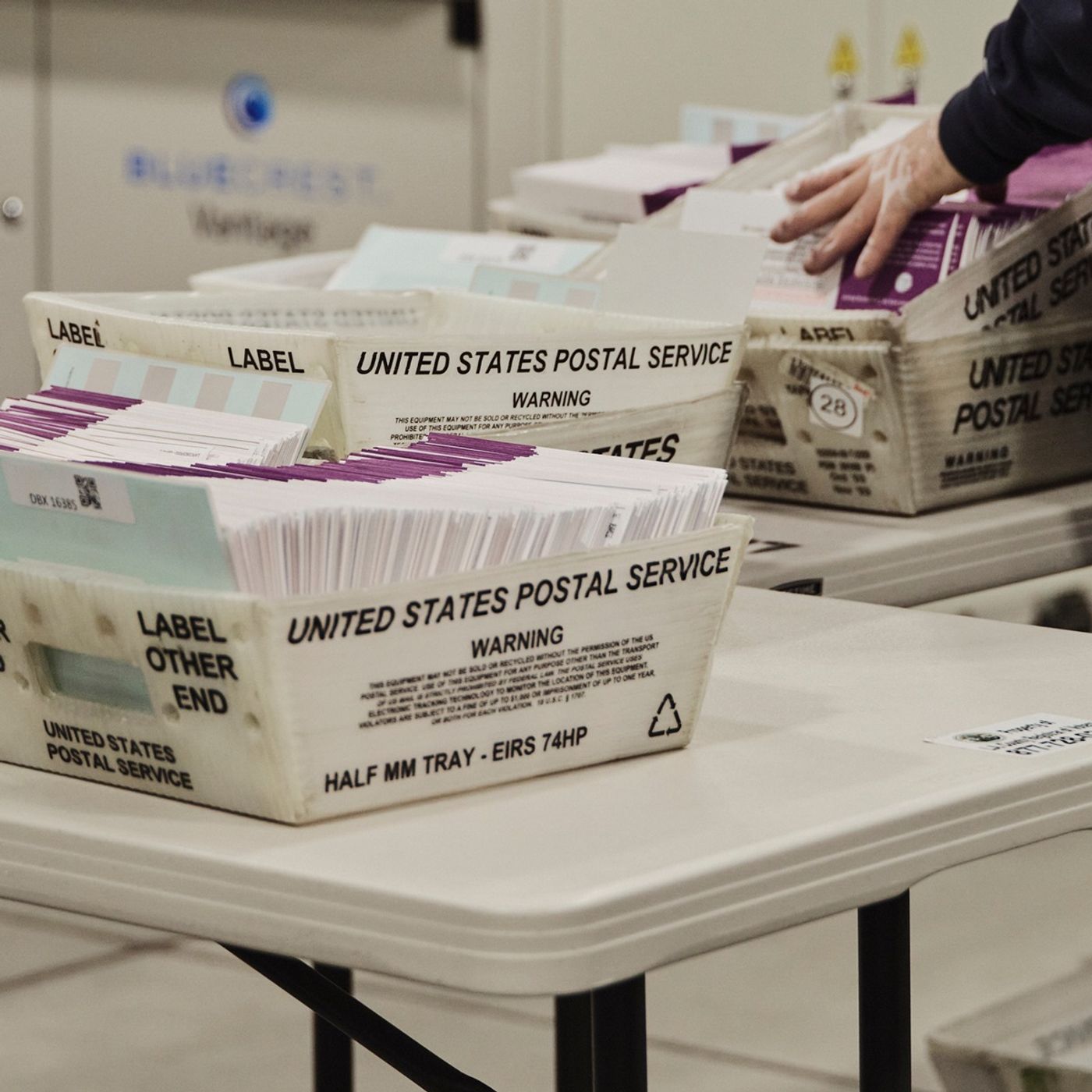
Overview of Trump’s War on Mail-In Voting
This New York Times Daily episode examines President Trump’s effort to use the Postal Service and an executive order to restrict mail-in voting just before the midterm elections. Reporter Nick Corasaniti explains how the plan would reshape election administration, why states say it is unconstitutional, and how the resulting legal fight has created confusion for election officials and voters across the country.
What Trump’s Plan Would Do
The episode breaks down two central parts of the executive order:
- Tight new ballot-design rules that could force states and counties to redesign mail ballots and envelopes.
- A voter-data portal run by the Postal Service, where states would have to upload lists of voters eligible for mail ballots.
The most consequential part is the second one: if a state does not comply, the Postal Service’s interpretation is that mail ballots would not be sent at all.
Why This Matters
Mail voting remains a major part of U.S. elections:
- Nearly 30% of voters cast ballots by mail in the 2024 election cycle.
- Eight states conduct elections almost entirely by mail.
- Any disruption would affect tens of millions of voters, especially in states that rely heavily on mail voting.
The episode emphasizes that this is not just a technical dispute; it could materially affect how a large share of the electorate votes.
The Legal Battle
States’ Argument
A coalition of 24 Democratic-led states sued almost immediately, arguing that:
- The president has no constitutional authority over how elections are run.
- Election administration is primarily a state responsibility.
- The executive order is an unconstitutional power grab that injects partisanship into election administration.
Court Developments
The episode traces the case through several stages:
- A federal judge in Massachusetts struck down key parts of the order as unlawful.
- The Trump administration appealed and lost at first.
- The Supreme Court initially declined to fully stop the plan, saying the dispute was not yet “ripe” because implementation had not gone far enough.
- That sent the case back down, leaving the matter unresolved while states prepared for ballot deadlines.
Confusion for Election Officials and Voters
Election officials are trying to manage both the legal uncertainty and public anxiety:
- They are telling voters that mail voting is still legal now.
- They are also preparing contingency plans, including:
- more drop boxes,
- changed office hours,
- pop-up voting centers,
- and reminders that some voters may return ballots in person if allowed.
But there are limits:
- Some states have restricted drop boxes.
- Ballot redesign and database changes are difficult on a tight timeline.
- The Postal Service’s portal was reportedly being built even while the legal fight continued, adding to the uncertainty.
Voters, meanwhile, are increasingly confused and unsure whether their ballots will count.
Bigger Political Context
The episode places this fight in a broader pattern of Trump’s approach to elections:
- He has long questioned mail voting without evidence.
- He blamed mail voting for his 2020 loss.
- The episode links this effort to a wider campaign of undermining trust in elections, including:
- challenges to certification,
- false elector schemes,
- and the January 6 attack on the Capitol.
The main takeaway is that even if the legal challenge succeeds, the process itself may already have discouraged some voters and weakened confidence in mail voting.
Key Takeaways
- Trump’s executive order seeks to make the Postal Service a gatekeeper for mail voting.
- States argue the order is unconstitutional because election authority belongs to the states.
- The legal process is moving too slowly to eliminate the real-world uncertainty before ballots go out.
- Regardless of the final ruling, the episode suggests the administration has already achieved part of its goal: making mail voting feel less trustworthy.
Bottom Line
This episode shows how a legal and administrative fight over the Postal Service has become a high-stakes battle over voting access, election integrity, and public trust. The immediate issue is mail ballots in the midterms, but the larger issue is whether federal power can be used to reshape how Americans vote.