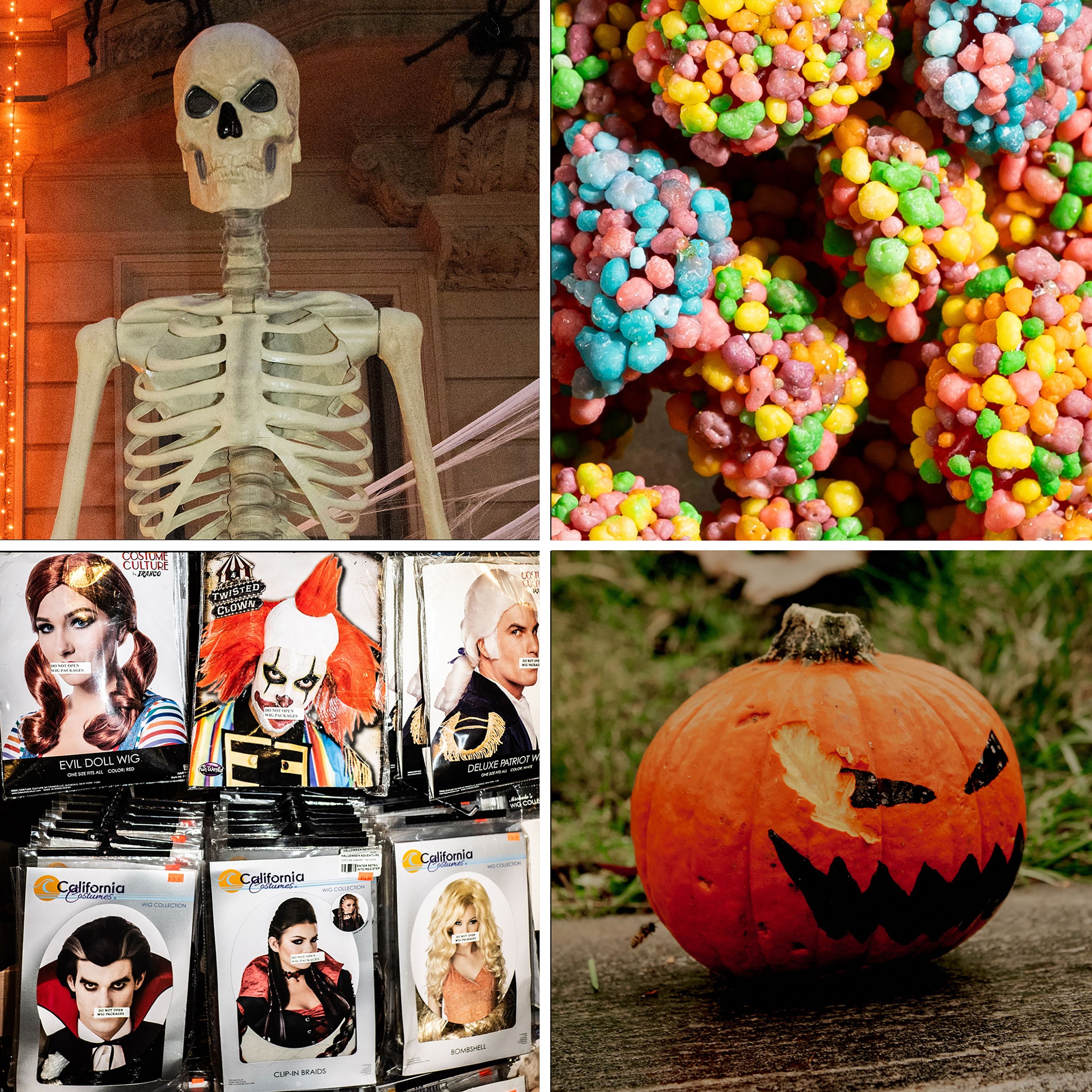
Overview of Tricks, Treats and Trends
This Sunday edition of The Daily looks at how Halloween continues to evolve in American culture, from the candy kids want most, to the costumes people will recognize in 2026, to the rise of giant lawn decorations like the viral 12-foot skeleton “Skelly.” The episode argues that Halloween endures because it changes with the times—absorbing internet culture, nostalgia, and consumer trends while staying recognizably Halloween.
Halloween Candy in 2026
What’s trending
Food writer Kim Severson says the candy market is increasingly moving away from classic chocolate bars and toward sour, fruity, and texture-heavy sweets.
Key candy trends discussed:
- M&M’s are the top Halloween candy this year
- Sour Patch Kids come in second
- Skittles, Hot Tamales, and similar fruit-forward candies are gaining ground
- Nerds Gummy Clusters are a standout viral hit
- Skittles Popped reflects the industry’s obsession with “popped” or freeze-dried formats
- Crybaby gum taps into 1990s nostalgia and the popularity of extreme sour candy
Why people like these candies
The episode links the rise of sour and hybrid candies to Gen Z preferences:
- more interest in sweet-sour, sweet-savory, and crunchy-soft contrasts
- nostalgia among millennials now buying candy for their kids
- some experts think sour flavors may be appealing because they provide a sensory distraction
The price problem
Candy is getting more expensive:
- candy prices are rising faster than inflation, roughly 8% year over year
- chocolate prices are up about 15%–20%
- the main driver is the cocoa supply crisis, including bad weather and crop disease in West Africa, where much of the world’s cacao is grown
The practical takeaway: Halloween candy may be handed out more carefully this year, with fewer fistfuls and more single pieces per trick-or-treater.
The Most 2026 Halloween Costumes
Halloween as cultural shorthand
Styles editor Louis Lucero II describes Halloween as a kind of “first draft of meme history.” The best costumes, he says, are the ones that instantly signal a year’s biggest pop-culture moments.
Predicted costume trends
The episode highlights several costumes likely to show up this year:
- Taylor Swift and Travis Kelce
- Gloria Steinem
- Nathan Fielder and Elizabeth Holmes
- AI as a conceptual, low-effort costume
- Erling Haaland with his taxidermy raccoon reference
- Dolly Parton
Costume philosophy
Lucero favors:
- clever, low-cost DIY costumes
- poster-board and cardboard creations
- costumes that reflect identity, irony, or cultural literacy
The segment treats Halloween as a chance to be funny, timely, and a little bit self-aware.
The Reign of Skelly and Halloween Decor
Why the giant skeleton became iconic
Reporter Callie Holterman revisits the 12-foot Home Depot skeleton, known as Skelly:
- officially, the Home Accents Holiday 12-Foot Giant Skeleton with LCD Eyes
- price: $299
- released in 2020 and instantly turned into a viral phenomenon
Holterman argues Skelly became a kind of blank canvas—part decoration, part meme—because people could customize it endlessly:
- pirate skeleton
- alien skeleton
- gardener skeleton
- zombie-style display
- or just a giant, humorous presence in the yard
Why it took off
Skelly’s popularity was helped by:
- the pandemic era’s need for outdoor, socially distanced fun
- social media’s appetite for visual jokes
- the broader move toward Halloween as a major consumer holiday
New features and future of Skelly
Home Depot has kept updating the product:
- earlier versions included a servo motor that let the head move
- newer versions are Bluetooth-enabled
- owners can change lighting, movement, eye functions, and even pre-record or live-record messages
The result is a decoration that has become both a product and a platform.
Bigger Picture: Why Halloween Keeps Growing
The episode closes by framing Halloween as one of America’s most adaptable holidays:
- it isn’t tied to religion
- it avoids the family stress and travel pressure of other holidays
- it gives people room to be playful, creative, and commercial at the same time
That combination helps explain why Halloween spending keeps rising:
- $10.6 billion in 2022
- projected $13.5 billion this year
Key Takeaways
- Halloween in 2026 is shaped by sour candy, viral products, and meme-like costumes
- Chocolate still matters, but non-chocolate sweets are increasingly dominant
- Inflation and cocoa shortages are making Halloween candy more expensive
- Skelly remains the defining Halloween decoration, now upgraded with smart features
- Halloween’s strength is its ability to adapt to the moment while staying familiar