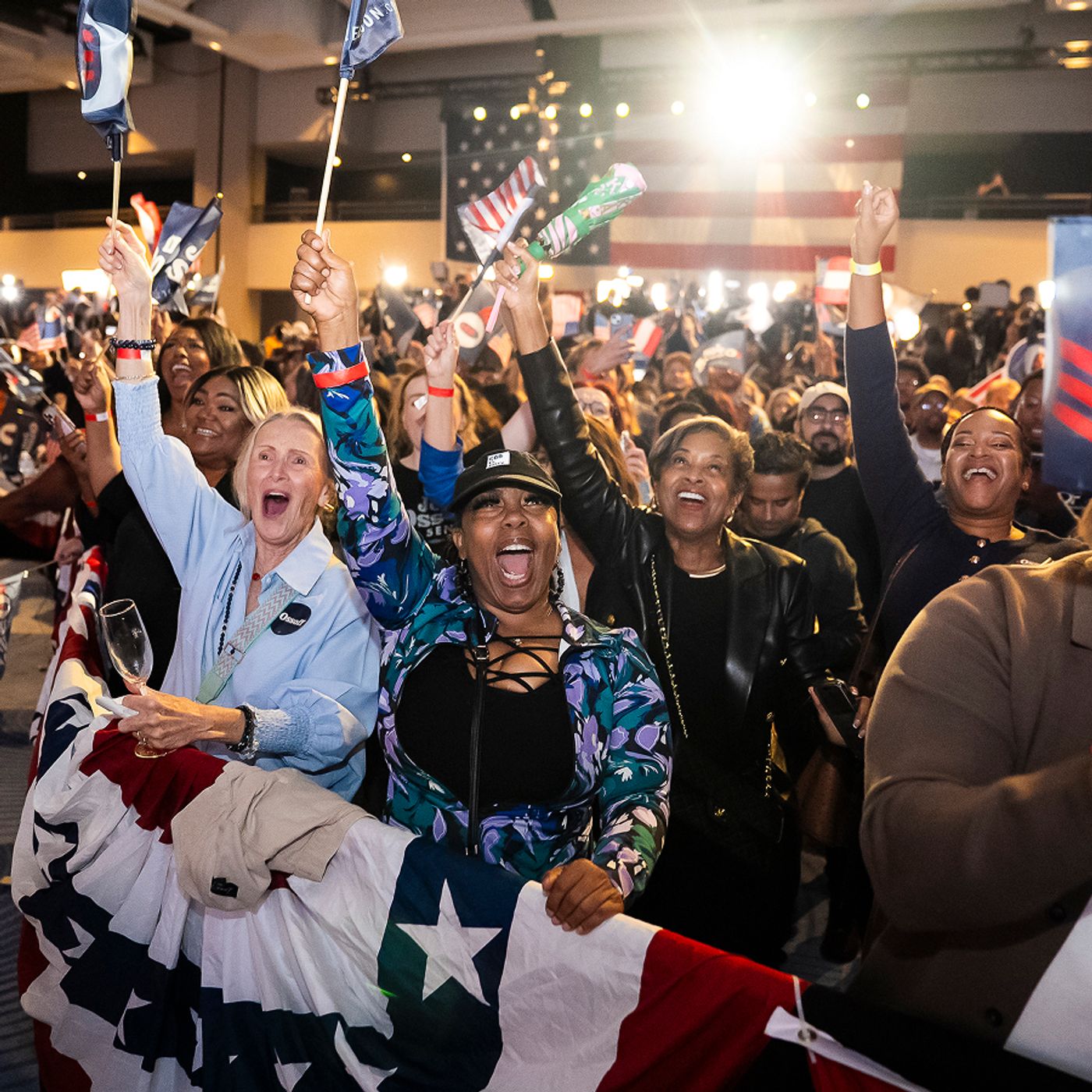
Overview of The Voters Who Flipped Congress
In this Daily episode, Michael Barbaro and chief political analyst Nate Cohn break down the midterm election results and what they reveal about the voters who reshaped Congress. The conversation centers on an unusually diverse electorate, major Democratic gains in red states, the surprising weakness of some progressive candidates, the limited apparent effect of massive Republican spending, and what the final poll results say about how voters made up their minds.
Election Results and the Scale of the Democratic Win
Cohn begins with a status update on the race calls and notes that Democrats are on track for an exceptionally strong night:
- Senate: Democrats are leading in the outstanding races and could end up with 56 seats, an extraordinary result in red America.
- House: Democrats are at 237 seats and may climb above 250, which would mark their biggest House majority in generations.
- Governorships: Democrats have flipped several major states, including Ohio, Iowa, Georgia, Texas, and Nevada, giving them control of governorships in a majority of states and a large share of the U.S. population.
The hosts emphasize how historically unusual it is for Democrats to win so deeply in states that had been strongly Republican.
Who Showed Up: A More Diverse Electorate
One of the episode’s main takeaways is that this midterm electorate was more diverse than usual, even more diverse than many presidential-election electorates.
Black Voter Turnout
- The Black share of the electorate increased, especially in the South.
- In some Southern states, Black turnout appears to have been pivotal in helping Democrats compete or win in places like South Carolina and Mississippi.
- In Georgia, Cohn highlights an eye-catching early-vote fact: more young Black voters turned out than young white voters.
Cohn suggests this surge may be linked to backlash against Republican-led changes to voting rules and the weakening of the Voting Rights Act.
Hispanic Voter Turnout
- The Hispanic share of the vote rose in Texas, bucking a typical midterm pattern.
- Hispanic voters reportedly broke heavily for Democrats, helping explain large Democratic gains in Texas and other places with significant Hispanic populations.
- Cohn ties this to the president’s hardline immigration policies, which the episode argues alienated many Hispanic voters.
White Republican Turnout Dropped
- In many places, white Republicans were less likely to vote than in past elections.
- Young white Republicans especially seem to have stayed home in large numbers.
- Cohn says many younger voters who had been drawn to Trump for economic reasons did not see the promised results and failed to turn out again.
The Trump Coalition Slipped Away
A central theme is that Trump’s coalition from the previous election appears to have fractured:
- Voters who helped Trump win the popular vote in the last cycle appear to have moved away from Republicans or stayed home.
- The episode frames this as a consequence of Trump pursuing policies that repelled key parts of his own coalition, especially on immigration and the war in Iran.
- The result was a midterm electorate that looked less like a typical off-year turnout model and more like a referendum against the president.
Progressive Candidates Underperformed
Cohn’s second major argument is that progressive Democratic candidates generally did worse than moderate Democrats.
What “Underperformance” Means
Cohn defines progressives narrowly:
- Not just any left-of-center Democrat
- But candidates aligned with activist-progressive politics
- Often those who ran against the party establishment in primaries
Pattern Across Races
He says the pattern is consistent:
- High-profile progressives often won, but by less than expected
- They also frequently did worse than other Democrats on the same ballot or in the same state
Examples mentioned include:
- Abdul El-Sayed in Michigan
- Angie Nixon in Florida
- Other progressive candidates in contested House and Senate races
Why This Matters
The episode argues that broad, moderate candidates did better in this wave:
- Candidates who presented as mainstream, religious, or broadly appealing seem to have overperformed
- By contrast, progressive candidacies may have cost Democrats some margin, even in a favorable national environment
Barbaro and Cohn use Florida as the clearest illustration: a progressive Democrat came close, but Cohn argues that a more moderate Democrat likely would have won more comfortably.
Money Mattered Less Than Expected
The episode also examines the role of campaign spending and concludes that money had limited impact on the final outcomes.
- Republicans spent about two to one more than Democrats in key races.
- In some contests, the spending gaps were enormous:
- Ohio: Republicans spent about $100 million more
- Michigan: about $84 million more
- Texas: about $200 million more
- Despite that, Democrats still performed strongly, even in places where Republicans massively outraised them.
Cohn’s interpretation:
- Money still matters in politics, especially for shaping the policy environment and influencing down-ballot messaging.
- But in a polarized, midterm, anti-incumbent environment, voters were more motivated by their feelings about the president than by ad spending.
- Many attacks likely mattered little because voters had already made up their minds to vote against Republicans.
He also suggests that billionaires and big Republican donors may rethink the strategy after seeing such weak returns on their spending.
Loose Ends and Strange Strategic Experiments
The episode briefly revisits a few unusual campaign strategies:
The “Other Dan Sullivan” in Alaska
- Cohn says there is still too much vote left to count to know whether the second Dan Sullivan on the ballot mattered.
- He doubts that tactic will prove decisive.
Independent Candidates in Deep-Red States
Democrats tried backing independent candidates in places like:
- Nebraska
- South Dakota
- Idaho
- Montana
The idea was to avoid the weak Democratic brand in those states. Cohn says the results were disappointing and not a clear template for future success.
How the Polls Held Up
The final section returns to the podcast’s own polling.
Final Polls Were Strong
Cohn says the final polling was essentially spot on:
- Democrats were narrowly ahead in all seven key Senate battlegrounds
- The average lead in the final poll was about five points
- The actual results matched that almost exactly
Earlier Polls Missed Some Movement
Earlier polling underestimated Democrats somewhat, and earlier still it underestimated them more. Cohn’s explanation:
- The Democratic surge likely came from late-deciding voters
- Some were traditional Republicans dissatisfied with the president
- Others were Democrats dissatisfied with their own nominees
- Many ended up deciding they had to vote Democratic as a check on the president
Key Takeaways
- The midterm produced a surprisingly large Democratic wave across Congress and state government.
- Black and Hispanic turnout were crucial to Democratic gains, especially in the South and Texas.
- Young white Republicans stayed home in notable numbers.
- Moderate Democrats outperformed progressive Democrats in many contested races.
- Massive Republican spending appears to have had far less effect than expected.
- The final polls were highly accurate, but the episode emphasizes that voter decisions kept shifting late into the cycle.
Bottom Line
Cohn’s overarching conclusion is that this election was less about money or messaging tricks and more about a large bloc of voters—especially nonwhite voters and disaffected former Republicans—deciding that Democrats were the better vehicle for checking the president. The result was a realignment-sized midterm that dramatically changed the political map.