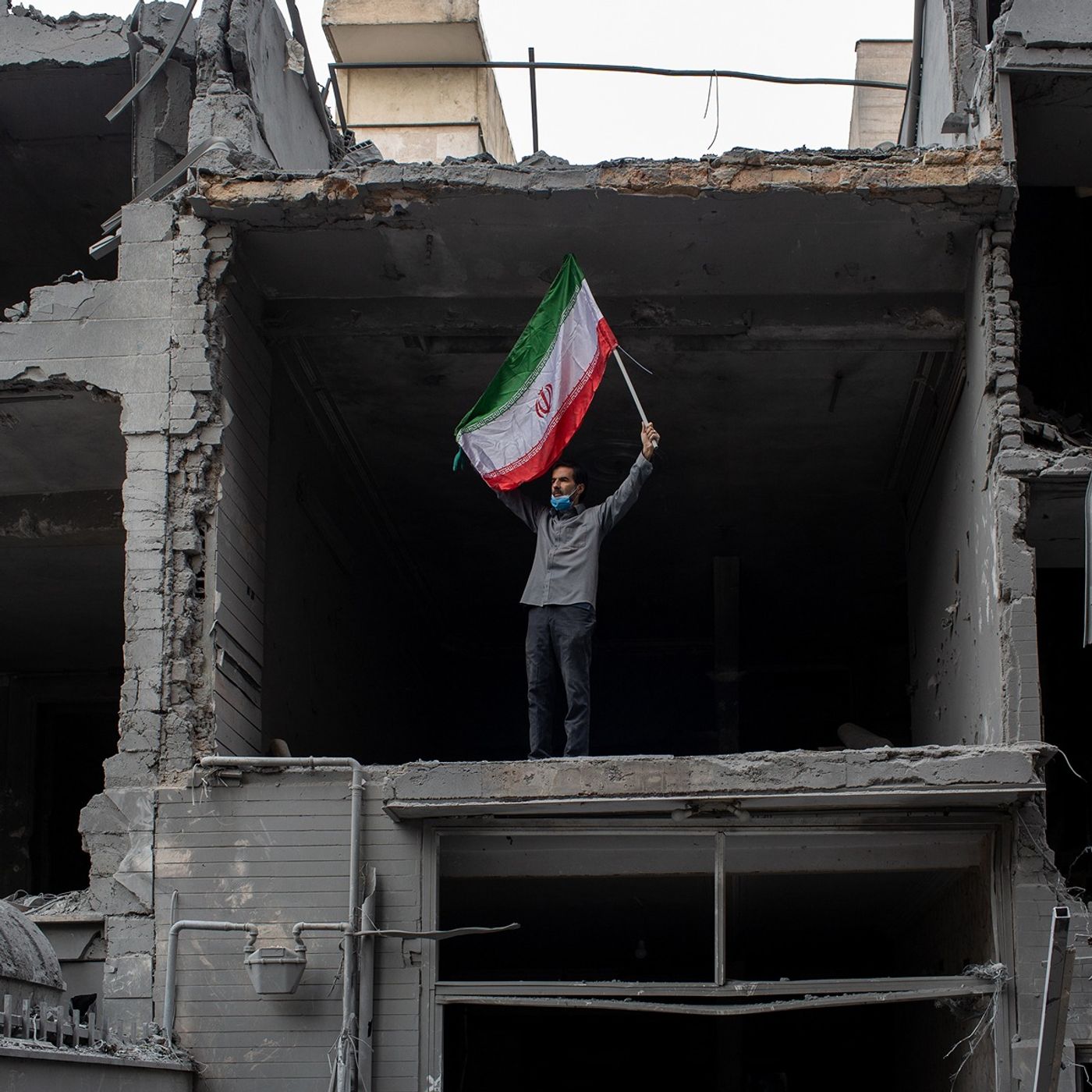
Overview of The Daily — "Who Is Winning the War in Iran?"
This episode of The New York Times’ The Daily (hosted by Natalie Kitroeff) interviews NYT national security reporter Eric Schmitt about the state of the war with Iran roughly three weeks in. Schmitt explains why, despite heavy U.S. and Israeli military blows to Iran’s conventional forces and leadership, Tehran continues to inflict significant damage through decentralized, asymmetric tactics — particularly by choking maritime traffic through the Strait of Hormuz. The conversation lays out battlefield realities, human costs, strategic dilemmas for the U.S. and allies, and the extremely limited and risky options available to end the crisis.
Key developments reported
- U.S. forces (as described by senior commanders) have sharply degraded Iran’s conventional military capabilities: attacks on missiles, launchers, drone storage, and naval assets.
- The U.S. campaign reportedly struck thousands of targets and struck scores of Iranian naval vessels; Israel has run parallel strikes that have targeted senior Iranian security and intelligence figures.
- Iran has nevertheless continued to retaliate and sustain attacks regionally — including direct strikes on commercial tankers and energy infrastructure — using decentralized forces and unconventional weapons.
- The conflict has sharply disrupted international shipping through the Strait of Hormuz and caused notable economic and energy-market shocks (including damage reported to major regional energy hubs).
Military assessment
- Pentagon view: militarily the campaign is making measurable progress at degrading Iran’s ability to project force (missile and naval assets, leadership targets). Commanders feel they are achieving many tactical objectives.
- But the conflict has shifted into an asymmetric phase: Iran can still impose outsized effects through mines, speedboats, coastal missiles, and small, decentralized units operating under contingency directives.
- U.S. forces have tried to reduce exposure (troops repositioned), but the operational environment remains dangerous and complex.
Iran’s asymmetric tactics and why they matter
- Primary methods Iran is using:
- Naval mines (many thousands in inventories; can be floating or seabed-attached and are hard to detect)
- Shore-launched missiles and cruise missiles targeting commercial and naval vessels
- Fast attack speedboats with small arms/RPGs that can harass and attack ships
- Underwater vehicles and other unconventional means against tankers
- Effect: even limited attacks (or credible threat of attacks) multiply insurance costs, deter shipping companies, and slow maritime traffic — producing global economic and energy impacts disproportionate to Iran’s actual remaining conventional firepower.
- Iran’s command is intentionally decentralized (“mosaic” defense), so local district commanders can keep operations running even when central leadership is targeted.
Human cost (estimates reported)
- The New York Times estimated roughly 2,100 deaths so far, including more than 1,300 civilians (mostly in Iran).
- U.S. military deaths reported around 13, with additional injuries. U.S. commanders view that toll as tragic but relatively low given the scale of operations to date.
- Other Gulf states have also suffered casualties and damage from strikes (Saudi Arabia, UAE, Qatar noted).
Political and strategic dilemmas for the U.S.
- Military success does not automatically translate into political success. Key U.S. objectives have been shifting and overlapping in public statements: regime change, denial of nuclear-weapons capability, and preventing Iran’s regional power projection.
- Allies were not extensively coordinated beforehand; President Trump publicly asked for allied help only after the conflict escalated and has criticized slow responses.
- The Pentagon had warned about threats to the Strait of Hormuz, but U.S. mine-countermeasure assets and prepositioned naval forces were insufficiently ready — requiring a rapid and politically costly ramp-up.
Options on the table (each with major drawbacks)
-
Escort operations
- Navy escorts (destroyers, helicopters, drones) to shepherd commercial tankers through the strait.
- Risks: resource intensive, exposes sailors and ships to Iranian missiles/speedboat attacks, depends on shipowners/insurers accepting risk even with escorts.
-
Seize or neutralize Kharg (Kharg/“Karj”) Island
- Amphibious seizure of Iran’s offshore oil hub to control flows and pressure Tehran economically.
- Risks: crossing the strait to conduct the operation is itself dangerous; occupation would be vulnerable to Iranian attack; any damage to oil infrastructure would be economically catastrophic and undercut the operation’s purpose.
-
Deny or remove Iran’s nuclear-material capability
- Options range from bombing and entombing underground enriched-uranium stores to special-forces seizures/extractions of canisters (e.g., Isfahan).
- Risks: large potential for catastrophic unintended consequences (radioactive release if canisters are breached), huge operational complexity, and the near-certainty that Iran would fiercely defend these sites.
-
Declare victory and withdraw
- President could publicly assert that military goals have been met and step back.
- Risks: Iran and regional partners may continue asymmetric attacks; Israel may oppose an early U.S. exit; declaring victory does not end Iran’s capacity to cause instability or terror activity.
Likely outcomes and constraints
- Regime change appears unlikely; analysts believe a weakened, possibly more hard-line, Iranian government is the more probable near-term result.
- Any U.S. escalation to seize territory or attempt a nuclear-material extraction is extremely high-risk and could widen the war.
- The conflict is now as much a political/economic crisis (maritime commerce, global energy markets, allied cohesion) as it is a military one — constraining American choices.
Key takeaways
- Tactical military degradation of Iran’s conventional forces has been real and significant, but it has not ended Iran’s ability to inflict strategic pain.
- Iran’s decentralized, low-cost tools (mines, speedboats, shoreline missiles) are highly effective at disrupting global commerce and creating leverage disproportionate to Iran’s material losses.
- The U.S. faces limited and unappealing options: high-risk kinetic operations, resource-intensive defensive operations, or political decisions about acceptable levels of ongoing disruption.
- Achieving a durable political end-state (short of regime collapse) will be extremely difficult; allied coordination and clear goals are essential but currently fractured.
What to watch next
- Volume and route of tanker traffic through the Strait of Hormuz and the success/scale of any multinational escort operations.
- Any decisions by the U.S. to attempt seizure or long-term control of strategic Iranian oil infrastructure.
- Further strikes on energy infrastructure in the region (e.g., Qatar) and the responses by Gulf states.
- Diplomatic movement among U.S. allies (NATO, European and Asian partners) on maritime security and economic measures.
- Statements and actions from Israel and any divergence between Israeli and U.S. objectives.
Produced by The Daily; guest: NYT national security reporter Eric Schmitt; host: Natalie Kitroeff.