Overview of The Daily — "Trump’s Investigator Breaks His Silence"
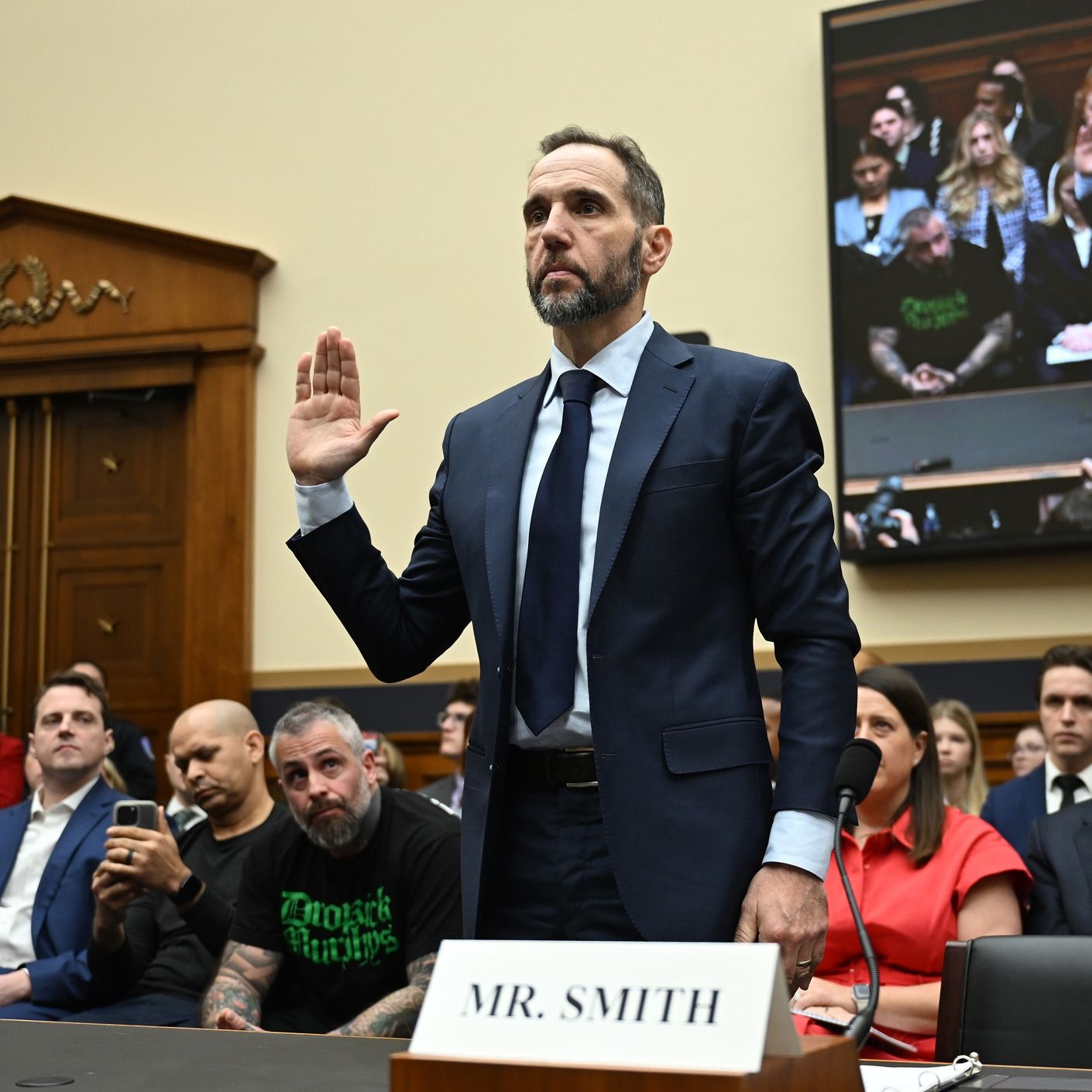
This episode covers the first public congressional testimony by Special Counsel Jack Smith, who for three years led two major criminal investigations into Donald Trump: the Jan. 6 effort to overturn the 2020 election and the retention of classified documents at Mar-a-Lago. Smith used his time before the House Judiciary Committee to defend his investigatory decisions, assert that his team developed proof beyond a reasonable doubt that Trump committed crimes, and argue that holding powerful people accountable is essential to preserving the rule of law. Republicans on the committee sought to discredit Smith’s methods and appointment; Democrats aimed to bolster his credibility and refocus attention on Trump’s conduct. The hearing lasted about four and a half hours and included heated exchanges over phone toll-record subpoenas, sworn-oath paperwork, informant payments, and the broader political stakes.
Key takeaways
- Jack Smith publicly defended his investigations and prosecutions of Donald Trump, saying his team developed proof beyond a reasonable doubt of criminal activity.
- Republicans tried to undermine Smith by attacking technicalities of his appointment, investigatory choices (including secrecy orders), spending on informants, and the subpoenaing of phone toll records — including records of some members of Congress and Speaker Kevin McCarthy.
- Democrats used their questioning to affirm the lawfulness and normalcy of the investigative steps, press Smith to detail the alleged misconduct, and stress the democratic risk of not holding a president accountable.
- Trump publicly demanded, via Truth Social, that his allies prosecute Smith while the hearing was in progress; Smith said he would not be intimidated.
- The hearing did not produce evidence that Smith colluded with the Biden administration — a central Republican allegation — and Republicans largely failed to discredit his conduct in public.
What Jack Smith argued (his central messages)
- He is a nonpartisan career prosecutor with decades of experience and no partisan loyalties.
- He stands by his decisions as special counsel, including bringing charges against Trump.
- His investigation “developed proof beyond a reasonable doubt” that Trump engaged in criminal activity (both the election-obstruction conspiracy and the classified-documents matter).
- Holding powerful people to the rule of law is essential; failing to do so risks normalizing crimes by leaders and endangering democracy.
- He conducted investigations within Department of Justice policy at the time (though some DOJ policies have since changed).
Hearing highlights and notable exchanges
- Opening statement: Smith framed his career and defended the integrity of his work and the sufficiency of the evidence.
- Republicans’ tactics:
- Sought to challenge the legal legitimacy of Smith’s appointment (asking about a signed oath with no witness and a subsequent re-swearing).
- Pressed about informant payments (Smith referenced a $20,000 FBI payment approved to a confidential human source).
- Focused heavily on toll-record subpoenas (non-content metadata) obtained for Trump associates, Rudy Giuliani, and several lawmakers — and on court orders that kept targets unaware of subpoenas.
- Chip Roy and others confronted Smith after learning their phone records had been subpoenaed.
- Democrats’ response:
- Emphasized standard investigative practice for obtaining toll records in complex conspiracies.
- Walked Smith through allegations against Trump: fake electors, pressuring state officials, spreading lies to followers, pressuring DOJ — and asked Smith to confirm findings.
- Jamie Raskin and Rep. Jayapal were prominent in giving Smith space to explain and in stressing democratic stakes.
- Dramatic moment: Trump publicly called for Attorney General Pam Bondi to prosecute Smith while the hearing was ongoing; Smith said he would not be intimidated.
Controversial issues explained
- Toll records vs. wiretaps: Toll (call-detail) records list numbers, times, durations — not the content of calls. Smith’s team obtained these to map communications relevant to an alleged conspiracy to pressure lawmakers to overturn the election.
- Secrecy orders: Smith asked judges to keep subpoena targets unaware of the records collection — standard in some investigations but politically explosive when targets are lawmakers.
- Oaths and appointment paperwork: Republicans highlighted irregularities (a signed oath with no witness; a later re-swearing) to question procedural legitimacy. Smith said he stood by the process and did not recall discussing the paperwork with AG Garland.
- Informant payments: Smith confirmed approving an FBI payment to a confidential source who reviewed photographic/video materials; he did not disclose the source’s identity.
Implications — what this hearing means going forward
- Short term: The hearing publicly reinforced Smith’s credibility for many observers and did not produce the smoking-gun evidence Republicans hoped would prove partisan collusion.
- Political risk: Trump’s public demand to prosecute Smith signals he may seek retaliation if he can influence the DOJ, heightening concerns about politicizing the Justice Department.
- DOJ independence: The hearing underscored the political tensions around prosecuting a former president and raised stakes for any future actions against prosecutors who brought cases involving Trump.
- Legal/civil liberties questions: The use of toll-record subpoenas for lawmakers and secrecy around them will likely continue to be controversial and could prompt further policy or legal scrutiny.
Notable quotes from the hearing
- “Our investigation developed proof beyond a reasonable doubt that President Trump engaged in criminal activity.” — Jack Smith
- “If we do not hold the most powerful people in our society to the same standards of the rule of law, it can be catastrophic.” — Jack Smith, on the stakes for democracy
- Smith on intimidation: “I will not be intimidated... We followed the facts and we followed the law.”
Topics discussed (quick list)
- Jan. 6 investigation and alleged conspiracy to overturn the 2020 election
- Mar-a-Lago/classified documents investigation
- Special counsel appointment and oath paperwork
- Toll-record subpoenas and secrecy orders for members of Congress and associates
- FBI payments to confidential sources
- Partisan accusations of collusion vs. claims of prosecutorial independence
- Potential retaliation and the politicization of the DOJ
What to watch next
- Any formal moves by the Justice Department (under a Trump administration) to charge or investigate Jack Smith.
- Congressional follow-ups or legislative action about DOJ policies on subpoenas and protections for members of Congress.
- News about any internal DOJ review or policy changes regarding metadata collection and notification procedures.
- Continued public and legal debate over accountability for presidential misconduct and the independence of federal prosecutors.
Producers/editing note: The episode is produced by The New York Times’ The Daily (host Michael Barbaro); it includes reporting and a post-hearing analysis of the exchanges, with contributors contextualizing the political and legal stakes.