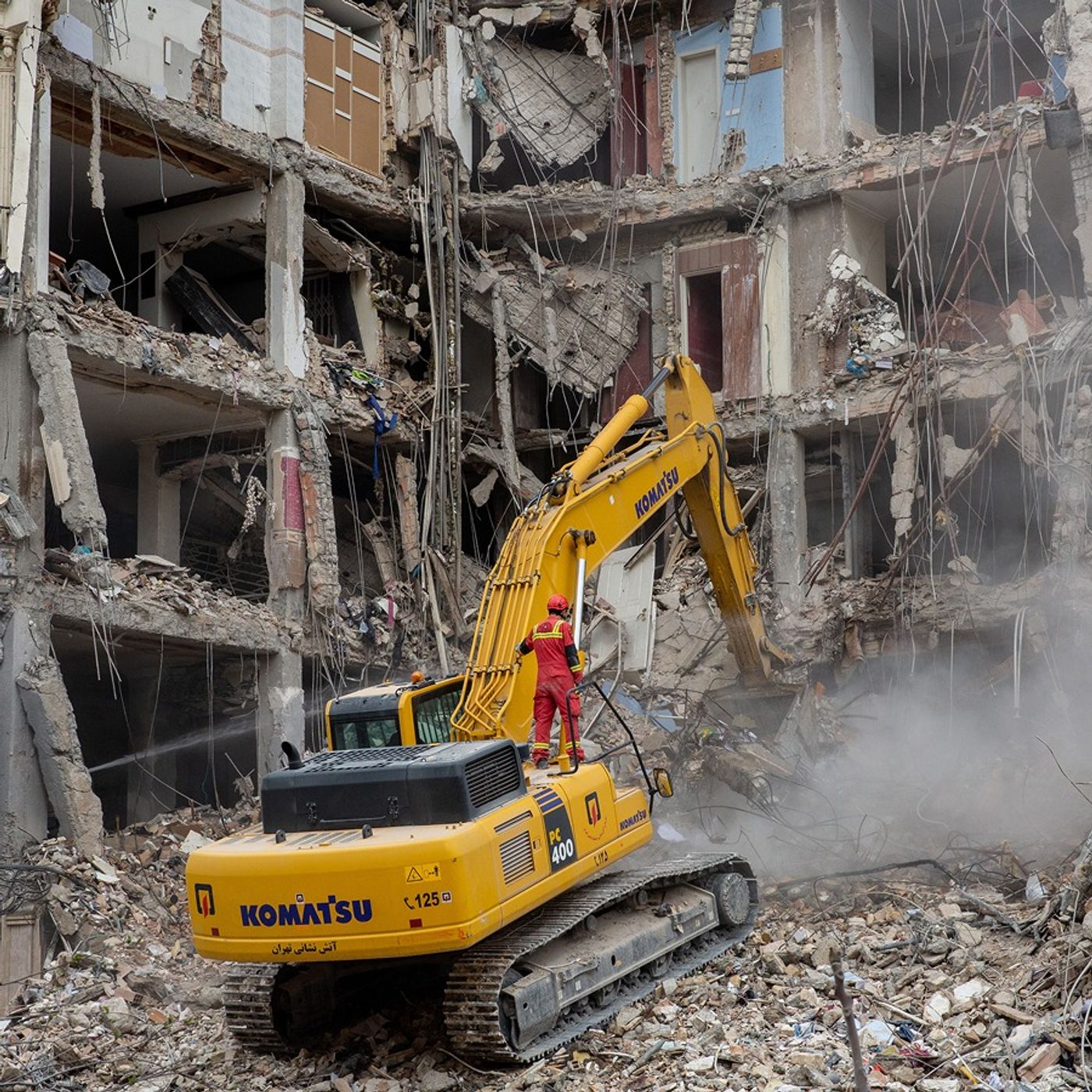
Overview of "Trump Says He’s Ready for Diplomacy. Iran? Not So Much." (The Daily — The New York Times)
Michael Barbaro interviews David Sanger about where the U.S.–Iran conflict stands roughly one month after major strikes began. Sanger argues the United States is conducting outreach to shape a future negotiation but is not actually in negotiations now — and Iran has strong reasons to resist talks on U.S. terms. The episode explains the U.S. two‑page, 15‑point offer, Iran’s non‑committal counterpoints, the differing objectives of the U.S. and Israel, and why a repeat of a 2015‑style nuclear deal is unlikely.
Key takeaways
- The U.S. is "engaging in operations to shape a negotiation" but formal negotiations with Iran have not begun.
- President Trump publicly claimed “very good and productive conversations” with Iran; Tehran denied any negotiations. Both statements misrepresent the actual situation.
- The U.S. delivered a two‑page, 15‑item proposal (12 demands, 3 offers): core U.S. demands include permanently curbing Iran’s uranium enrichment and limiting its missile arsenal; the main U.S offer is sanctions relief and re‑entry to the global economy.
- Iran’s reply was a short, five‑point document emphasizing compensation for damage and asserting sovereignty over the Strait of Hormuz — not a near‑term acceptance of U.S. terms.
- The White House has floated Vice President J.D. Vance as a potential U.S. negotiator to signal seriousness; Iran may see him as an acceptable interlocutor because of his earlier skepticism of war.
- Israel’s objectives diverge from the U.S.: Israel seeks to severely constrain or eliminate Iran’s future strike capability (and might tolerate chaos), while the U.S. prefers a cohesive Iranian government that can negotiate and stabilize global markets.
- The U.S. has used military strikes as part of its negotiating posture; Iran distrusts negotiations because previous talks were followed by attacks (e.g., strikes on nuclear sites in prior months).
- Time currently favors Iran in some respects: continuing disruptions (higher oil prices, financial market volatility, alliance frictions) increase Iranian leverage and domestic propaganda value for its leadership.
- A 2015‑style deal focused narrowly on nuclear limits is unlikely now; the conflict has expanded the negotiating agenda to existential questions about Iran’s survivability, control of the Strait of Hormuz, and economic reparations.
What was discussed (topics and evidence)
The 15‑point U.S. proposal
- Mostly demands: stop enrichment, give up steps toward a weapon, drastically limit missile range/arsenal.
- Offers: phased sanctions relief and reintegration into the global economy.
- Iran’s response emphasized compensation and control of the Strait — incompatible with the U.S. demands.
Why Iran resists talks
- Distrust: prior negotiations were followed by strikes on Iranian nuclear facilities, making diplomacy appear as a cover for attacks.
- Pride and domestic politics: continued resistance can help unify an unpopular regime and present Iran as a victim of foreign aggression.
- Leverage via time: ongoing disruption of markets and oil prices can strengthen Iran’s bargaining position.
U.S. tactics and signaling
- Using military force as part of negotiation pressure rather than reserving force as a last resort.
- Possible lead negotiator: Vice President J.D. Vance — deployed politically to signal seriousness to Iran and reassure the U.S. base.
- Deployment of several hundred U.S. special operations forces reported; Iranian parliament speaker warned any ground‑troop incursion would be met with fierce response.
Israel’s role and divergence
- Israel continues strikes (including on nuclear sites) and may prefer a weakened or chaotic Iran rather than a negotiated, cohesive government.
- U.S. priorities (markets, oil flow, allied cooperation) differ from Israel’s focus on eliminating Iran’s ability to project power.
Nuclear implications
- The conflict and U.S. pressure may incentivize Iran to seek a nuclear deterrent, paralleling the North Korea model that deters attack by having an assured retaliatory capability.
- Whether the U.S. will insist on permanent relinquishment of enrichment is a key sticking point; Iran may gamble on extracting concessions if the war drags on.
Notable quotes and lines
- Trump (public claim): “The United States of America and the country of Iran have had very good and productive conversations regarding a complete and total resolution of our hostilities in the Middle East.”
- Iran (official denial): “We deny what U.S. President Donald Trump said regarding any negotiations…”
- David Sanger: the U.S. is “engaging in operations right now to shape a negotiation” but “I wouldn’t say the negotiations have yet started.”
- Sanger on administration strategy: “Force isn’t necessarily the last resort. It could be an early tool that you use before you come back for negotiations.”
- On the post‑2018 environment: “Now we’re negotiating over their future survivability as a state. That is completely existential for the Iranians.”
Implications and what to watch next
- Short term: formal negotiations appear unlikely; expect more signaling, limited strikes, and continued back‑and‑forth as each side gauges leverage.
- Escalation risk: troop deployments, continued Israeli strikes, or miscalculations could widen the conflict.
- Economic impact: persistent market volatility and high oil prices can increase pressure on the U.S. administration and shift bargaining dynamics.
- Diplomatic variables to monitor:
- Whether J.D. Vance (or another senior U.S. official) is formally named to lead talks.
- Any change in the U.S. red lines (e.g., permanent renunciation of enrichment).
- Iran’s posture on Strait of Hormuz control and demands for compensation.
- Israeli strikes and coordination (or friction) with U.S. policy.
Bottom line
The U.S. is preparing the framework for diplomacy but has not yet secured Iran’s trust or consent to talks on U.S. terms. Iran’s willingness to prolong the conflict — to consolidate domestic support and increase economic leverage — plus diverging U.S. and Israeli goals make a quick, Obama‑style nuclear deal unlikely. Any diplomatic path forward will be broader, far more complex, and centered on existential questions about Iran’s future role in the region.