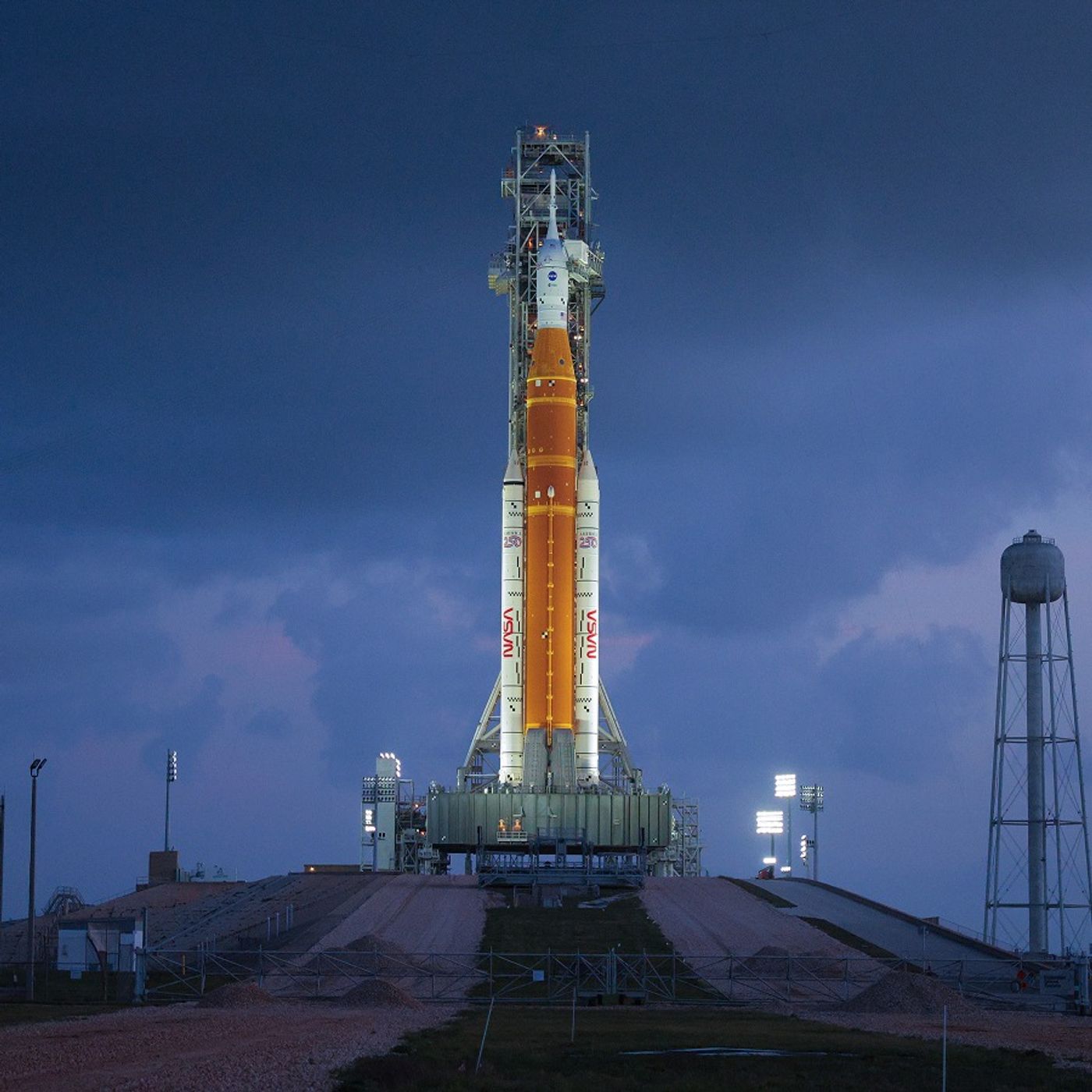
Overview of Today’s Mission to the Moon
This episode of The Daily (The New York Times) explains Artemis II — the first crewed mission to travel to the moon’s vicinity in more than 50 years — and places it in scientific, historical and geopolitical context. Reporter Ken Chang outlines what the mission will do (a crewed lunar flyby to test life‑support and systems), who’s on board, the 10‑day timeline, why the U.S. wants to return to the moon (science, infrastructure, commercial opportunities and strategic leadership), and how Artemis II fits into the broader Artemis program.
Mission objectives and significance
- Primary objective: Demonstrate that humans can live and be sustained aboard NASA’s Orion spacecraft during a deep‑space trip (test life‑support systems with actual people producing CO2, water, waste).
- Program context:
- Artemis I (2022): uncrewed test flight around the moon.
- Artemis II: crewed lunar flyby to validate systems with humans aboard.
- Artemis III and beyond: lunar landings and building longer‑term habitations, with more commercial partner involvement.
- Strategic and scientific reasons to return:
- Establish a sustained presence (habitats, power plants) and research bases (analogous to Antarctic stations).
- Test technologies needed for Mars (nuclear power, habitats, life support).
- Potential commercial opportunities (mining lunar resources such as helium‑3, valuable for fusion/quantum applications).
- Fundamental science: using the moon’s far side as a radio‑quiet site for low‑frequency cosmology (observing signals from the early universe).
- Geopolitics: stakes in being first to occupy lunar infrastructure and set rules for space commerce, especially relative to China.
The crew
- Reid Wiseman (commander) — former U.S. Navy fighter pilot; former head of NASA’s astronaut office. Personal note: he will be leaving his daughters behind for the mission.
- Victor Glover — former naval aviator; veteran ISS crewmember. His presence is notable for diversity milestones within deep‑space missions.
- Christina Koch — electrical engineer who previously worked on NASA underground missions; holds the record for the longest single spaceflight by a woman (328 days).
- Jeremy Hansen — Canadian astronaut; if successful, he will be the first non‑American to travel to deep space on a mission of this kind.
Mission timeline & key events (approximate 10‑day plan)
- Launch day: wake up ~8 hours before launch, suiting up, driven to launch pad, enter Orion capsule, then wait ~4 hours for countdown.
- Ascent: ~8 minutes from liftoff to space.
- First day(s): two looping orbits of Earth to check systems before committing to the lunar burn.
- Trans‑lunar transit: ~4 days to the moon.
- Day ~6: closest approach — lunar flyby using lunar gravity as a slingshot; about 40 minutes of radio blackout while passing over the far side.
- Astronauts will observe daylight on far‑side regions that no human has seen in daylight before.
- Return transit: ~3 days back to Earth.
- Re‑entry and splashdown: Pacific Ocean (off San Diego), recovery by ship, medical checks, then return to Houston.
- Overall mission emphasis: safety and validating human life‑support in deep space — "the biggest goal... is to not die."
Technical and operational details
- Spacecraft: Orion capsule (crew habitat and systems).
- Mission design: trajectory uses lunar gravity to sling the spacecraft back to Earth (minimal engine intervention required for return).
- Living conditions: cabin volume compared to "two minivans" (confined space; microgravity allows use of more volume).
- Tests performed: closed‑loop life‑support under real human metabolic loads (CO2 control, water recycling, waste management), communications and mission procedures in deep space.
Program evolution and private sector role
- Artemis II represents a largely NASA‑led, “old‑school” systems effort (design and operation by NASA).
- Future lunar landings (Artemis III and after) will rely heavily on private companies: SpaceX and Blue Origin are contracted to build lunar landers and other hardware. Artemis II is seen as a bridge between mostly NASA systems and a future mixed NASA–commercial architecture.
Broader context and cultural significance
- Historical parallel: Apollo 8 (1968) — a lunar orbit mission that provided a calming, unifying moment during a turbulent year; the program’s imagery and messages had cultural impact beyond science.
- Contemporary context: Artemis II occurs amid global tensions and war; the episode suggests that space missions can offer unifying, hopeful imagery even when world events are divisive.
- Geopolitical urgency: competition with China motivates accelerated timelines and strategic importance for being “first” on the moon.
Notable quotes and moments
- “The biggest goal for the astronauts on this mission is to not die.” — blunt summary of the mission’s primary human priority.
- Apollo 8 reading (quoted in episode) and closing: “In the beginning, God created the heaven and the earth... good night, good luck, Merry Christmas and God bless all of you... on the good earth.” — used to illustrate how a lunar mission once offered global solace.
Quick takeaways
- Artemis II is a crewed lunar flyby to validate human life‑support and spacecraft systems — a key milestone toward sustained lunar presence and eventual landings.
- Crewed mission duration: ~10 days; major milestone is the far‑side flyby with ~40‑minute communications blackout.
- Broader aims include scientific observation, testing for Mars missions, possible commercial exploitation (e.g., helium‑3), and strategic leadership in space.
- This mission marks a transitional moment: a final major NASA‑run deep‑space flight before deeper reliance on commercial partners for surface access and infrastructure.
- Launch conditions: scheduled for Wednesday, April 1; weather forecast gave about an 80% chance of launch (at time of reporting).
Other items mentioned in the episode
- Brief news items: a federal judge blocked a White House construction project pending congressional approval; U.S. gasoline prices rose above $4/gal amid regional tensions affecting oil flows.
Produced as a clear primer for readers who want the essentials of Artemis II without listening to the full episode: what it will do, who’s going, why it matters, the timeline, and how it fits into the future of lunar and deep‑space exploration.