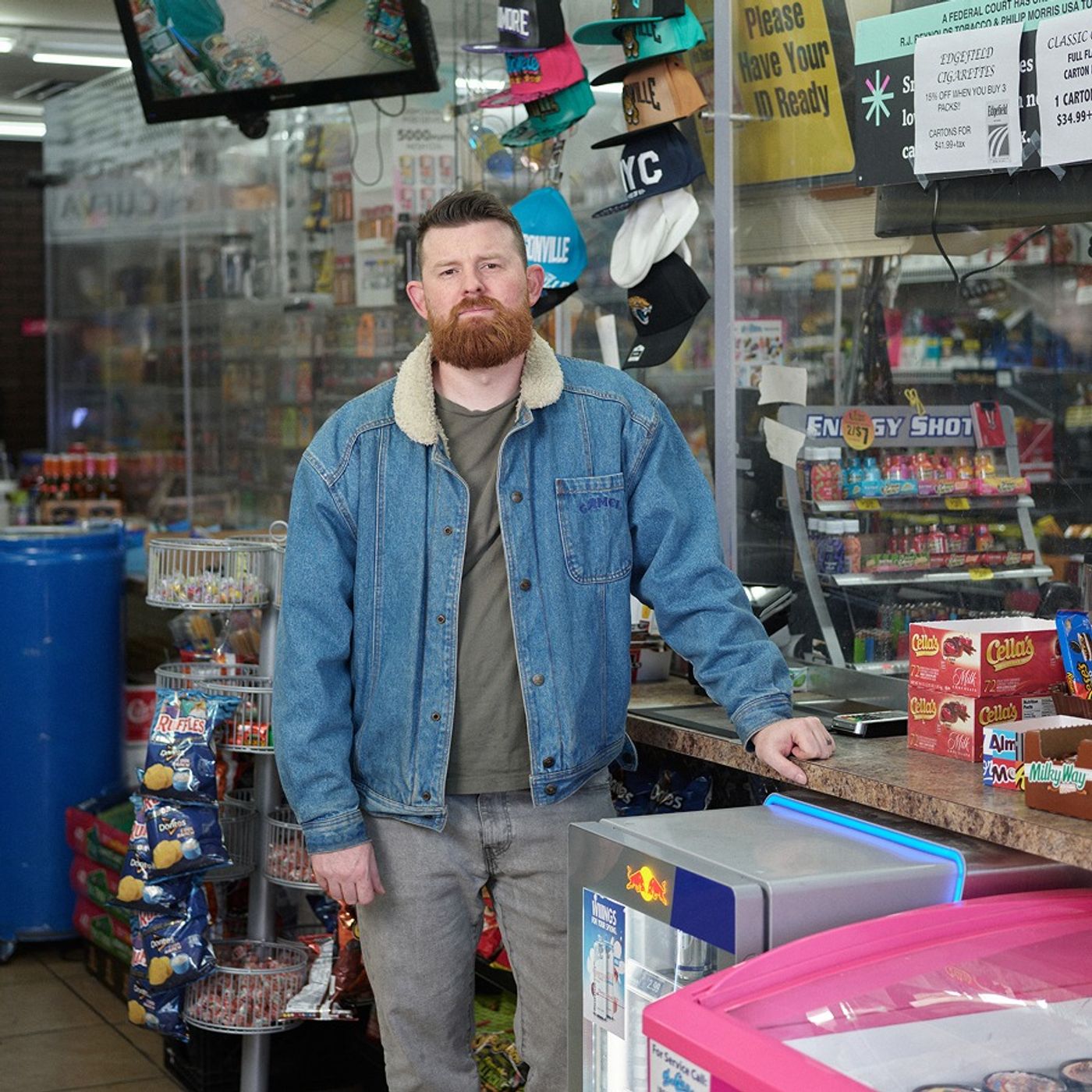
Overview of The Daily: The View of the War From a Florida Gas Station
This episode of The New York Times’ The Daily (host Michael Barbaro, aired Friday, March 27) reports from an independently owned gas station in suburban Jacksonville, Florida, to show how a recent war and resulting oil-market disruption are playing out at the neighborhood level. Reporter Anna Foley and Barbaro spend days with station owner/manager Cam Judy, interviewing him and his customers to illustrate the economic, social and political effects of rapidly rising pump prices.
Key takeaways
- Independent gas-station owners like Cam set prices locally but face thin margins and rising upstream costs (fuel, trucking, card fees), so higher retail prices don’t necessarily mean higher profits.
- Rapid price increases are producing immediate financial strain for many customers—some cut groceries, use food banks, or skip meals.
- Reactions to the war and price hikes are politically mixed: some people blame and feel betrayed by political leaders; others support military action despite the economic pain.
- Prices rose quickly after the war began and are likely to fall more slowly; Cam expects prices to top $4.00 and estimates a possible cap around $4.59 if conditions worsen.
People & perspectives featured
- Cam Judy — independent station manager in Jacksonville. Took over from his father; emphasizes community ties and balancing customer loyalty with the need to stay solvent.
- Andrew — a veteran on a fixed income who says gas increases forced the family to cut groceries and sometimes skip meals.
- William — a 70-year-old owner of a trucking company who is personally able to absorb higher fuel costs and supports U.S. action in Iran to help Iranians.
- “Sean” — a licensed Medicare agent who voted for President Trump expecting lower gas prices; feels betrayed and emotional about the financial squeeze on her household.
- Passersby and regular customers — a range of responses showing how deeply personal and political the pain at the pump has become.
How gas pricing works (as explained in the piece)
- Independent owners set pump prices, but costs upstream matter: wholesale fuel price, delivery/trucking fees, and card-processing fees eat into margins.
- Typical per-gallon profit for a station like Cam’s is small—roughly 10–15 cents per gallon.
- Cam’s pumps hold ~8,000 gallons; a 10-cent margin yields about $800 gross—illustrating how small per-gallon profits are in aggregate.
- Competitive considerations: some independents price slightly above local chains to increase margin, but Cam avoids that because of long-term customer relationships.
Local, human impacts (selected examples)
- Daily habits shift: customers are reducing spending on groceries, using food banks and skipping meals; example: a father who prioritizes feeding his children and sometimes skips dinner.
- Small trucking companies face acute exposure: one trucker described $1,200–$1,600 fills for diesel, with freight rates not keeping pace—risking business viability.
- Social fabric: Cam and his father are community fixtures; customers depend on him beyond commerce (loans in emergencies, community discipline for kids, donations).
Political and national context in the episode
- The price spike is tied narratively to a conflict involving Iran; the episode includes references to President Trump’s threats and calls for Iran to negotiate, and to Israeli actions (killing an Iranian naval commander, expanded operations in Lebanon).
- For some listeners/customers, rising gas prices are a referendum on presidential decisions and campaign promises (notably on lower gas prices).
- The episode connects local distress to broader policy and geopolitical events, noting that military conflict can translate quickly into domestic economic pain.
Forecast and implications
- Cam expects prices to continue rising over the short term and believes falls will be slower than the recent rises.
- He predicted surpassing $4.00 per gallon and estimated a cap around $4.59 based on his past highest prices and current uncertainty.
- Broader implications: sustained higher fuel costs can push vulnerable households into greater hardship, threaten small transportation businesses, and have political consequences for elected leaders.
Notable quotes
- Cam: “I hope they understand that I’m not pricing my gas to make a quick buck. I’m pricing my gas how I need to price it in order to stay afloat.”
- Customer Andrew (veteran): “It’s not our war.”
- “Sean” (voter who feels betrayed): “I was hoodwinked… I made the wrong vote.”
- Trucking owner William: despite pain, “I still support what we’re doing in Iran… I support it for the people of Iran.”
Why this story matters
- It translates abstract macro events (war, oil markets, policy decisions) into concrete local effects—showing how geopolitical shocks rapidly alter everyday budgets and community relationships.
- It highlights the precarious economics of independent retailers and the political fragility that can follow from economic pain felt by ordinary voters.
Production notes
- Host: Michael Barbaro. Reported by Anna Foley. Produced by Anna Foley and Caitlin O’Keefe; edited by Devin Taylor. Recorded on location in Jacksonville, Florida.