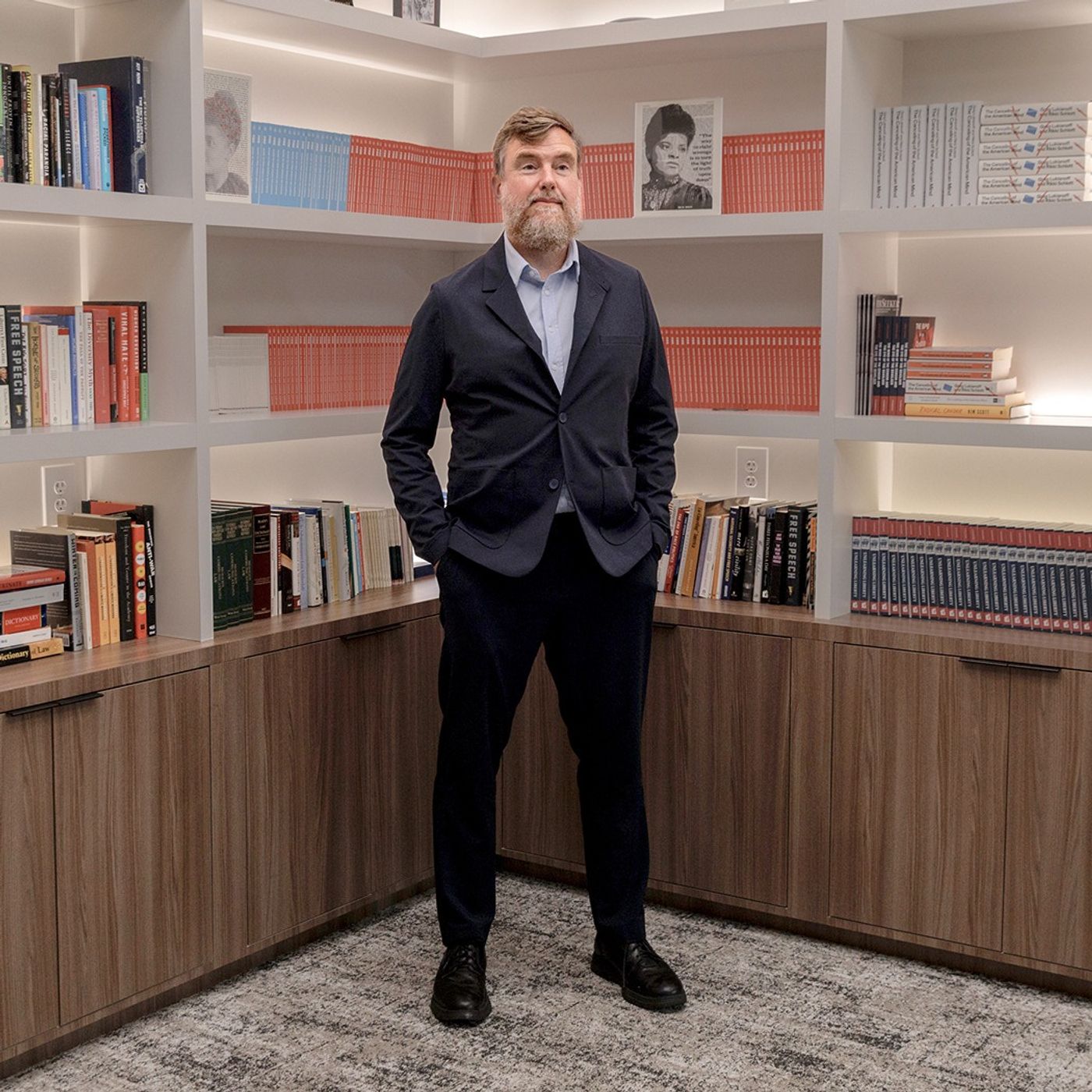
Overview of The Daily: The Lonely Work of a Free‑Speech Defender
This episode of The New York Times’ The Daily (host Natalie Kitroeff) features a long interview with Greg Lukianoff, president of the Foundation for Individual Rights and Expression (FIRE). The conversation traces Lukianoff’s personal and professional journey as a long‑time advocate for free speech—his background, formative cases, mental‑health struggles, scholarship (notably The Coddling of the American Mind with Jonathan Haidt), and his perspective on how both campus culture and federal power threaten free expression today.
Key topics covered
- Greg Lukianoff’s biography and worldview: upbringing, disposition against conformity, Stanford Law, joining FIRE in 2001 and becoming its president in 2006.
- Early/high‑profile free‑speech cases (e.g., Sami/“Sami” Al‑Arian at University of South Florida) and the consequences of defending unpopular speech.
- Campus free‑speech culture and the Yale 2015 Christakis confrontation (the viral “shrieking girl” clip) — why shouting people down and forced removals are harmful to higher education’s truth‑seeking role.
- The Coddling of the American Mind thesis: overprotecting students from discomfort produces fragility and fuels polarization/cancel culture.
- FIRE’s campus free‑speech rankings and the backlash FIRE has received from parts of the left.
- Concerns about the Trump administration’s use of federal power to pressure institutions (law firms, universities, media), including threats to funding, access, and nonprofit status.
- The line between speech and violence: warnings that equating words with physical violence can legitimize real violence and repression.
- Free speech as personal autonomy and an informational public good; limits of suppression; platforming and group polarization research.
- Lukianoff’s mental health—depression and suicide attempt—his use of cognitive behavioral therapy (CBT) and Buddhism to manage catastrophic thinking, and how that shaped his approach to confronting difficult speech rather than suppressing it.
Main takeaways
- Definition and core principles:
- “Freedom of speech is to be able to think what you will and say what you think.”
- Worst forms of censorship: viewpoint discrimination (forbidding a specific viewpoint) and compelled speech (forcing what someone must say).
- Free speech is anti‑majoritarian in that it protects minorities from being silenced by the majority.
- Cultural vs. governmental threats:
- Campus culture that seeks to eliminate discomfort undermines education’s truth‑seeking function and sows political backlash.
- Federal leverage (threats to funding, access, legal/administrative retaliation) is a more acute and dangerous threat because it uses state power to coerce speech or punishment.
- Tactics that worry Lukianoff most from recent federal actors:
- Targeting law firms and journalists who oppose or investigate the administration (limiting legal advocacy and press freedom).
- Pressuring universities (via Title VI, funding threats, restrictions on foreign students/research) to enforce ideological compliance.
- Platforming vs. suppression:
- Lukianoff defends broad tolerance of speech as a minimum condition for democracy. He acknowledges platforming can help spread hateful ideas but argues suppression is paternalistic and often counterproductive; cross‑ideological engagement reduces polarization more than siloed echo chambers.
- Personal resilience matters: confronting painful speech and ideas is psychologically difficult but healthier than enforced silence; CBT and honest debate are tools to manage this.
Notable quotes and insights
- “Freedom of speech is to be able to think what you will and say what you think.”
- “The purest form of speech is expression of your opinion, and the worst form of censorship is called viewpoint discrimination.”
- “One thing worse [than viewpoint discrimination] is compelled speech.”
- “Freedom of speech is anti‑democratic” — meaning it protects minority expression from majority censorship.
- “You’re not a free people if you don’t have free speech.”
- On suppression: “Be less of you, be less of who you are…that’s what censorship asks.”
Important examples / cases mentioned
- Sami Al‑Arian (University of South Florida): FIRE defended speech that was unpopular; later indictment on terrorism charges complicated public perception.
- Yale (2015) — Erica and Nicholas Christakis: campus conflict over Halloween‑costume guidance; Lukianoff recorded a confrontation and advocated against administrative punishment; the episode became emblematic of campus “shouting down.”
- FIRE’s campus free‑speech rankings: some elite universities (e.g., Harvard) scored poorly; FIRE drew criticism from left‑leaning academics.
- Trump administration tactics: intimidation of law firms, threats to universities (Title VI/NIH funding), public pressure on media figures (Jimmy Kimmel episode referenced), attempts to penalize critics and opponents.
- Post‑assassination reactions to Charlie Kirk: debate over rhetoric equating speech with violence; Lukianoff warns such rhetoric can hand extremists “a moral permission slip.”
Practical recommendations / action items
- For universities: uphold contractual promises of academic freedom; teach students how to engage with discomfort rather than protect them from it.
- For policymakers: avoid using federal power to coerce ideological conformity—respect First Amendment constraints and institutional autonomy.
- For media and hosts: if you platform odious guests, do so with rigorous questioning and context; don’t assume platforming is the only or worst option, but be deliberate.
- For individuals: practice engagement across differences, avoid mob censorship, and cultivate personal tools (e.g., CBT‑style reflection) to confront difficult ideas without shutting them down.
Context & controversies
- FIRE is criticized by some on the left as enabling or defending right‑wing views; Lukianoff contends that pointing out campus illiberalism was necessary and that warnings of a backlash were justified.
- The interview draws a clear line between cultural illiberalism (campus) and the more alarming escalation of state power being used against perceived opponents (federal actions under the Trump administration).
- Lukianoff acknowledges free speech is necessary but not sufficient—further civic work is required to neutralize harmful ideologies without resorting to censorship.
People & organizations referenced
- Greg Lukianoff — President, FIRE (Foundation for Individual Rights and Expression)
- Jonathan Haidt — social psychologist; co‑author, The Coddling of the American Mind
- Erica and Nicholas Christakis — Yale faculty involved in 2015 controversy
- Sami/Sami Al‑Arian — University of South Florida professor case cited
- Charlie Kirk — conservative activist whose assassination led to debate on rhetoric and violence
- Trump administration actors (general references to threats and actions), FCC chair Brendan Carr, Pam Bondi (mentioned in context of rhetoric)
- Harvard, Yale, University of South Florida and other campuses referenced
Episode credits (brief)
- Host: Natalie Kitroeff. Guest: Greg Lukianoff. Produced/edited by staff of The Daily (as voiced in the episode).
Summary takeaway: Lukianoff frames free speech as both a personal psychological liberty and a civic/informational prerequisite for democratic life. He warns that cultural practices that silence discomfort and federal actions that weaponize state power against opponents both risk corroding authentic expression—and that defending free speech requires consistent, sometimes unpopular, principles rather than selectivity.