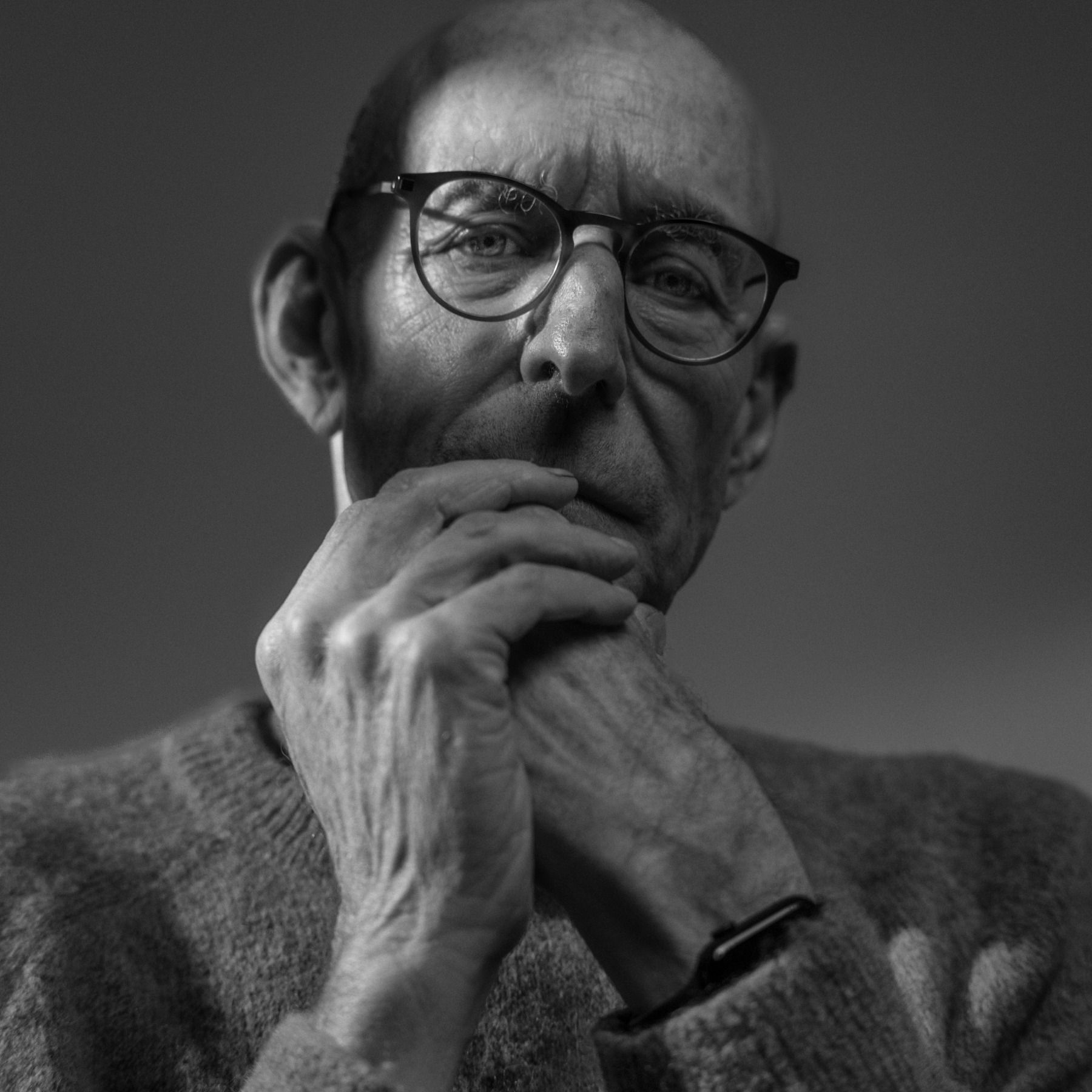
Overview of The Interview
This episode of The Interview (New York Times) features David Marchese in conversation with bestselling author Michael Pollan about Pollan’s new book, A World Appears: A Journey Into Consciousness (published Feb 24). The discussion ranges across definitions and theories of consciousness, the “hard problem,” embodiment and feeling, psychedelics and meditation, animal consciousness and ethics, the threat and promise of AI, and the social/political stakes of attention and awareness.
Key points and main takeaways
- Definition: Pollan summarizes consciousness as subjective experience or awareness — “what it is like” to be something (drawing on Thomas Nagel).
- The hard problem: Following David Chalmers, Pollan frames the central mystery as how matter (neurons) produces subjective experience — a gap science has not yet bridged.
- Two broad explanatory directions:
- Evolutionary/functional accounts: consciousness evolved to enable decision-making, complex social navigation, pattern recognition, or homeostasis.
- Non-evolutionary views: panpsychism — the idea that mindlike properties might be ubiquitous at a very small scale.
- Embodiment and feelings: Pollan is persuaded by researchers like Antonio Damasio and Mark Solms that consciousness is rooted in feelings (the brain’s monitoring of the body) and brainstem structures, not only cortical cognition. That makes embodiment central and complicates attempts to create conscious machines.
- AI skepticism: Pollan is skeptical that current AI architectures can become truly conscious because they lack bodily “friction” and feeling; yet he recognizes they can convincingly mimic consciousness (the Turing-test problem), complicating moral and social responses.
- Ethics and personhood: If more animals, plants, or machines are deemed conscious, moral implications follow — but history shows people often fail to extend compassion consistently (humans exploit humans and animals), so recognizing consciousness doesn’t automatically yield ethical change.
- Psychedelics & meditation: Pollan discusses personal guided psychedelic experiences and their overlap with contemplative practices; both can produce ego-dissolution and insights but can also destabilize people and raise unresolved questions.
- The self as constructed: Memory and continuous revision (what biologist Michael Levin calls “mnemonic improvisation”) help explain the felt continuity of self; even if the self is a construct, it functions as a useful, real-enough entity.
- Politics and attention: Pollan views contemporary politics (e.g., manipulative media/figures) as threats to human attention and consciousness, arguing for “consciousness hygiene” to protect the realm of private thought and freedom.
Topics discussed
- Philosophical framing: Nagel’s “What Is It Like to Be a Bat?”, Chalmers’ “hard problem.”
- Neuroscience: role of brainstem, feelings, and embodiment (Damasio, Solms).
- Theories of consciousness: multiple competing theories, panpsychism as a serious alternative.
- Artificial intelligence: limits of current models, Turing test, reportability, moral status.
- Animal and plant consciousness: expanding scientific recognition and its ethical complications.
- Psychedelics and meditation: subjective reports, guided experiences, therapeutic and philosophical value.
- The self and memory: constructed identity, revision of memory as a feature.
- Public life: media/political manipulation of attention; nutrition, RFK Jr., and the modern food movement.
Notable quotes and insights
- “The simplest way to define consciousness is simply as experience or subjective experience.”
- “The hard problem... is basically how you get from matter to mind.”
- On embodiment: consciousness may originate with feelings — “the brain’s monitoring of what’s going on in the body.”
- On AI: “Everything that machines know... is information. They don't have friction with nature.”
- On the self: “I don't have a self, yet I can make things happen.”
- On ethics and consistency: “Personhood — who we grant personhood to — is a very subjective human decision. We give it to corporations, oddly enough, which are not conscious.”
Practical implications and recommendations
- Consciousness hygiene: protect attention and private thought—limit manipulative media consumption and political attention-grabs that erode reflective capacities.
- Be cautious about claims of AI consciousness: rely on architecture, embodiment, and behavioral evidence; don’t conflate convincingly humanlike responses with inner feeling.
- Read beyond headlines: skepticism toward first-day science stories; look for replication, expert caveats, and deeper reporting.
- Ethical complexity: recognizing more beings as conscious raises moral questions but does not automatically change behavior; use debates about suffering (capacity to suffer) as a pragmatic ethical anchor.
- If exploring psychedelics: prefer guided, supervised settings; expect experiences to raise more questions than provide neat answers; combine with contemplative practice for integration.
Context and production notes
- Guest: Michael Pollan, author of A World Appears: A Journey Into Consciousness (published Feb 24).
- Host: David Marchese.
- The interview was produced and edited by The New York Times’ The Interview team; listeners can watch the conversation on the show’s YouTube channel.
Why this conversation matters
- The episode situates questions about consciousness at the crossroads of science, ethics, politics, and technology. With AI rising, ecological pressures, and renewed public interest in inner life (via psychedelics and meditation), Pollan argues we are undergoing a potentially revolutionary redefinition of what it means to be human — and that how we protect and understand consciousness will shape policy, technology, and moral life going forward.