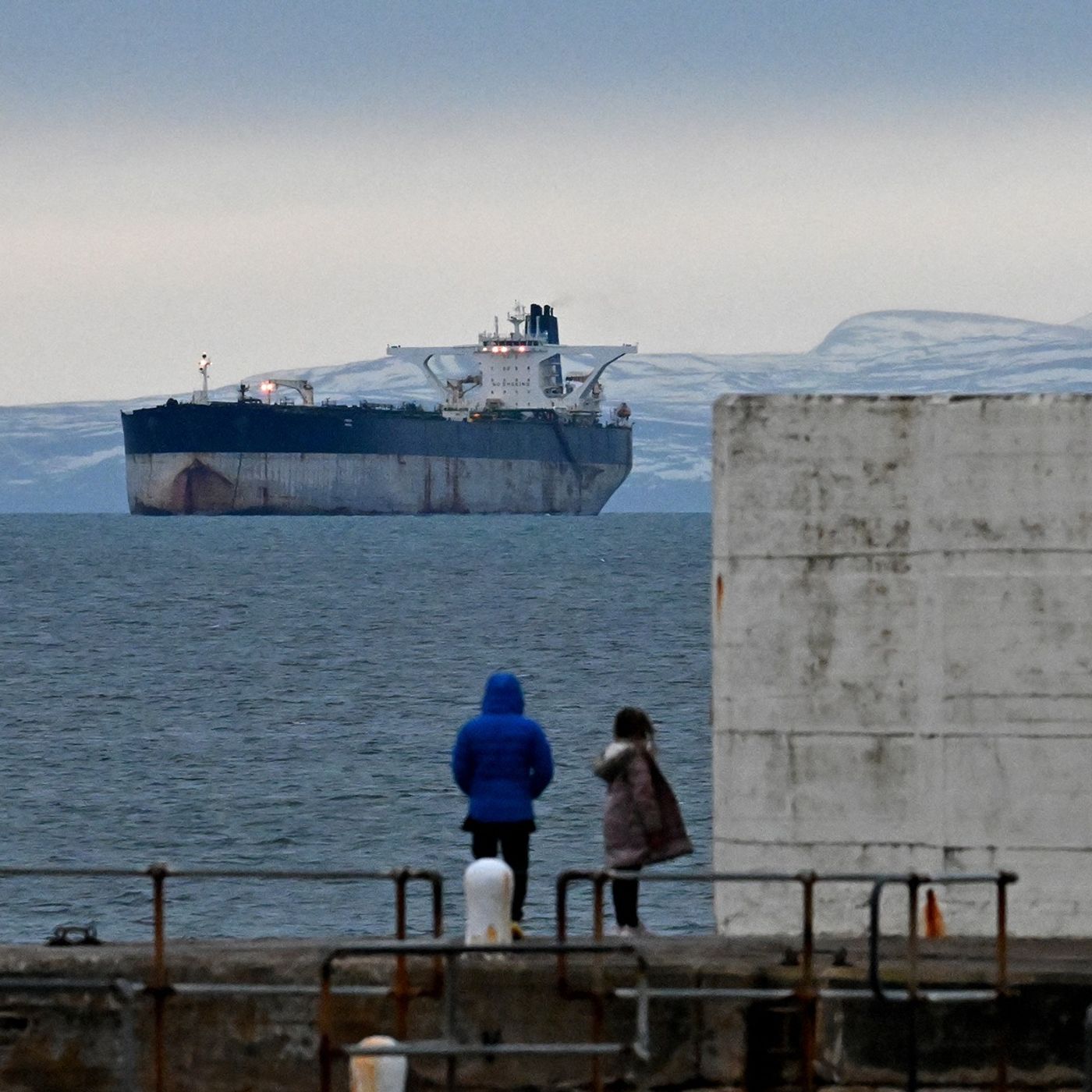
Overview of The Daily — The ‘Ghost Fleets’ Moving Oil Around the World
This episode (hosted by Rachel Abrams with reporting by Christiane Tribert of the New York Times visual investigations team) explains what “ghost,” “shadow,” or “dark” fleets are, how they move sanctioned oil (mainly from Venezuela, Russia and Iran) around the world, why they’ve proliferated, how journalists and governments track them, and why recent U.S. enforcement actions may be changing the game.
Key points / main takeaways
- “Ghost/shadow/dark fleets” = tankers that use deceptive practices to carry sanctioned oil and hide their identities, locations and cargoes.
- These vessels primarily ship oil from Venezuela, Russia and Iran to buyers such as China and India.
- Estimates (from the reporter) suggest 10–20% of tankers have engaged in shadow-fleet practices; the volume of oil involved corresponds to roughly 3–9% of world oil supply (figures are approximate and depend on available data).
- After years of limited enforcement, the U.S. began a stepped‑up campaign (December onward) to stop and seize tankers carrying Venezuelan oil. Some seizures and boardings have followed; other countries (e.g., France) have shown signs of similar enforcement.
- The shadow fleet uses tactics such as turning off or spoofing AIS (transponder) signals, repainting or covering hull names, changing flags (sometimes to Russian flags), and using dubious insurance providers to stay afloat.
- Journalists and investigators track these ships via satellite imagery, open-source AIS databases (e.g., MarineTraffic), shore photographers (e.g., TankerTrackers), crew social-media posts, and registry cross‑checks.
- Enforcement and insurance pressure are starting to bite: Western insurers are withdrawing cover, and naval interdictions are increasing — raising questions about how sustainable shadow‑fleet operations are and how global oil markets or geopolitics may shift.
How ghost/shadow/dark fleets operate
- Primary motives: big profits from carrying sanctioned oil despite legal/financial risk.
- Main deceptive techniques:
- Going dark: switching off AIS transponders to disappear from public tracking.
- Spoofing: broadcasting false AIS locations (e.g., showing the ship off West Africa while it’s elsewhere).
- Identity manipulation: repainting or covering ship names, reusing names of scrapped vessels, or changing ship registries.
- Flag-switching: flying flags of convenience or claiming Russian flags to deter boarding.
- Insurance fraud: obtaining dubious or sham insurance (sometimes from entities tied to sanctioned states) so ports will accept them.
- Operational tactics: sailing in coordinated groups (“zombie race”) to reduce the chance any one ship is intercepted.
U.S. enforcement timeline and effects (as presented)
- December: U.S. escalated pressure on Venezuelan oil flows — public threats to stop/board tankers and a military buildup in the region.
- Several tankers were stopped, boarded, or chased; a number of vessels were seized and placed in U.S. custody (episode cites multiple seizures).
- Immediate behavioral effects:
- Some tankers turned back to Venezuelan ports or remained anchored rather than risk leaving.
- Others attempted group departures; coordinated departures reduced odds of being intercepted (the “zombie race”).
- Some ships managed to evade and sail toward the Atlantic/Africa, while others were intercepted.
- Spillover: similar targeting and sanctions are being applied to Iranian-linked tankers; enforcement rhetoric and naval deployments have expanded to other regions.
How investigators and journalists find these ships
- Satellite imagery: high-resolution images reveal vessels present where AIS does not report them.
- AIS/open-source tracking platforms (MarineTraffic and similar): show vessels that are broadcasting, letting trackers spot mismatches with imagery.
- Visual ID: analysts identify vessels by deck color, hull configuration, length/width and compare with proprietary tanker databases and shore photography.
- Social media: crew posts (TikTok, Instagram) can accidentally reveal locations and vessel identities.
- On-the-ground photographers & organizations (e.g., TankerTrackers) provide corroborating imagery.
- Registry & insurance checks: cross-checking flags, shipping registries and insurers to detect inconsistencies or fraudulent documentation.
Risks and broader impacts
- Insurance risk: shadow-fleet ships often rely on dubious insurers; if a major spill or accident occurs, liability and cleanup funding could be uncertain and catastrophic.
- Market effects: each seizure or increased enforcement can cause short-term upticks in oil prices due to uncertainty, though these often subside. A sustained crackdown could raise costs and complicate supplies for buyers (notably China and India).
- Geopolitical risk: targeted states (Russia, Iran, Venezuela) may retaliate politically or by seeking alternative routes, buyers or enablers. So far, public state retaliation has been limited, but escalation is possible.
- Legal/diplomatic risk: boarding ships flying certain flags (e.g., Russian) raises the potential for diplomatic incidents.
- Enforcement tradeoffs: stronger enforcement reduces sanctioned regimes’ revenues but risks broader market disruption and diplomatic fallout.
Notable quotes / vivid details from the episode
- “Ghost Fleet,” “Shadow Fleet,” “Dark Fleet” — three terms for the same general phenomenon.
- “Zombie race” — coordinated group departures intended to lower the chance of individual capture.
- Tactics described: bedsheets hung over hulls to obscure names; vessels repainting and assuming identities of scrapped ships.
- “Strength in numbers” — the practical logic behind coordinated sailings.
What to watch next (actionable signals)
- Further U.S. or allied naval interdictions and public announcements of seized vessels.
- Expansion of sanctions and enforcement to Iranian and Russian logistics networks.
- Withdrawal of Western insurers and rise of opaque insurance providers — increases operational risk for shadow fleet operators.
- Satellite-imagery and open-source investigator reports showing vessel movements off West Africa, toward China/India, or aggregating in Caribbean storage.
- Any diplomatic responses or asymmetric retaliation from Russia, Iran or Venezuela.
Caveats / transcript accuracy note
- The transcript contains some clearly erroneous or misleading statements (for example, an assertion that President Trump “captured” Nicolás Maduro). That claim is inconsistent with public record and appears to be a transcript or editorial error. The summary above focuses on the verifiable reporting and key analytical points about shadow fleets and enforcement described by Christiane Tribert.
Bottom line
Shadow fleets are a sizable, technically sophisticated workaround to sanctions, using AIS manipulation, false identities and questionable insurance to move sanctioned oil to willing buyers. Recent U.S. and allied enforcement—combining naval interdictions and sanctions targeting tankers and insurers—is beginning to disrupt those operations, but the long-term outcome remains uncertain and could have ripple effects across insurance markets, geopolitics and global oil supplies.