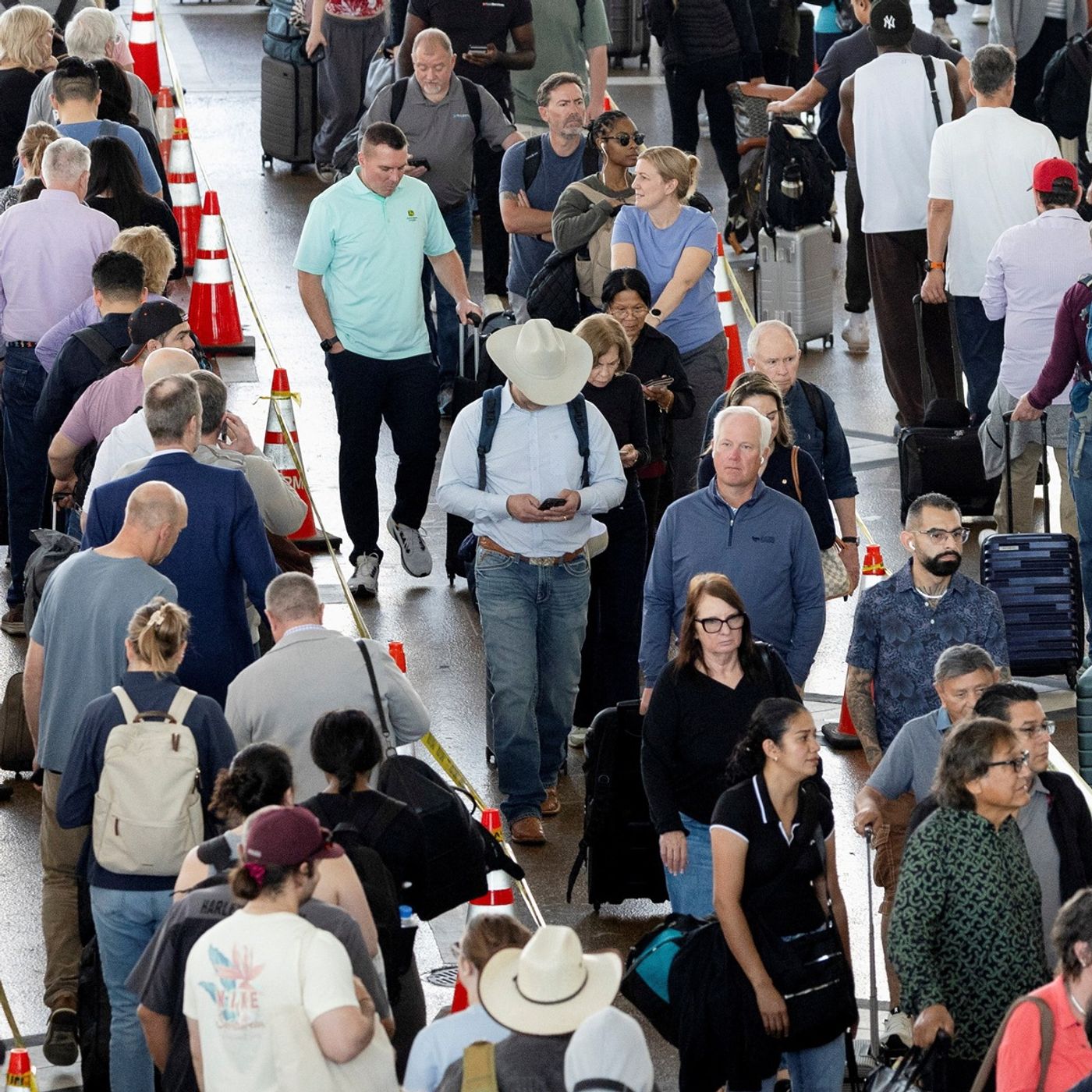
Overview of The Daily — "The Airport Meltdown"
This episode (March 26) of The New York Times' The Daily, hosted by Michael Barbaro, explains why U.S. airport security lines exploded into a national crisis: an extended partial shutdown of the Department of Homeland Security left Transportation Security Administration (TSA) workers unpaid, triggering mass call-outs, resignations and record-long wait times. The episode combines reporting from airports (Karin Demirjian) with coverage of Capitol Hill negotiations (Michael Gold) as lawmakers scramble to fund DHS, address ICE-related demands and avert further breakdowns in travel and other government functions.
What happened — immediate causes and timeline
- Root cause: A partial shutdown of DHS that began in mid-February over Democrats’ effort to impose restrictions on ICE (immigration enforcement) funding and practices.
- Delay to impact: Effects were delayed because pay cycles masked the immediate consequences; unpaid TSA workers began to feel financial strain weeks later.
- Escalation: After about six weeks of the shutdown, unpaid TSA staff increasingly called out or quit, producing the longest airport security wait times in TSA history by late March.
- Date/context: Episode recorded March 26; reporters documented multi-hour waits, passengers missing flights and chaotic scenes at major airports (Houston, JFK, Atlanta).
On-the-ground effects
- Passenger experiences: Travelers reported being stuck in lines five-plus hours with little food or water; some missed flights after repeated attempts to travel over several days.
- Operational knock-on effects: The NTSB struggled to get investigators to LaGuardia after an aviation accident because investigators were stuck in security lines.
- Anecdotes: Viral clips (e.g., an electric violinist in a long Atlanta line) illustrated both the human toll and surreal nature of the congestion.
Workforce dynamics and mitigation attempts
- TSA workforce: ~50,000 employees. Since the shutdown, 480 TSA workers have formally quit (a small share but significant given long training times).
- Call-outs: In hard-hit airports, call-outs reached very high levels (Houston reported call-outs above 40%; JFK consistently above 30%), magnifying delays.
- Training lag: New TSA officers require roughly 4–6 months of training — meaning short-term staffing fixes won’t quickly restore full capacity.
- ICE deployment: The Trump administration sent ICE personnel to airports. Problems:
- ICE agents are not trained as TSA screeners, so their utility in speeding security was limited.
- Deployment was politically fraught (seen by critics as ironic or potentially intended to augment ICE activities).
- ICE has separate funding streams (from earlier domestic spending bills), so they continued to be paid while TSA staff went unpaid — fueling resentment.
Congressional politics and negotiations
- Stakes: Lawmakers face pressure to end the shutdown to get TSA staff paid and prevent further system breakdowns.
- Democratic aims: Democrats initiated the shutdown to force reforms on ICE — wants legal changes (e.g., warrants before entering private homes, clearer identification rules for agents, limits on certain tactics).
- Republican offer: Senate Republicans floated funding DHS broadly while excluding parts of ICE’s immigration enforcement (a potential concession to Democrats).
- White House role: President Trump initially rejected the GOP offer (demanded ICE be funded and linked negotiations to unrelated priorities like the Save America Act/voter-ID provisions), then later entertained senators’ pitches after pressure from GOP senators.
- Key actors: Tom Homan (White House border czar) signaled openness to reforms; John Thune warned senators they might have to remain in Washington until a deal is reached; GOP senators (e.g., Katie Britt, Bernie Moreno, Lindsey Graham) lobbied the White House for a compromise.
- Current status (as of episode): Negotiations were active but fragile — Democrats worried a compromise that funds DHS but yields no ICE reforms would squander their leverage; Republicans and senators wanted a quick bill to end the crisis.
Numbers & facts to note
- TSA workforce: ~50,000 agents
- Quitters: 480 TSA workers resigned (as of the episode)
- Call-out rates: >40% in Houston on some days; >30% at JFK consistently
- Training time: 4–6 months for a new TSA officer
- Timeline: Shutdown began mid-February; crisis peaked/garnered congressional urgency in late March
Stakes and near-term risks
- Continued staffing losses and high call-outs could cause longer lines, airport slowdowns, and even temporary closures of smaller airports.
- Training delays mean staffing shortages could persist well beyond the resolution of the shutdown — potential strain for summer travel (e.g., World Cup).
- Political outcome hinges on White House buy-in and willingness of both parties to accept compromises; the situation could either quickly improve or deteriorate further.
Notable quotes and lines
- "We're seeing some of the longest security lines in history and the longest wait times in history." — TSA administrator (summarized)
- Passenger: "There was no water, no food. It was horrible. That's not human."
- Reporting note: The episode highlights the irony — the shutdown aimed at ICE has ended up primarily hurting TSA workers.
Practical takeaways for travelers (brief)
- Build extra time into travel plans if any DHS funding impasse looks unresolved.
- Monitor airport-specific reports and TSA processing times.
- Expect potential last-minute operational changes if staffing worsens.
Bottom line / Editorial takeaway
The airport meltdown is not a simple logistics failure but the predictable consequence of an extended DHS funding stalemate. Resolving the crisis requires both immediate legislative action to pay and stabilize frontline TSA staff and longer-term clarity about ICE practices (the original point of contention). Even if Congress reaches a quick funding fix, staffing and training lags mean travelers may continue to feel the effects for months.