Summary — "How Trump Got Israel and Hamas to a Truce" (NPR Up First)
Overview
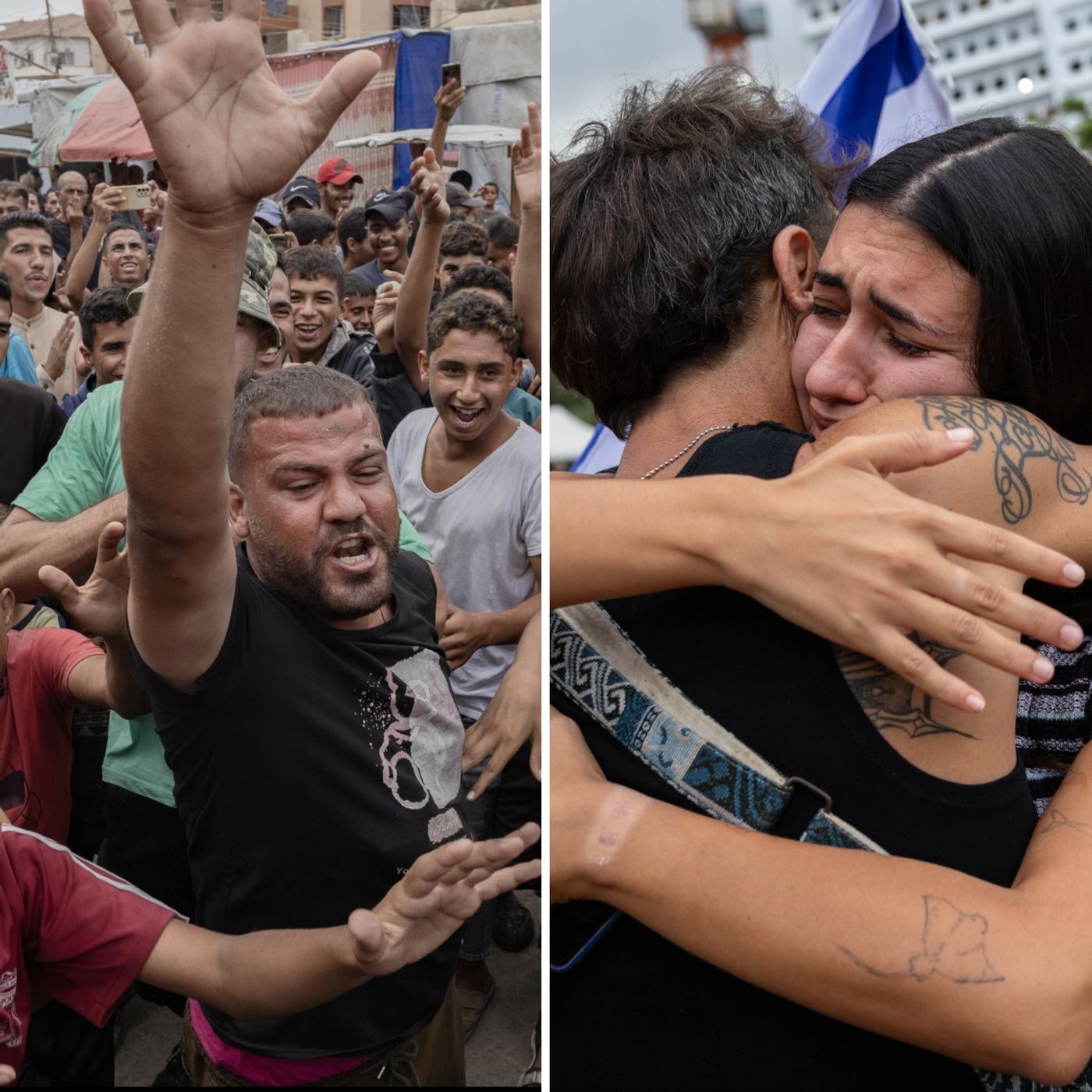
This episode covers a fragile ceasefire between Israel and Hamas brokered by President Trump. The first phase—starting with an Israeli pullback and an expected hostage-for-prisoner exchange—began with an unusually quiet morning in parts of Gaza. The U.S. is playing a major oversight role, including sending roughly 200 troops as part of an International Stabilization Force (ISF). The program also reports on the indictment of New York Attorney General Letitia James amid concerns about politicization of the Justice Department.
Key points and main takeaways
- Ceasefire launch
- For the first time in seven months, parts of Gaza woke up without Israeli airstrikes. Israeli forces announced a pullback to an agreed line.
- The deal signed in Egypt covers a first phase focused on hostage release; it states the war will end upon Israeli government approval.
- Hostage/prisoner exchange timeline
- Hamas has 72 hours from the ceasefire taking effect to release hostages (about 48 taken, ~20 believed alive).
- Israel will release many Palestinian detainees and prisoners after the initial hostage release. Exchanges were expected within a few days (by Monday).
- Humanitarian and reconstruction issues
- Gaza suffered massive destruction (thousands of buildings, many high-rises) and large-scale displacement; retrieval of bodies and rebuilding are major unresolved issues.
- Key to stabilization: opening the Rafah border to permit aid and heavy machinery and allowing hundreds of U.N. aid trucks to enter to address malnutrition and rubble clearance.
- U.S. role and troop deployment
- About 200 U.S. troops will join an ISF intended to oversee compliance; they are to work with Egypt, Qatar, Turkey, UAE and inform Israel of violations.
- U.S. officials say the troops are not intended to enter Gaza, but deployment details remain undefined.
- Political and diplomatic theater
- Trump heavily promoted and personally intervened in negotiations; he planned to travel to Egypt (and possibly Israel) to oversee implementation and be present for hostage releases.
- Skepticism persists because prior U.S.-backed ceasefires were broken and the first-phase document does not lay out subsequent steps or reconstruction funding.
- Separate DOJ/indictment story
- New York AG Letitia James was indicted on bank fraud and false statement charges related to mortgage paperwork. The indictment came from the Eastern District of Virginia.
- The U.S. attorney there was replaced by Lindsey Halligan, a former Trump personal attorney with no prosecutorial experience; she recently secured indictments against James Comey and now Letitia James.
- James called the charges baseless and part of "weaponization" of the justice system; concerns raised about politicized prosecutions after Trump publicly urged action against perceived foes.
Notable quotes / insights
- President Trump: "It's really peace in the Middle East." — expressing optimism about the deal.
- President Trump: "I've never seen anything quite like it." — on his role and involvement in brokering the deal.
- On uncertainties about recovering bodies: "We're going to do the best we can." — Trump, when asked what would happen if not all hostages are returned.
- Letitia James: The indictment is "a continuation of Trump's weaponization of the justice system" and the charges are "baseless."
Topics discussed
- Israel-Hamas ceasefire mechanics and timeline
- Hostage recovery and prisoner exchanges
- Gaza humanitarian crisis: destruction, displaced people, aid access
- U.S. diplomatic and military role (ISF, 200 troops)
- President Trump's personal involvement and planned regional trip
- Skepticism about long-term peace and reconstruction financing
- U.S. domestic politics: indictment of Letitia James, DOJ leadership changes, concerns over politicization
Action items / recommendations (what to watch next)
- Short-term (next 72 hours)
- Whether Hamas releases the hostages (and which ones), and whether Israel follows through with prisoner releases.
- Opening of the Rafah crossing and the flow of heavy machinery and U.N. aid convoys into Gaza.
- U.S. and international oversight
- Details and locations of the ~200 U.S. troops and full terms of the International Stabilization Force.
- Coordination among Egypt, Qatar, Turkey, UAE and Israel on monitoring and enforcement.
- Longer-term
- Concrete commitments (financial and logistical) from wealthy Arab states for Gaza reconstruction.
- Whether the initial phase leads to a durable ceasefire or if past patterns (broken deals) repeat.
- Domestic politics
- Developments in the indictments of Letitia James and James Comey, and any further changes or oversight regarding DOJ conduct.
Concise takeaway: A delicate, U.S.-brokered first-phase ceasefire began with an Israeli pullback and a 72-hour window for hostage releases, but major uncertainties remain—especially around enforcement, humanitarian access, reconstruction funding, and the durability of the truce—while a separate U.S. political-legal controversy raises concerns about DOJ politicization.