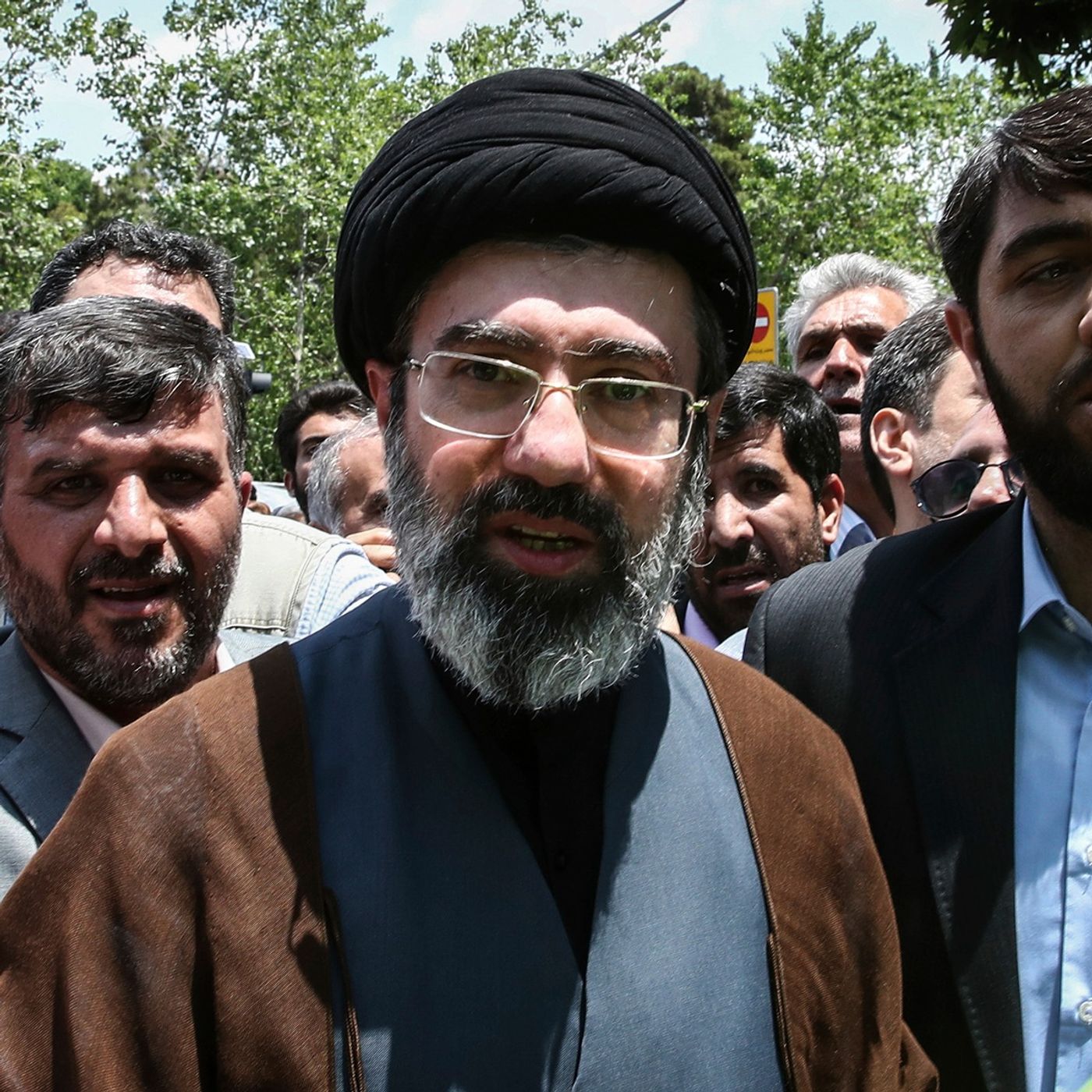
Overview of Chosen by War: The Rise of Iran’s New Supreme Leader
This New York Times Daily episode (host Michael Barbaro) explains how Iran’s new supreme leader, Mushtaba (Mojtaba) Khamenei — the son of the late supreme leader — was chosen in the chaotic aftermath of his father’s death, and why his elevation matters for the war with the United States and Israel, for domestic politics inside Iran, and for regional stability.
Key takeaways
- Mushtaba Khamenei, long a behind‑the‑scenes figure, was elected supreme leader after intense factional jockeying inside Iran following his father’s death in airstrikes.
- Hardline elements — especially the Islamic Revolutionary Guard Corps (IRGC) and allied security/intelligence figures — pushed successfully for Mushtaba to preserve the late leader’s policies and give the Guards continued latitude in the war.
- Moderates and pragmatists tried to install a less hardline successor (names discussed: Hassan Rouhani, Hassan Khomeini, Ali Reza Arafi) but failed after a last‑minute hardliner emergency vote.
- Mushtaba has made only written statements so far: he vows revenge for “martyrs,” says attacks on Gulf neighbors will continue, calls for U.S. bases to be closed/attacked, and supports keeping the Strait of Hormuz closed.
- His public absence (no video/speech) is explained by reported leg injuries and security concerns — he is reportedly high on Israeli target lists.
- Many Iranians who briefly hoped the war might produce political change now feel fear and disappointment; analysts warn the U.S./Israel campaign may have unintentionally helped deliver an even more hardline successor.
Background and the selection process
- The constitutional body that appoints the supreme leader is the Assembly of Experts (88 senior clerics), but the final result was shaped by intense back‑channel pressure from political and military factions.
- Two competing blocs:
- Pragmatic/moderate camp: sought a candidate who could signal change or moderation during a fraught moment of war and domestic unrest (candidates included Hassan Rouhani, Hassan Khomeini, and Ali Reza Arafi).
- Hardline/IRGC camp: wanted continuity of revolutionary doctrine and a leader who would preserve IRGC power during wartime — Mushtaba emerged as their unanimous choice.
- After initial moves to announce Mushtaba, a New York Times scoop and threats from the U.S. and Israel triggered a pause. Moderates tried to use newly presented testimony (including a sealed letter allegedly from the late supreme leader opposing familial succession) to overturn the choice.
- Hardliners mobilized: IRGC leaders and the former IRGC intelligence chief (reported as Hossein Taeb) pressed for an emergency virtual meeting and a fast vote. On March 8 the Assembly held a vote and Mushtaba secured the required two‑thirds majority.
Who is Mushtaba (Mojtaba) Khamenei?
- Born 1969; came of age during the Islamic Revolution and the Iran–Iraq War.
- Volunteered for frontline service at about 17, forging ties with many of today’s senior IRGC officers.
- Studied in Qom (Shia seminaries), taught advanced Islamic jurisprudence; later moved into his father’s inner political circle.
- Ran security and military administrative affairs in his father’s office and reportedly coordinated with senior IRGC figures (e.g., Hossein Taeb and Mohammad Bagher Ghalibaf).
- Accusations from critics and some sources tie him to hardline policies and to orchestrating or encouraging crackdowns (notably referencing the 2009 post‑election protests and ties to Basij paramilitaries).
- Largely a shadow figure in public life — little direct outreach or public leadership prior to his elevation.
Factions, motivations, and the “Game of Thrones” dynamic
- The selection resembled an internal succession battle: moderates argued wartime presented an opportunity to change direction; hardliners argued wartime required continuity and centralization under the IRGC.
- Hardliners framed the choice as wartime necessity and leveraged military authority and networks to secure the outcome.
- The episode highlights how IRGC institutional power — military, economic, political — was decisive in shaping Iran’s leadership at this moment.
Immediate policy signals and likely trajectory
- Mushtaba’s public statements have been brief but uncompromising:
- “Avenging the blood of your martyrs is a top priority.”
- Attacks on Gulf Arab neighbors who assist the U.S. will continue.
- U.S. bases in the region “should be” closed and “will be attacked.”
- He pledged to keep his father’s political and military appointments intact.
- Analysts in the episode argue the evidence points toward continued hardline, confrontational policy rather than moderation.
- Motive of revenge (family losses) may intensify hawkish decision‑making.
Regional and geopolitical implications
- Consolidation of a leader aligned with the IRGC could further entrench militarized policy and reduce diplomatic opening.
- Iran’s declaration about the Strait of Hormuz and continued attacks on regional actors heighten risks to global shipping and energy markets.
- The episode raises the paradox that U.S. and Israeli actions intended to weaken the regime may have, in these circumstances, helped produce a successor loyal to the old guard.
Notable quotes from the episode
- From Mushtaba Khamenei (as reported): “Avenging the blood of your martyrs is a top priority” and “attacks on Gulf Arab neighbors will continue.”
- Host framing: the selection process was “the Islamic Republic version of Game of Thrones.”
- Observers: if Iran were not at war, “Mushtaba probably would not be supreme leader” — his elevation is tightly linked to wartime dynamics.
What to watch next
- Whether Mushtaba appears publicly (video/speech) and what tone he adopts.
- Any changes (or confirmations) in senior military and security appointments — will key IRGC figures remain in place?
- The scale and targets of continued Iranian operations in the Gulf and against U.S./allied forces.
- Domestic reaction inside Iran: protests, repression, and the effects on civilian morale and displacement.
- International responses: diplomatic moves, coalition behavior around the Strait of Hormuz, and whether U.S./Israeli strategy adjusts after the apparent unintended political outcome.
Bottom line
The episode portrays Mushtaba Khamenei’s elevation as the result of wartime political engineering by the IRGC and allied hardliners. His background, alliances, and first statements suggest continuity — not reform — and the selection carries immediate risks of further escalation in the region while deepening Iranian domestic polarization and fear.